Leaderboard


Popular Content
Showing content with the highest reputation since 08/16/2025 in all areas
-
Sorry some of you were disappointed in the way the Awards Show was run. Some of you always will be. Based on all the feedback I have received, you are not in the majority. Bill and Aris did a great job with less than 200 categories for a number of years with a show that generally lasted four hours or longer. Most still complained the show ran too long every year, and nobody did anything to fix it. Currently there are 225 regular categories. That number is likely to increase next year. Something needed to be done about the Marathon Awards Show. San Marcos used slides over dinner in 2023 and it worked well. In 2025 we knew we had to put a fix into the Awards Show to get it organized and finished a timely manner. We concluded there was no way to read 225 categories, no matter who was reading, and finish the show in a timely manner. We choose showing the slides over dinner. The plan was to show the slides twice, but everyone was finished eating, so they only ran once. Not sure if the slides ran long or dinner ran fast. We also for the first time I know wrote a script. Everyone who had a speaking roll had written remarks that we walked through prior to the show. FYI, we did cut back on the amount of time we spent thanking everyone, but understand, these folks have put two years of their life into a convention for IPMS and deserve some recognition. The result was an organized show that was completed in two hours. By the time everyone had picked up their models, the slide show was posted online in multiple places so everyone could see who won. Even then, we had people pounding on the Contest Room doors and yelling at volunteers demanding their models. I can't see where we are going back to a four hour show where we announce all the winners. We have received a lot more positive feedback than negative. That doesn't mean we are not looking to improve in 2026 and make some changes to make it easier for people to see the winners. We are always doing our best to improve the convention experience. That does not mean we are going to please everyone. We look at all the feedback and try to create the best convention we can. Scott Hackney 2nd Vice President, IPMS/USA6 points
-
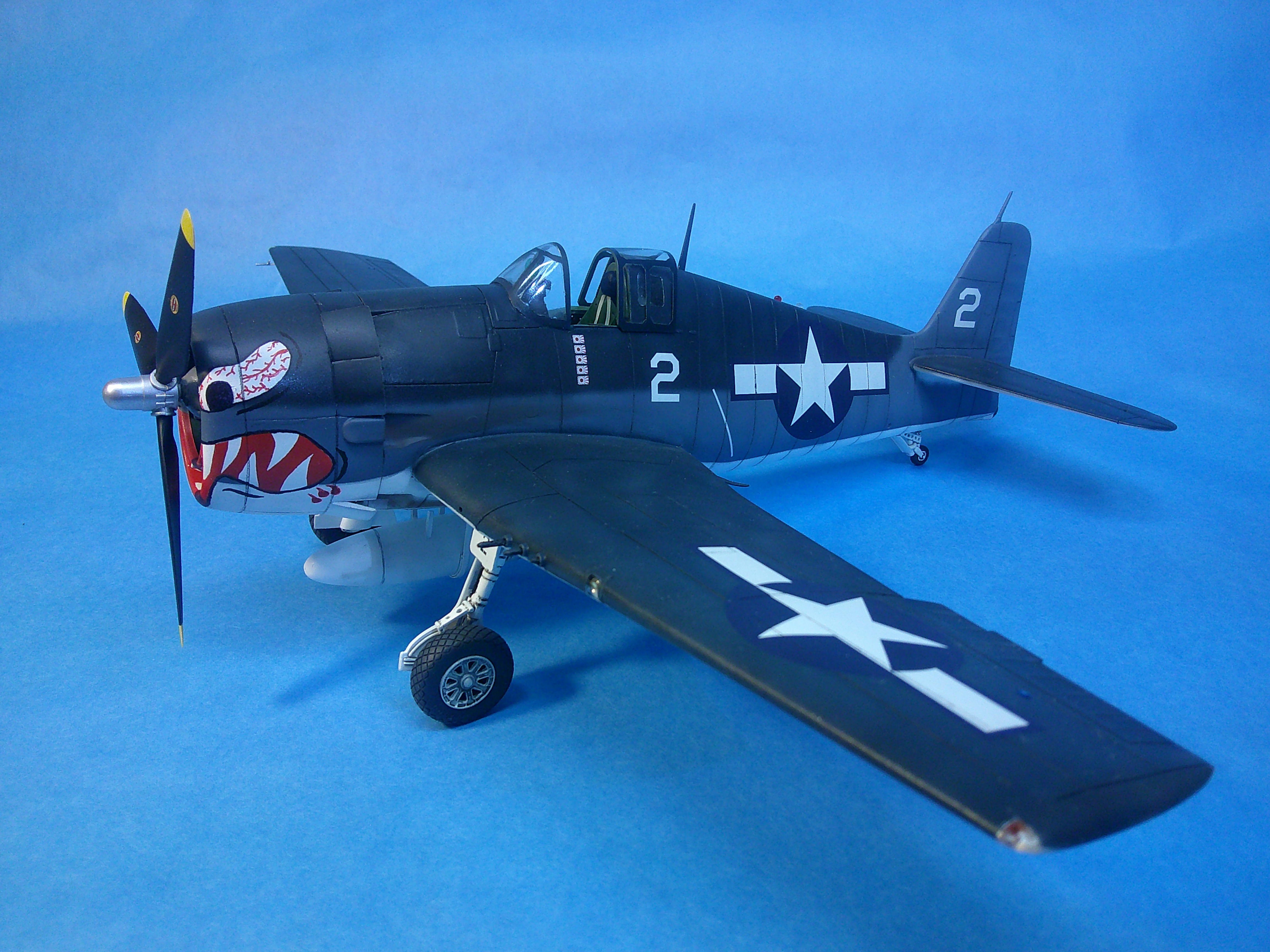
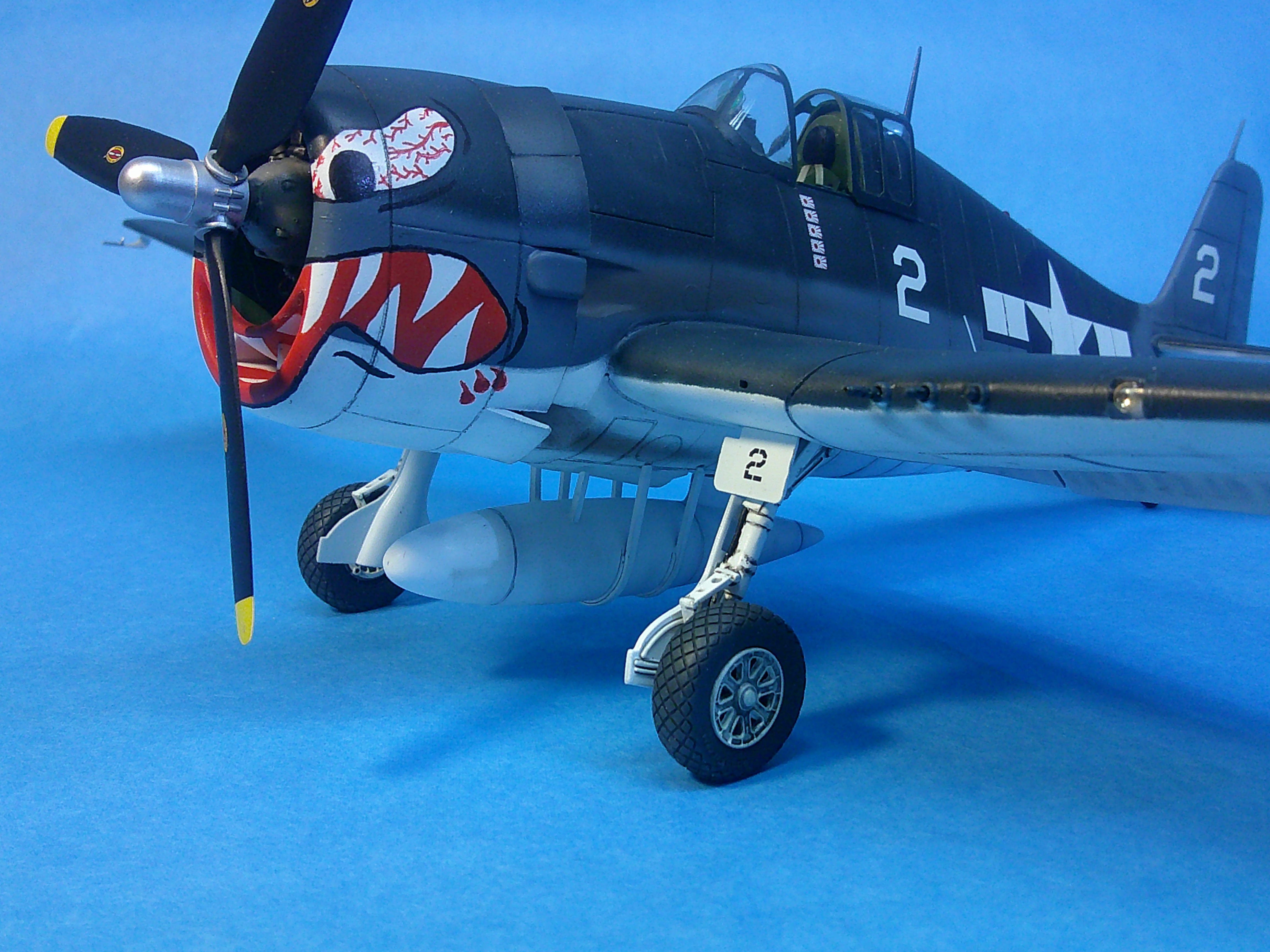
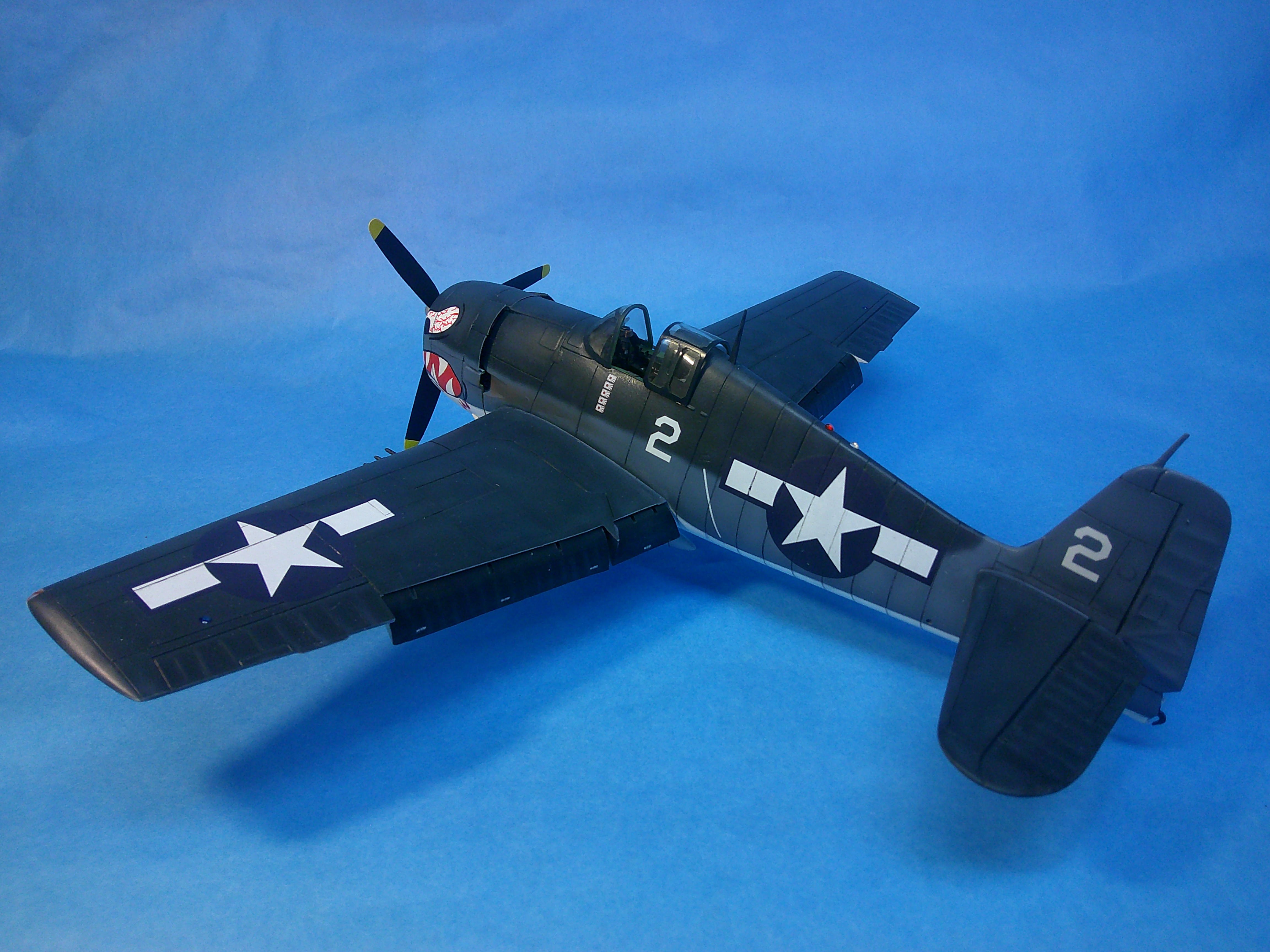
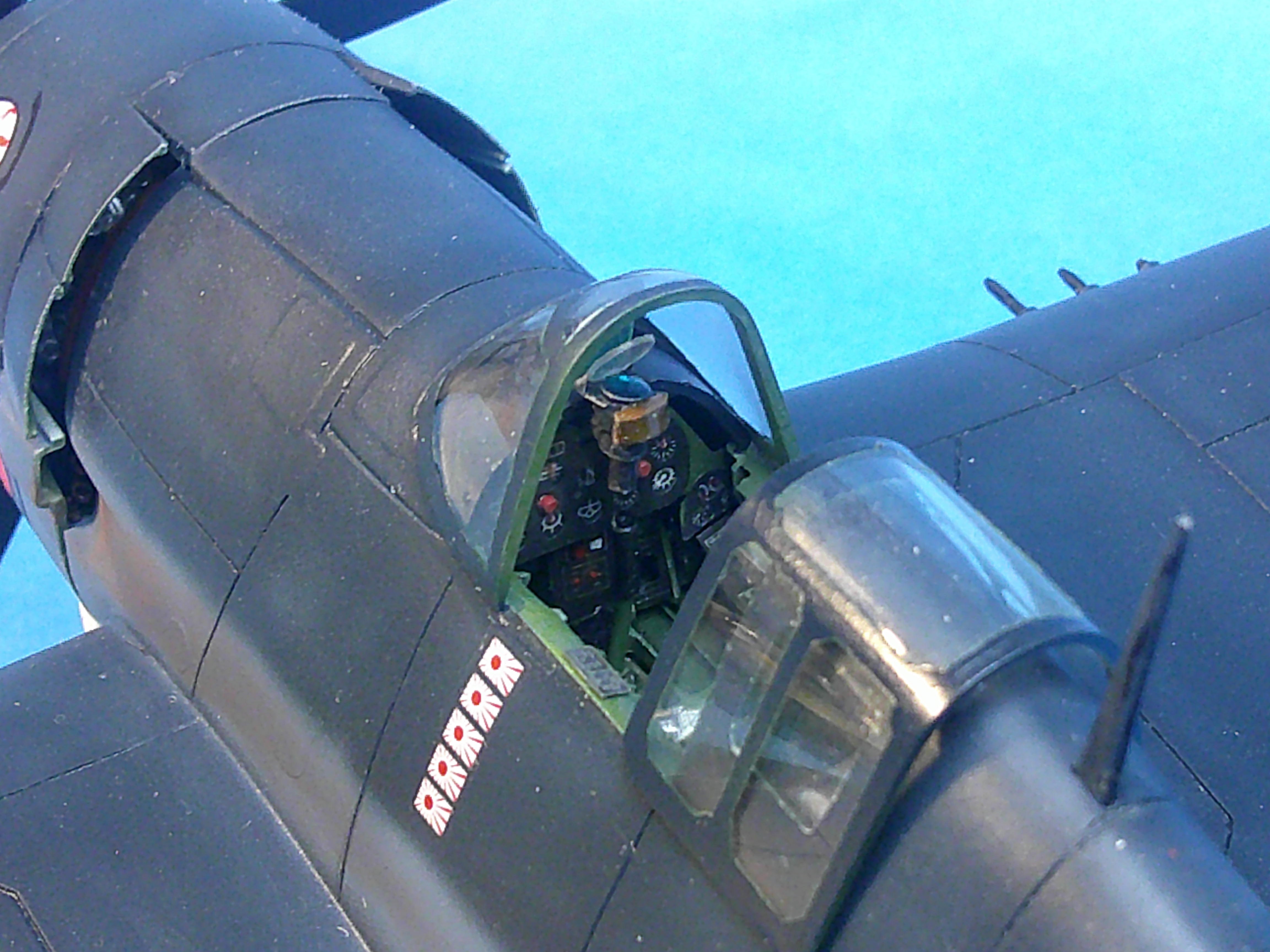
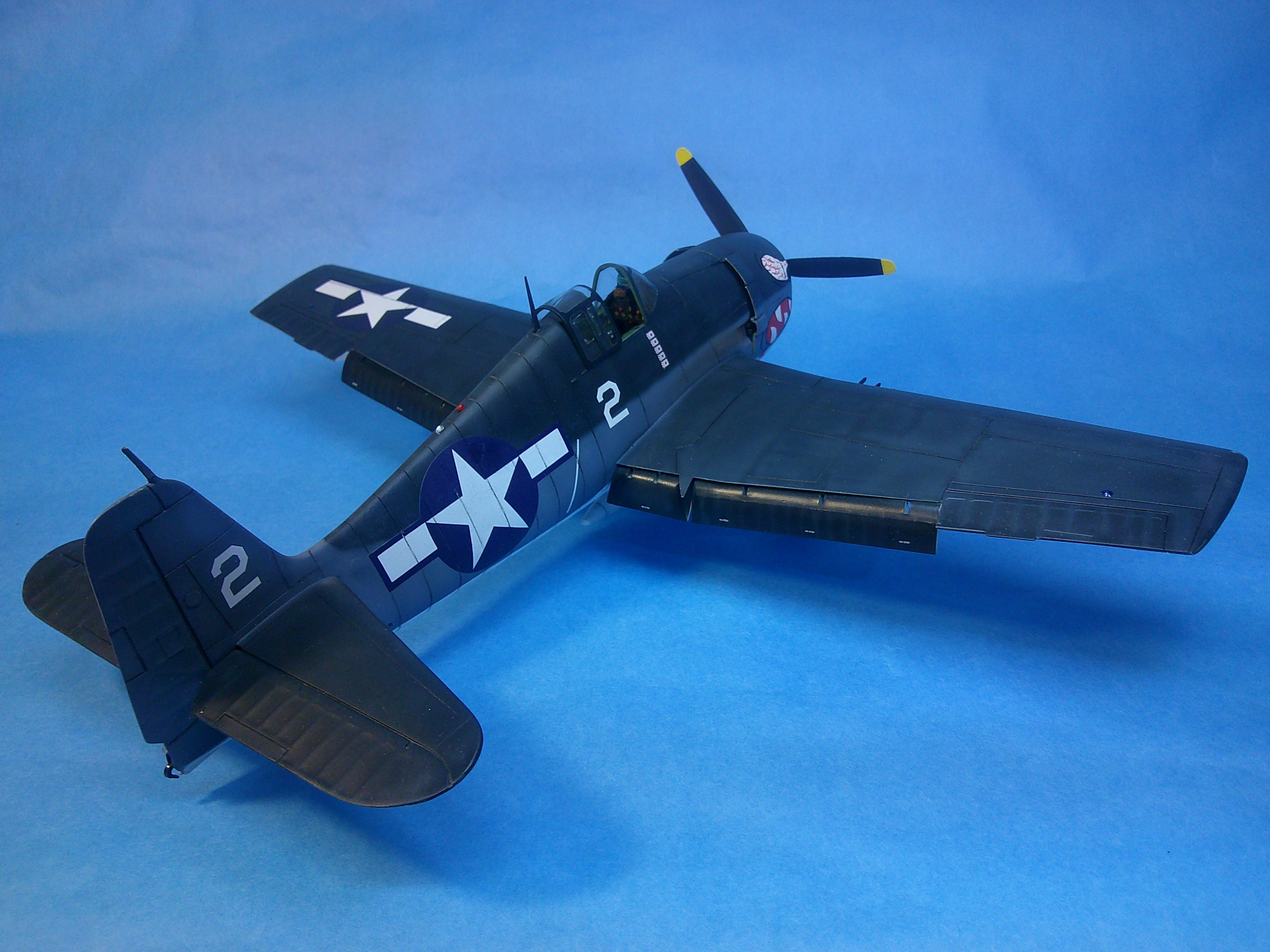
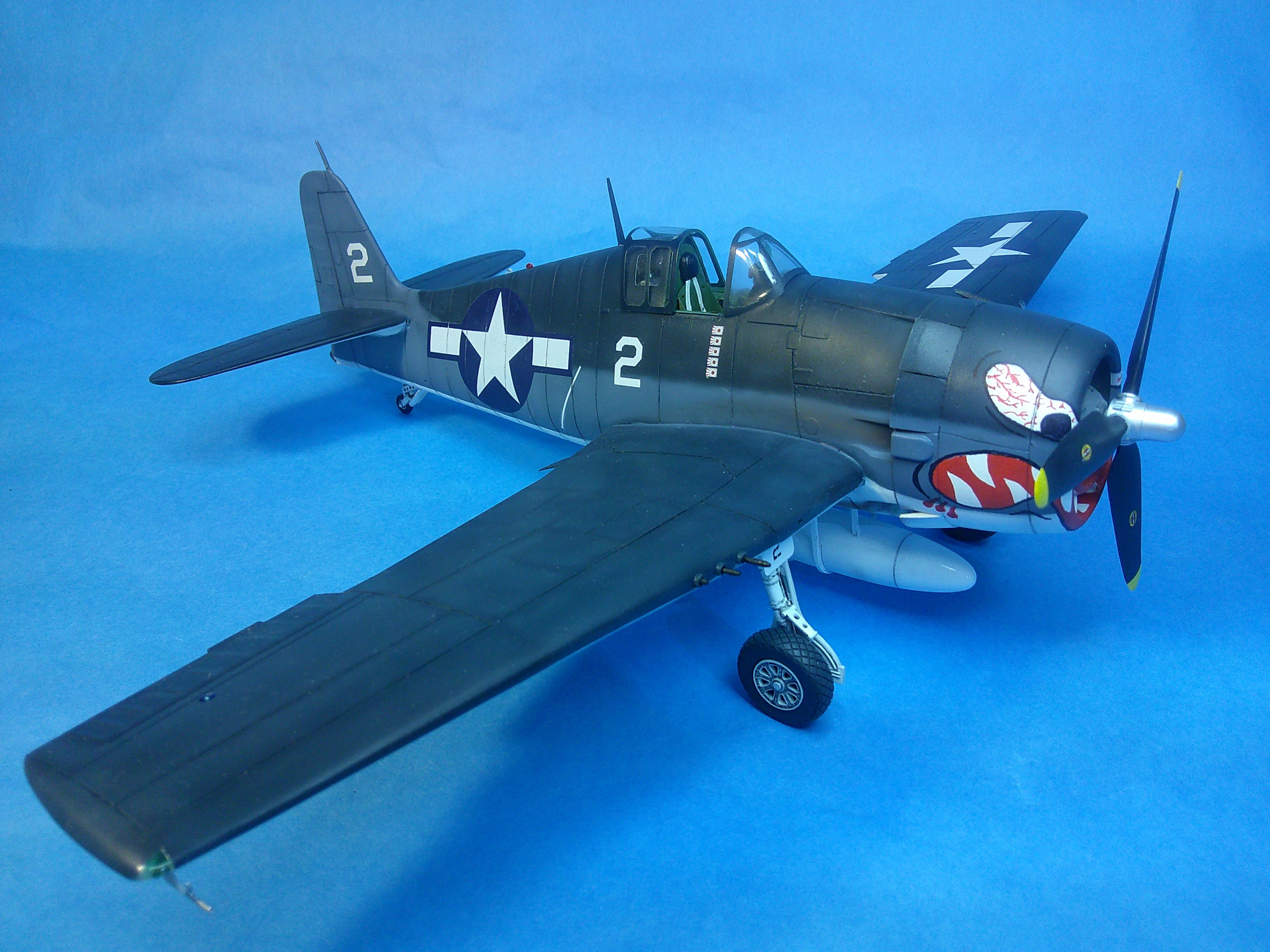
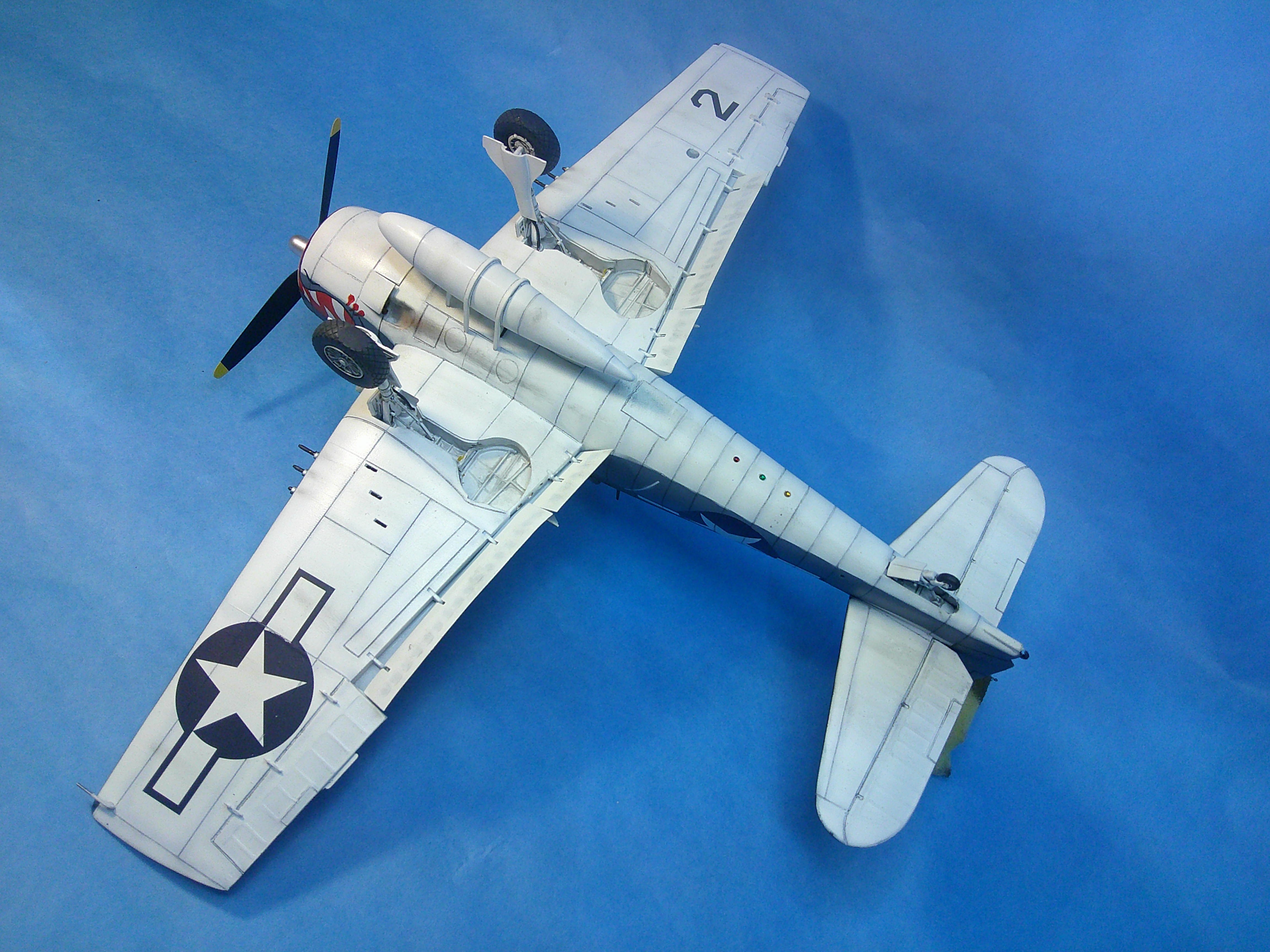
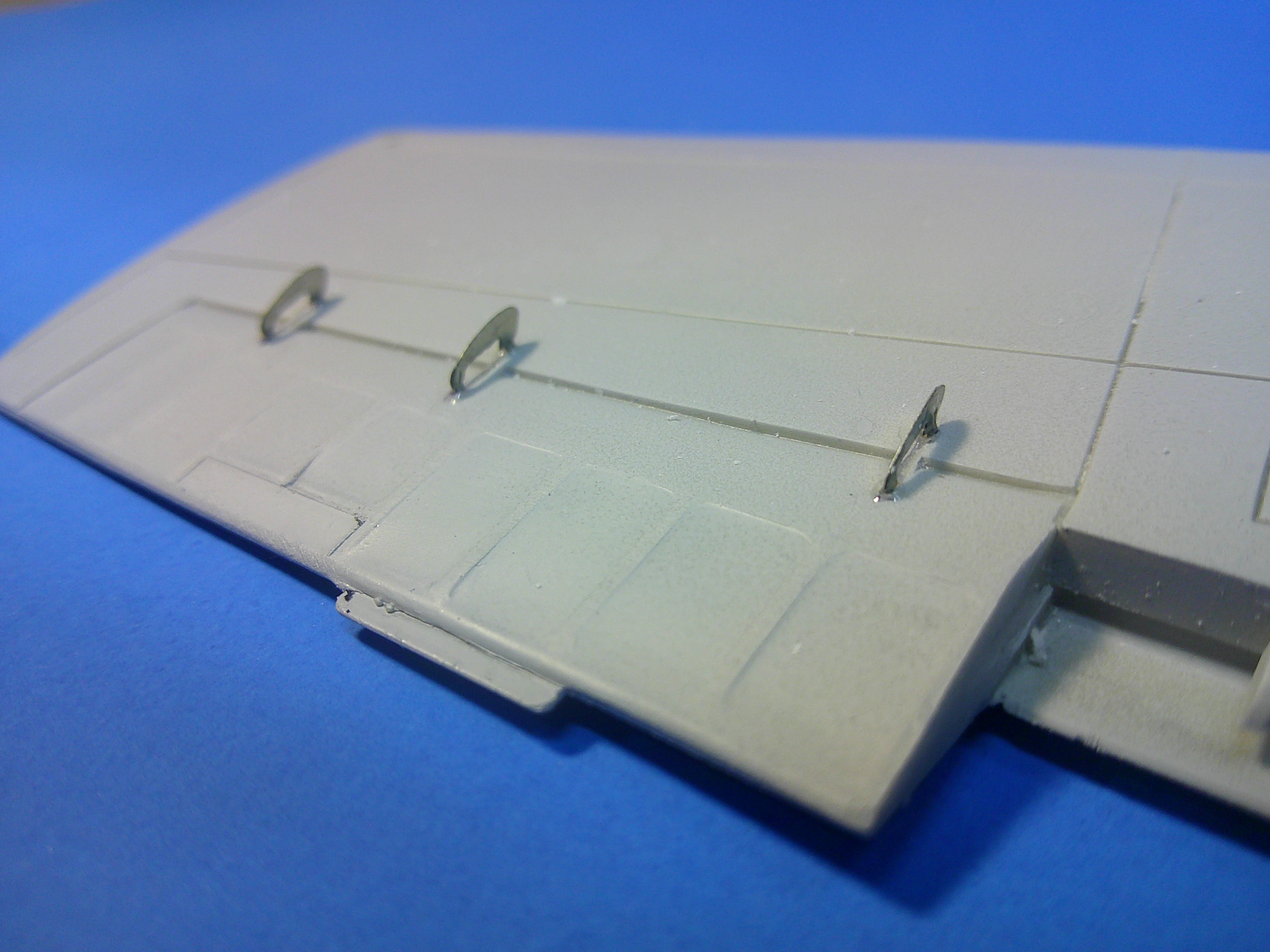
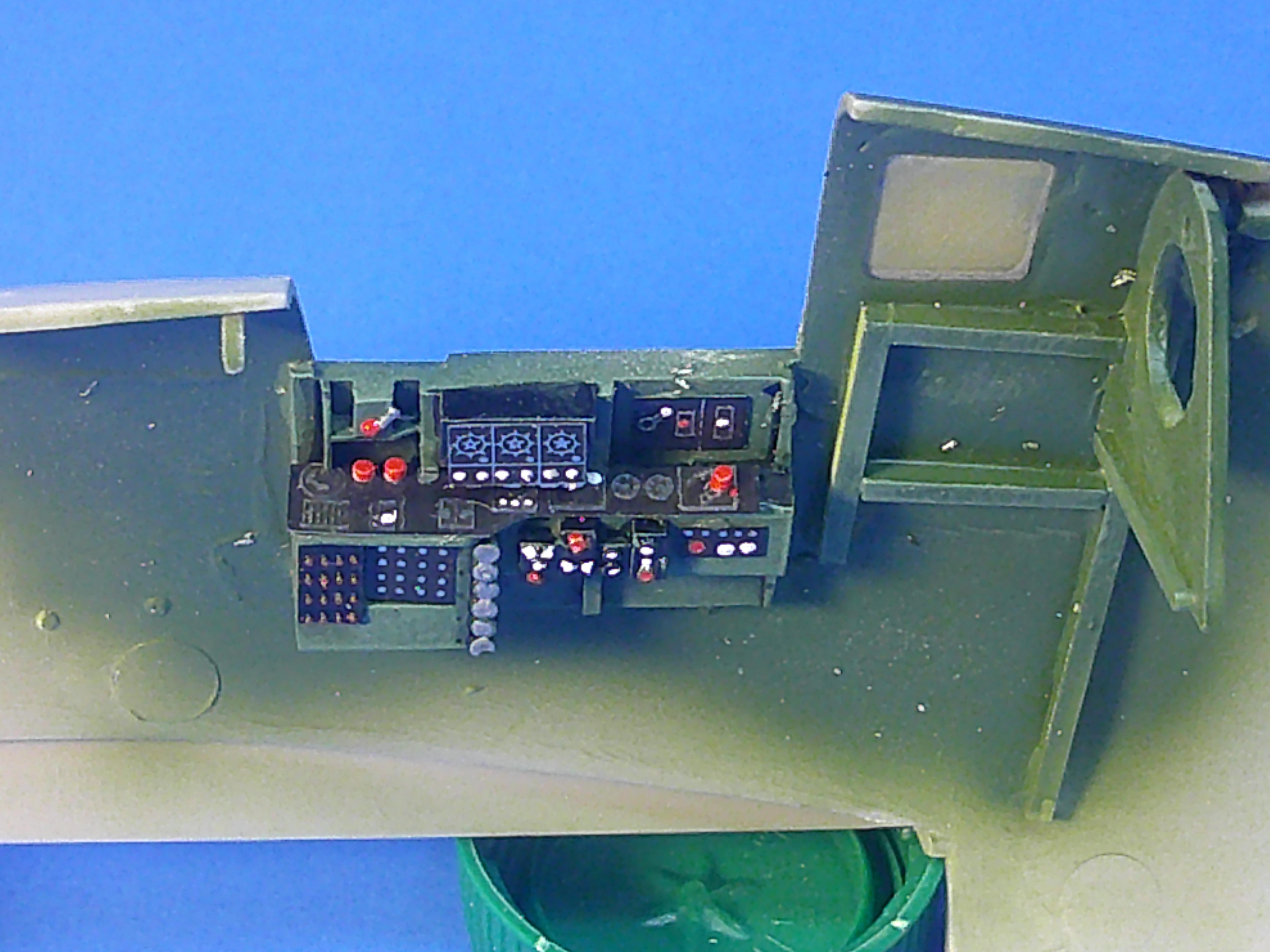
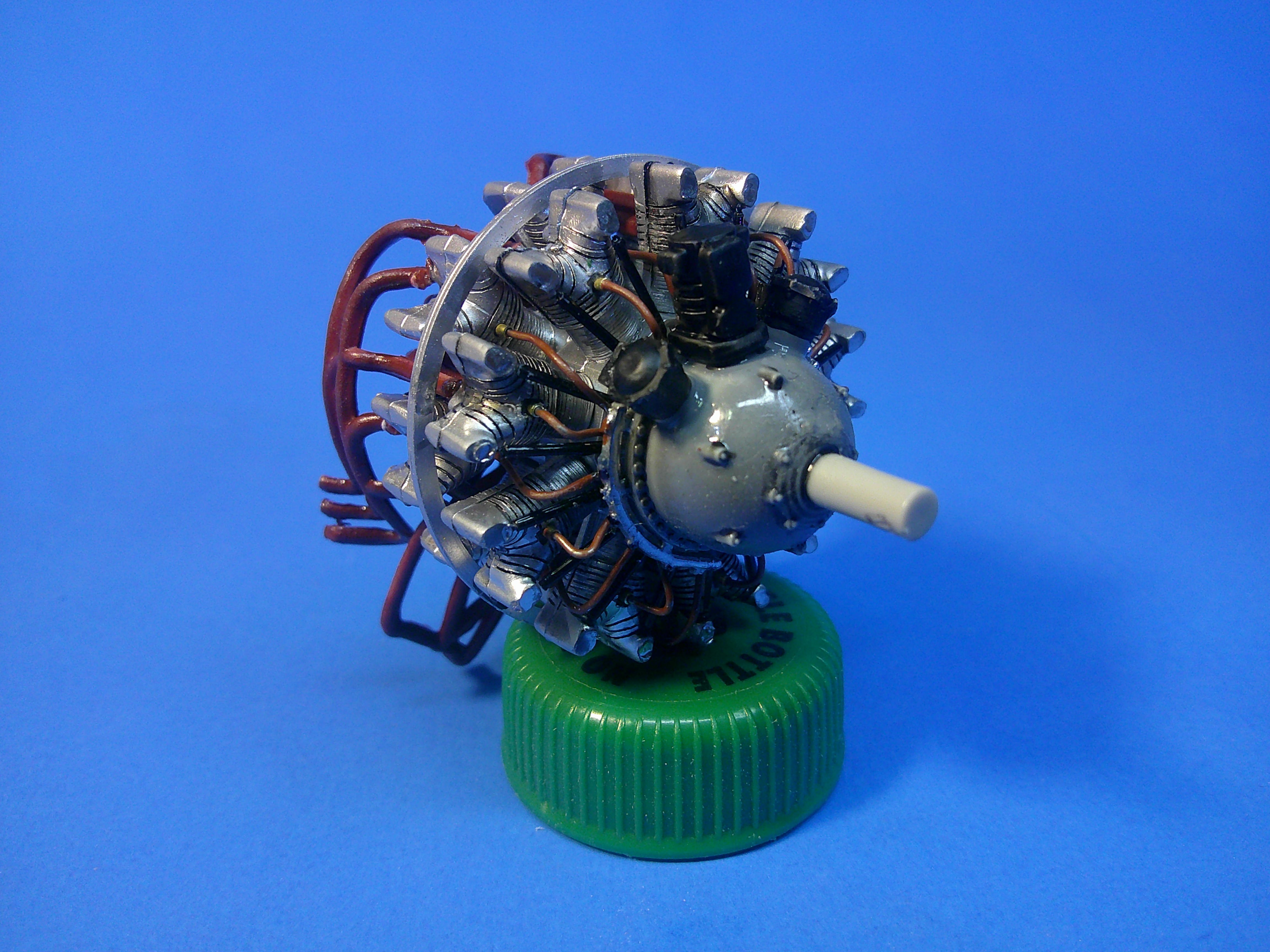
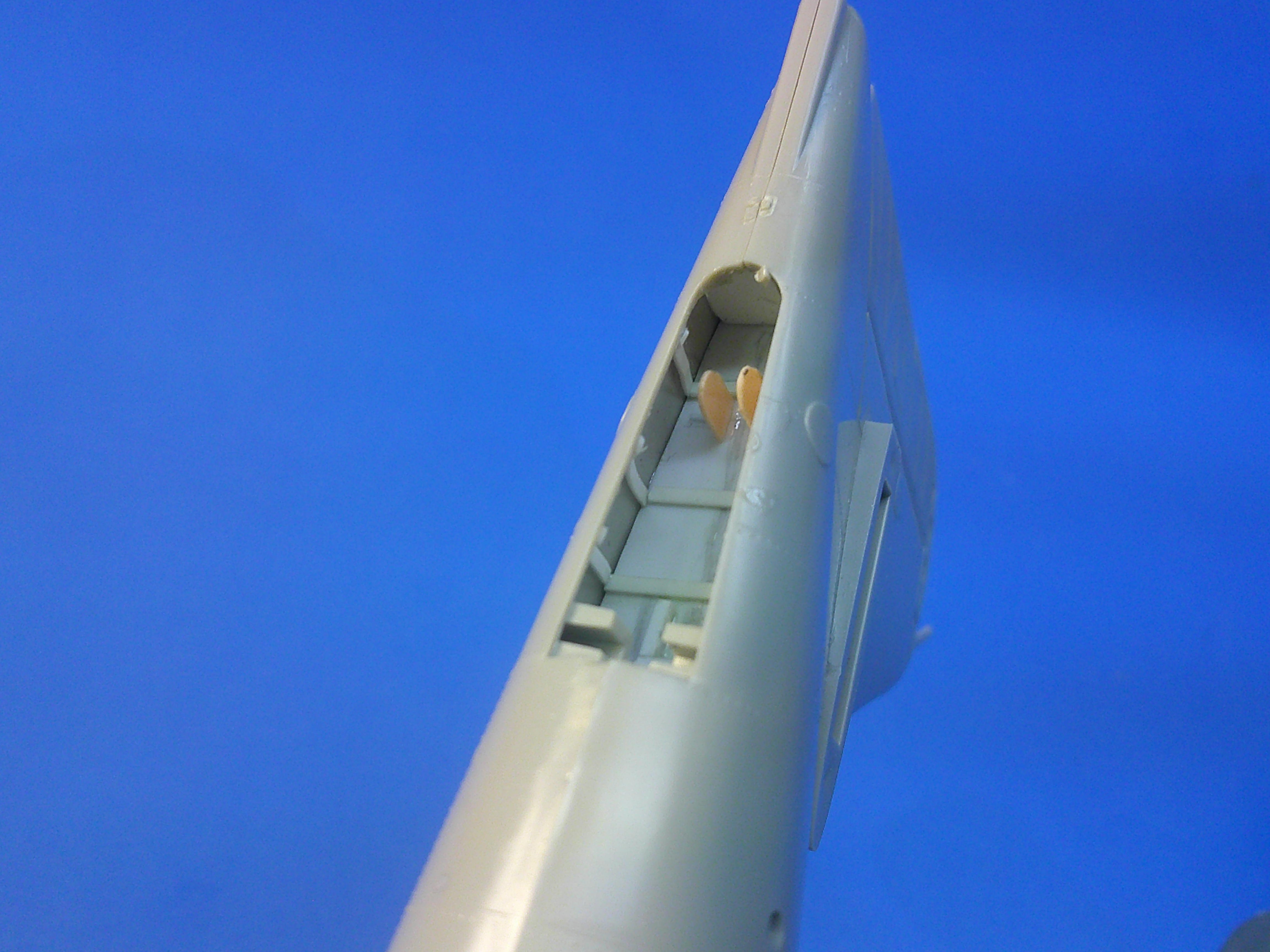
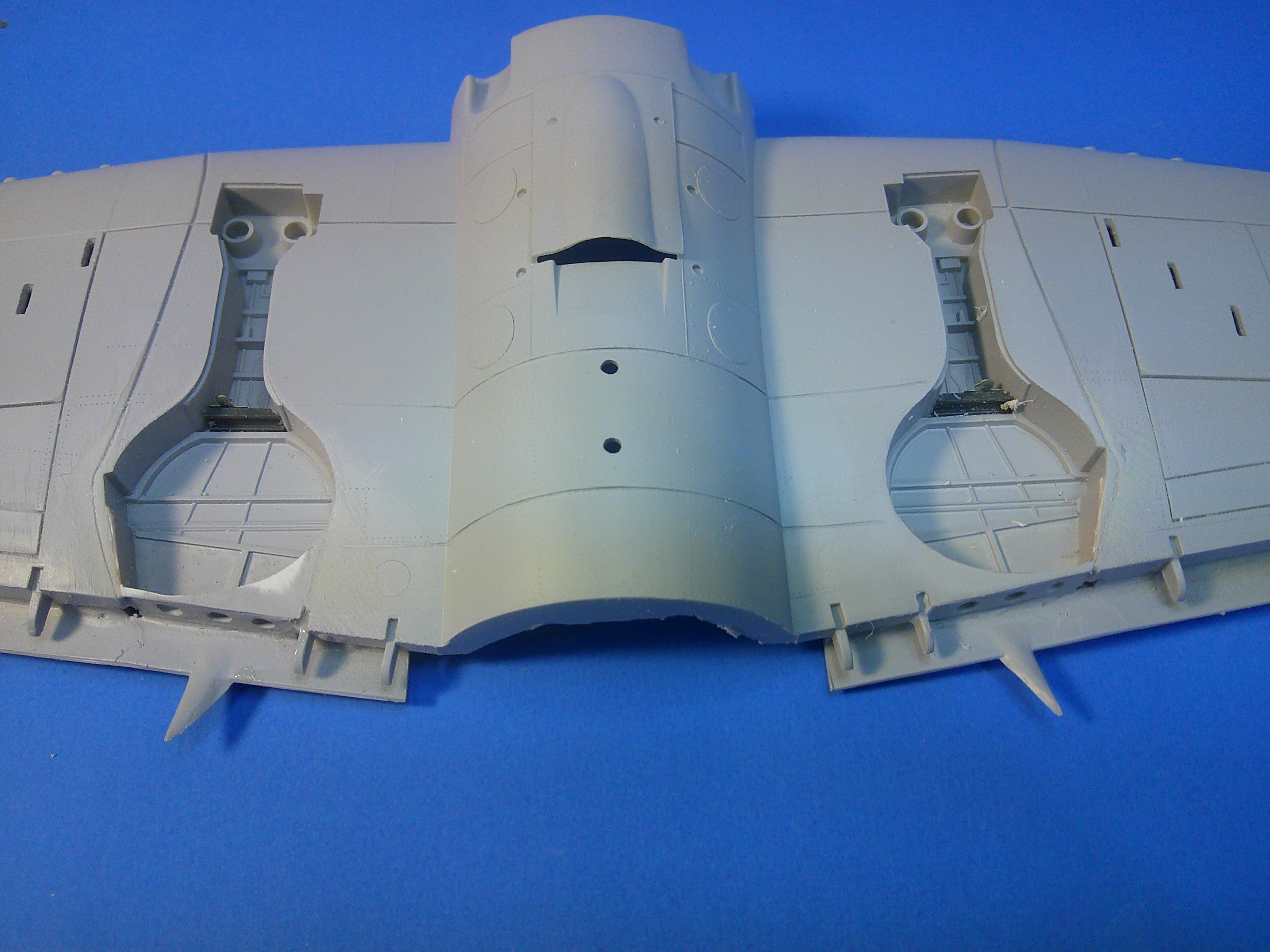
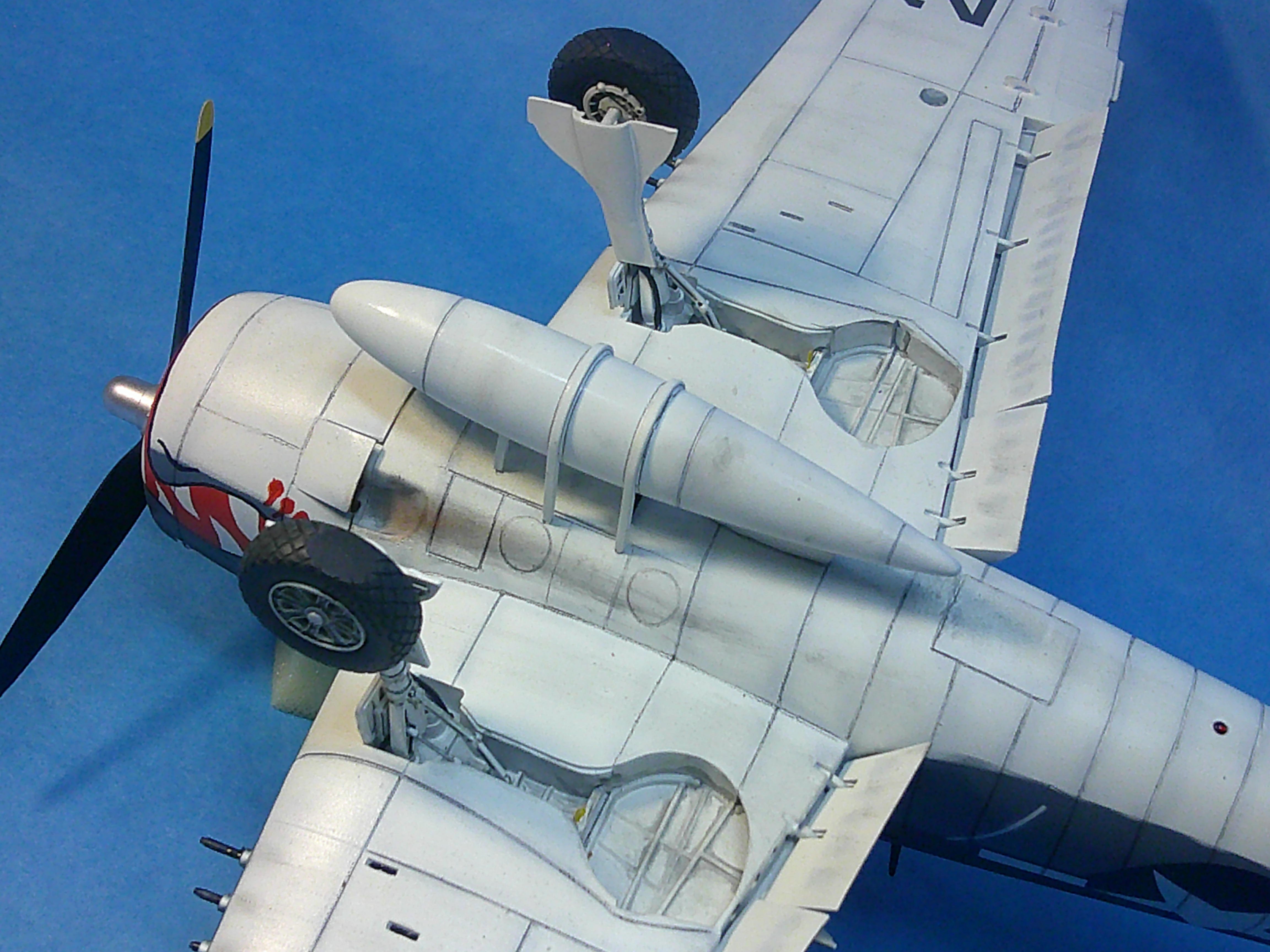
I just finished the classic 1/32 Hasagawa Hellcat, first released back in the early '70s. I built it as an F6F-3 on the Princeton and "shot the works" detailing and correcting parts of it. BUT.... the main accomplishment was PAINTING the cat-mouth artwork on the cowling. The interior is a combination of Verlinden resin parts for the floor and side panels and HodgePodge PE parts for the main instrument panel (with film instruments), the seat, and side wall detailing. I also scratchbuilt the engine water injection storage tank behind the cockpit since it would be visable through the -3 side windows. The rudder pedals are HP PE parts (with Grumman on them!) but I had to scratchbuild their frames. The kit only had a hole for the tail wheel, so I scratchbuilt a well for it. The main gear bay detailing mysteriously stopped half-way back in the tire well, so the rear half of each of them needed to be detailed with strip plastic. The wells also needed to be closed off at the rear and their outlines around the tire wells corrected so that there was a curve along their inside edges along the top. You can also see the HP PE gear up-lock hooks added in each well. The kit's aileron hinges were solid blobs so they were cut off and replaced with HP PE actuators that have the proper see-through underside to them. The kit engine is almost a kit in itself and VERY complete for its age. All I did was add plug wire receptacles and ignition cables made from solder wire. The cat-mouth artwork is a combination of masking and painting for the eye and mouth outlines and teeth along with detailing for and around them added using black and red very fine point Sharpie pens. The hardest part wasn't the artwork itself as much as making sure the masking for both sides was even and symmetrical from all angles! The approach light in the leading edge of the wing was added using an MV lens with a clear cover made from packing tape. I scratchbuilt a Mk.VIII gun sight (8 parts!) and also added the bullet proof glass panel behind the windshield that the kit omitted. The dropped flaps and open cowl flaps are a kit option. The kit has indented scribing on the wings and forward fuselage, but I had to scribe in all of rest of the main fuselage and tail panel lines using a razor saw. I added position lights to the rear fuselage above the tail hook and on the fuselage spine. Also note the blue formation light that was drilled, painted, and given a UV cured resin lens top on the outer part of each top wing. The wingtip lights are drilled and painted clear plastic that was then sanded and polished to shape. I also used aftermarket brass .50 gun barrels, each one cut to its proper length. I added brake lines and gear actuator struts to each of the landing gear and also drilled out their scissors links. The tires are aftermarket resin. I also added MV lens IFF lights under the rear fuselage bottom and the -3 landing light under the left wing. All in all this was a fun build that only took me about 3 weeks. It was also nostalgic as I originally built it back in the late '70s. Now I have to figure out if I can get one more built before the Nats! Critiques, comments, and questions welcome as always! Gil
 4 points
 -
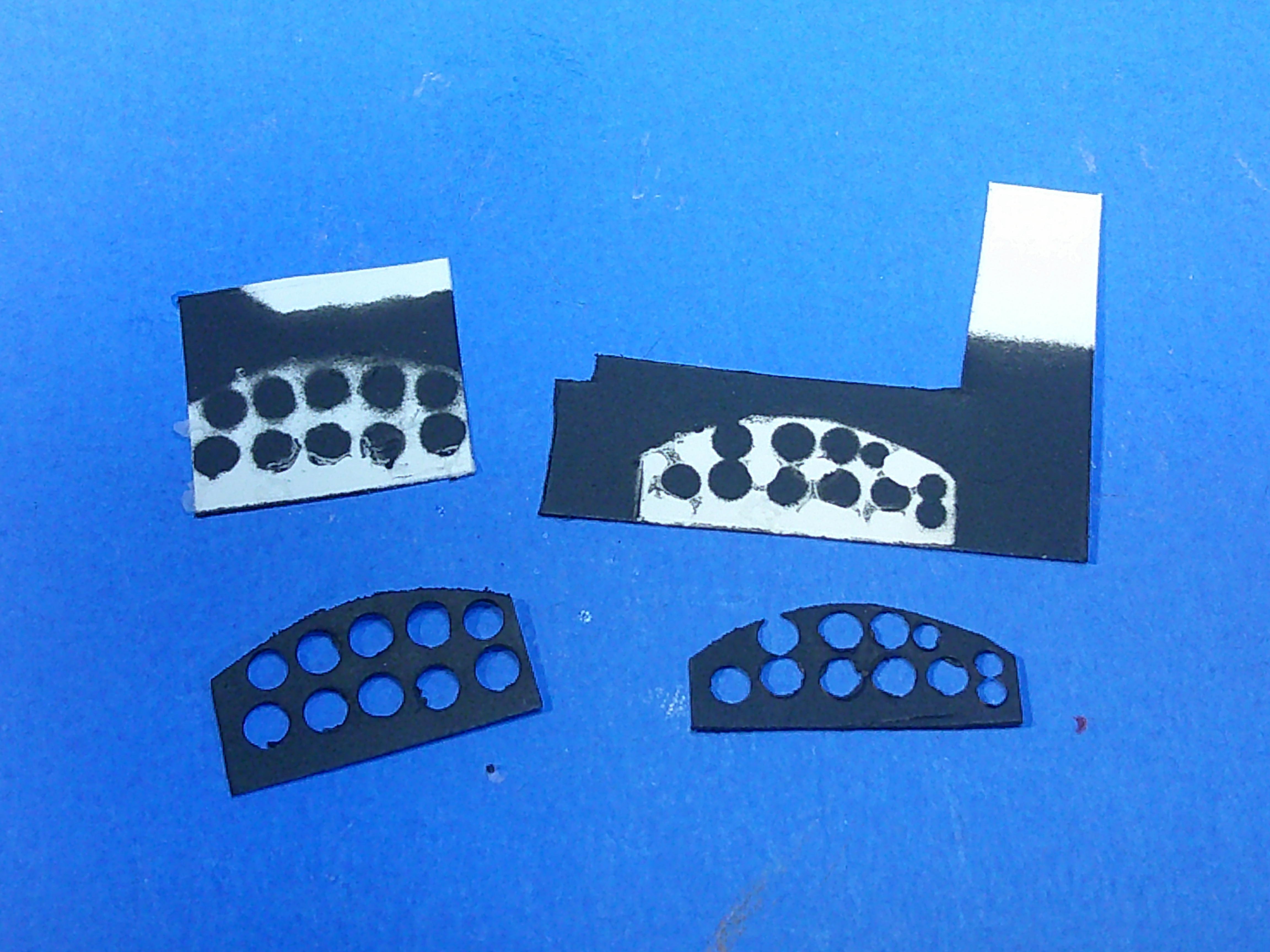
Ok.... after the debacle of diverting to build the RF-84F, I'm back to work on this 1/48 Martin T4M torpedo bomber. I started by making a 3rd tailplane, as the first 2 just didn't cut it. I tried to "carve" the ribs on the far left one and that was too rough looking. I used the skinning method on the center one, but it had some gunk under the skin when I folded it over that resulted in having to try to sand the ribbing which ruined a section. It seems the 3rd time was the charm! The far right shows the 3rd tailplane I've built by sanding thicker sheet plastic to airfoil shape and skinning it with with "drawn ribbed" .005 sheet plastic (as seen in the post above). This one has much more consistent ribbing. Since I'd had trouble before trying to scribe the elevon hinge line, this time I sawed the elevons off of the tailplanes, glued some half-round to their leading edges, and carved a groove in the rear edge of the tailplane so that the elevons fit snuggly into that groove when I reattached them. I also realized that according to the scale plans the tail fin does NOT sit on top of the tailplane; instead, the tail plane is mounted on either side of the tail fin just below the lowest rib. So, that meant cutting out the center section of the tail plane (the thickness of the tail fin) and drilling holes so I could use thick wire for mounting pins. This pic shows test fitting each tailplane half to the fin. Not absolutely perfect, but certainly workable! Front and rear views of test fitting the tail fin and tail planes to the balsa fuselage (which will be vacuformed in the end). Moving to the wings.... I realized the wings AND the ailerons would be easier to skin if they were separate, so I sawed them apart. I also reasoned that the center of the bottom wing, where it's attached to the fuselage, the landing gear, and where the torpedo hangs would probably be the most heavily reinforced wing area so I used .010 sheet plastic with no ribbing to skin it. I used "ribbed" .005 sheet for the upper wing section, but note that I had to leave a space for a wing tank (the blue rectangle) when drawing in the ribbing. All that's left now is to use the .005 sheet to skin the rest of the wings and also skin the ailerons! By the way.... I'm using Gorrilla brand contact cement to attach all of the skinning. It only takes 2-3 minutes after applying before it's ready to use. BUT, it is NOT designed for "polystyrene", so it has to be used only in thin coats, which is exactly what's called for in this build. It seems to sand better than the regular "wood working" contact cement I first tried and gives me slightly more working time than using superglue. Critiques, questions, and comments welcome as I stumble forward with this project! 😁 Gil
4 points
-
I started this 11 years ago, but my cat got ahold of it and chewed apart the stretched chassis and ate the fuel tanks. The cat is still alive. It started as IBG's 15cwt C15A, and everything behind the spare is scratch-built. The larger wheels came from IBG's Holmes Breakdown kit; details from PART helped dress it up. Decals were pieced together from the Matchbox Monty's caravan, various 1:72 sheets, and the IBG sheet. The unit sign was made by trimming the corners off a Portuguese flag decal, with white "72" numbers swiped from the numbers jungle on the Airfix USAAF Bomber Service set's decal sheet. Something I learned was that, when the Commonwealth forces were ordered to paint the white star on their vehicles prior to the Normandy landings, many Canadian units applied the markings crooked to differentiate themselves from the Americans! (A good website for Canadian vehicle markings is https://www.canadiansoldiers.com/vehicles/markings/vehiclemarkings.htm.) Weathering included everything from oils to MIG pigments. The bed's cover was made from toilet tissue, and the stores in the bed came from Italeri, Academy, Prieser and my own scratch-building. Note the cases of beer back there - since it's a Canadian truck, I'm saying they're Elsinores.
4 points
-
Got the front and rear work done for the bumper and doors to the body. Little things are beginning to add up. A couple of things need to be done to the chassis and engine and then I can begin painting the frame and get the engine installed. The grill guard that I had done I found to be too small so a new one was made up which protects the headlights much better. After that the front bumper was easy to get done. Next up is to get the trim done for the rear doors.
4 points
-
Got quite a bit more done in the last few days. Radiator and shroud are set as well as the fenders and running boards. Next is to get the hood sections done. The center needs to be tweaked so that the hinge will work. The gap needs to be closed some with a brass sliver on each side. Side pieces will also need hinges but are set to go.
4 points
-
For me BEST AWARDS CEREMONY EVER.! do not have the need to hear my name or waste the time hearing everyone else's. Having the winners posted within a couple days is more than good. I hope the ceremony stays exactly the same - short and sweet. I do however agree with sticking to the schedules Dave4 points
-
This will be my 2nd stab at scratchbuilding a model. It's seems to be more seldom done these days since there's SO many kits available that weren't out there just 10yrs ago. Still, there ARE still gaps, especially in 1/48, which is my primary scale of choice. This will take more time than my usual builds and it will be easier to post progress as I go along as opposed to trying to post everything at once at the end. This the Martin T4M-1. It's never been made in 1/48 in vacuform or resin to my knowledge. I've seen 2-3 scratchbuilt over the last 40yrs, but no kits have been produced except in 1/72. After finding some suitable plans I had them enlarged to 1/48. You can see the two pieces cut out of the plans laying under and beside them. I started by first gluing two blocks of balsa together with a sheet of copy paper trapped between them, using white glue. This allows the two "halves" to later be pried apart. Then those cut out plans were taped to the top and side of the balsa and it was cut to the rough shape seen above on a scroll saw. Note that I actually forgot the "dip" for the 3rd cockpit opening for the gunner's position and had to add that later! The two rough halves seen above were then glued back together and the fuselage was sanded to shape. I used rough and medium grit sanding sticks for this step. Although I did cut out one of the side view templates (as seen on the left in the first pic above) to check the shape as I went, I actually found it easiest to just use "mark-1 eyeball" for 90% of the work. I'm satisfied the outline matches the drawings close enough for "government work"! The over-arching idea here is to make a fuselage that can be split back apart into 2 halves that will be used to vacuform the fuselage in plastic. Next up were the wings. I decided to use the KISS principle and just carve them from solid balsa. The wing thickness on the plans is 1/4", so I used a sheet of 1/4" balsa. I decided not to vacuform the wing parts, but to simply use them as "cores" and wrap them in very thin sheet plastic (more on that below with the tailplane surfaces). Luckily for me, the top and bottom wing of the T4M is virtually identical, so all I had to do was cut out the top wing plan and use it to cut the 1/4" balsa sheets to shape on the scroll saw. The next step was to give the block balsa wings their airfoil shapes. The first thing to do then was to draw a center line in fine tipped black marker around the edges of each sheet. Since I also had a 1/8" sheet of balsa handy, it was used as a template to draw the lines. Those center lines would help me judge the evenness of my sanding as I progressed, especially on the trailing edge since both the top and bottom rear surfaces had to taper down exactly to that rear center line! The leading edge was easily done as all it needed was simple "rounding", which was done with sanding sticks. I taped a large sheet of 80grit sandpaper to the front edge of my workbench to do the heavy sanding on to work on getting the airfoil shape. Again, I just used "mark-1 eyeball" to sand a tapering surface on the top and bottom. I switched back and forth between them frequently always trying to sand just as much on one as I'd just done on the other; and to also maintain the same angle I was holding the piece at while sanding. Once again, I found this easier than expected and the heavy 80grit paper helped speed the process along. Once both were sanded to shape I only had to add the pilot's cutout in the center to make the "top" wing. One part of scratchbuilding is knowing you have to engineer things that kits give you. I had to figure out HOW I would attach the bottom wing to the fuselage. Again, trying to go the simplest way, I decided to cut the airfoil shape into the fuselage bottom so the wing can be fit up into it. The scroll saw has more than earned its keep on this project! I tackled the tail surfaces next. Since they're smaller I decided to use thick sheet plastic to carve their blanks. After transferring their plan shapes to the sheet plastic heavy scissors was used to cut them out. They were then hand sanded to their airfoil shapes just like the wings. Note the very thin piece of .005 plastic sheet at the top of the pic. This was what I'd use to "skin" them with, so I didn't have to worry about any sanding marks on the plastic blanks. This and the following pics will show the method used to make the ribbed skinning for the horizontal tailplane, but the same method was used for the fin and rudder too. Note that the tailplane plan has been drawn in pencil onto the .005 plastic sheet, including the "rib" lines. Also note that they do not go all the way to the edges of the drawing/part. The .005 sheet was then placed onto a folded piece of paper towel to give it a slightly padded surface under it. A straight edge and a ball point pen was then used to draw in the rib lines (whether or not the ink transfers to the plastic is not important). This method creates an indented line on the inside and a raised "rib" on the outer surface of the thin sheet. Here, the tail plane blank (which had already been used in 2 previous failing attempts at ribbing!) has been superglued to the first half of its "skin". After it set, more superglue was applied to the other half and it was folded over onto the top. This method isn't perfect.... it produces rough edges at the sides and rear, but those can be carved and sanded to shape. On one of my first attempts I tried using contact cement instead of superglue. It worked ok, BUT when it came time to sand it and the .005 was sanded through, the contact cement did NOT sand well. Superglue solved that problem! Here are the rough sanded and primed tail plane parts. I'm very satisfied with the representation of the structural ribbing as being even and visible enough for my purposes. I believe that once they've been fine sanded and painted they'll look the part, pun intended! That's where things stand as of today! My next step will be to try to "skin" the wings. More pics when more progress has been made. Comments, critiques, questions, and suggestions are all welcome as always! Gil
3 points
-
I have always liked Tester's Dullcoat, but sometimes it dries to a semi-matte rather than a dead flat finish. I recently read on-line another modeler say that he lets a bottle of Tester's Dullcoat sit until the "flattening agent" (you know what I mean, all that 'stuff' that gathers at the bottom of the bottle) settles to the bottom. Then he draws/pours off a quantity of the solvent. This increases the concentration of the flattening agent and depending on how much you draw off, the finish that can vary all the way up to dead flat. I decided to give this a try. I took a new bottle of Dullcoat which had settled completely and poured off about 1/3 to 1/2 of the carrier/solvent. I was a bit afraid that it might be spotty or have flecks of flattening agent in the finish so I tested it on a scrap piece of plastic with a flat paint on one side and a high gloss black on the other. i thinned the Dullcoat as normal for my airbrush and gave each finish a coat. The matte finish was still matte, no surprise. But the high gloss dried to a DEAD FLAT and there was no flaking or spotting on either finish. I then tried it on my current project that had gloss and matte surfaces plus decals and I got an even dead flat finish over all. 60 some odd years of modeling and I am still learning.3 points
-
Some more details have been added to the wings..... The 4 wing fold panels have been scribed in, their hinges added, and another coat of primer sprayed on. The hinges were made by sawing notches every 1/16" along a piece of half-round plastic strip. Note that hand holds have also been drilled out in the wingtips of the bottom wing. There's still yet MORE filling and sanding to be done, as evidenced by the one seam line running down into the one wing fold panel and some other slightly marred spots here and there, but little by little the wings are getting there!
3 points
-
This is the Muroc Models 1:72 kit of this weird test article, a glider used to verify the aerodynamic qualities of the JB-1A unmanned flying bomb (which flew for a total of five seconds when it was finally tested). Apparently, it didn't like slowing down - landing it was a challenge, and its landing gear was unsprung, giving it a suspension not unlike that of a shopping cart. I built it in three days - it's a simple kit, and I added detail to the cockpit, plus some nose weight so it sat right. The yellow is ModelMaster deep yellow.
3 points
-
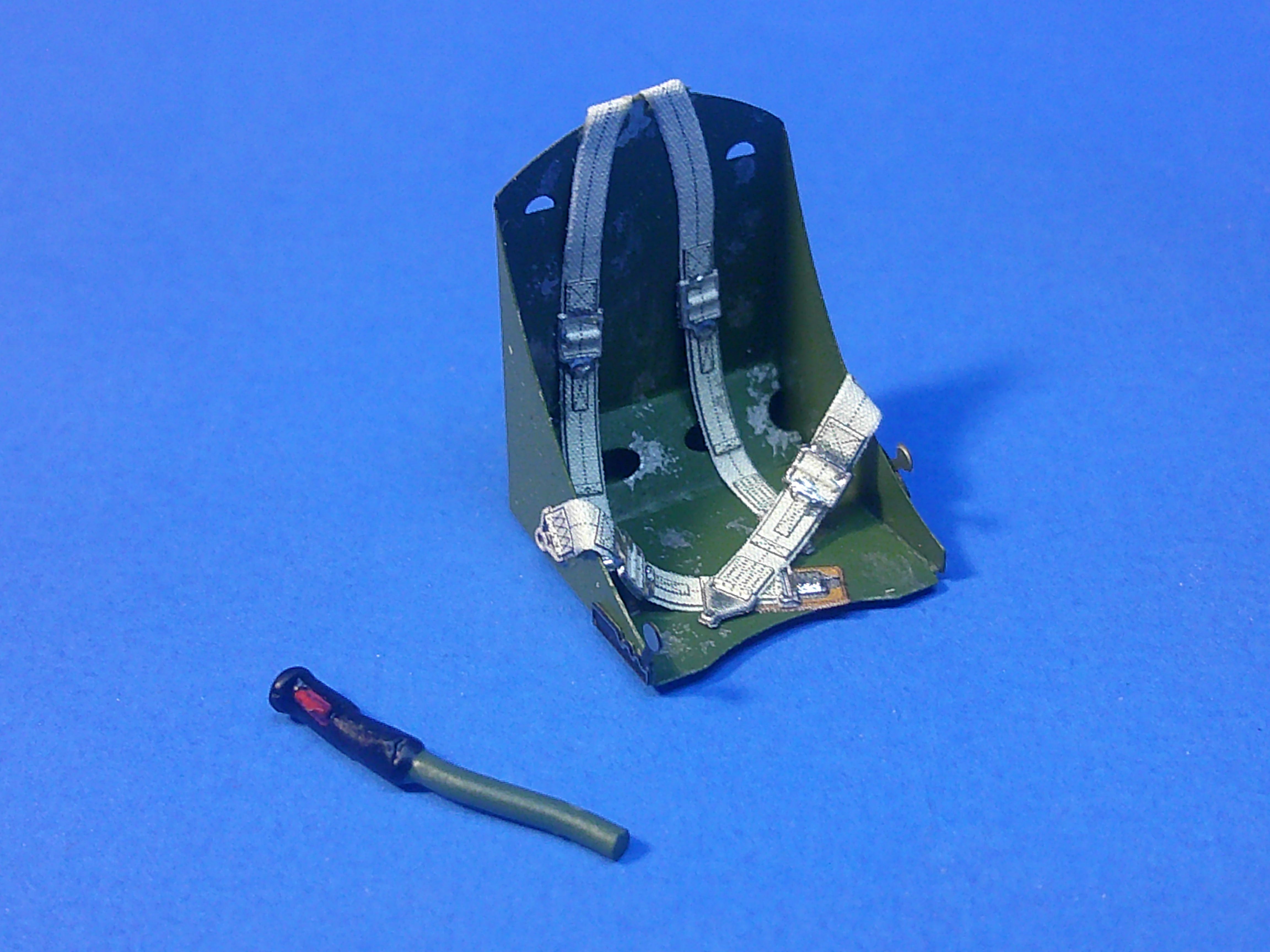
My latest effort is the 1/48 Hobby Boss FJ-4 Fury. The kit has recessed panel lines and rivet detail, and average cockpit detail. Overall shapes and outlines appear accurate, save for one glaring error: the rear fuselage, between the trailing edge of the wings and the horizontal stabilizers, had a very prominent "dip" that shouldn't be there. A review of this kit in Bert Kinzeys' Detail & Scale book on the FJ-4 has instructions on how to correct this error, but I decided to live with it as is. Wing fold joints are included, but you must cut the wing tips apart yourself. Overall, parts fit is good, with a little filler needed at the wing roots and at spots along the fuselage and nose. The kit decals provide markings for two Marine jets, from VMF-451 'Warlords', and VMF-232 'Red Devils', but the blue in the VMF-451 markings are way too light. Hobby Boss offers kits of both the FJ-4 and FJ-4B, but you can build either variant from either kit. If you build an FJ-4, be sure to sand off the rear-most speed brake door on each fuselage half, and use the nose gear door without the antenna fairing. My references for this build were: Squadron/Signal Publications No. 103, FJ Fury in Action; Naval Fighters No. 25, North American FJ-4/4B Fury, by Steve Ginter; and the excellent FJ Fury in Detail & Scale, Part 2: FJ-4 and -4B Variants, by Bert Kinzey. Another valuable online source of photos and information was this web page on Replica in Scale: https://replicainscale.blogspot.com/search?q=fj-4 I wasn't happy with the barely-there kit instrument panel detail and how the cockpit consoles were represented, so I used an aftermarket cockpit set from AMS Resin. The kit seat is good, but lacks cushions and belts. The AMS resin seat wasn't that much better, but it did have a seat cushion, belts, and oxygen hose molded in. The kit has nicely detailed sidewall parts, but I couldn't get them to fit with the resin cockpit set. The AMS set also includes a detailed part for the area under the rear of the canopy, for which Hobby Boss provides nothing. The cockpit parts were airbrushed Model Master Acryl Dark Gull Grey, then details were hand-painted, and attached to the fuselage half. The AMS set also included a exhaust piece with flame holder, but it didn't fit well so I used the kit exhaust, and a length of styrene tube with the flame holder glued to the end to give the exhaust pipe some depth . The intake trunk fit pretty well but still needed sanding and putty to eliminate seams. The nose intake ring lacks the approach light at the bottom, so a section was cut from the intake and three small holes drilled, and painted Tamiya clear red, amber, and green. The cutout for the lights was then filled with Micro Krystal Klear. I ended up doing a lot of sanding around the intake to smooth everything out. Before closing up the fuselage halves, I added several large fishing weights to keep the model from being a tail-sitter. The fuselage speed brakes can be posed open, and have good detail inside, but I glued mine shut. The fit here was poor. The prominent vents on each fuselage side were too thick, so they were sanded down to paper-thinness, glued on place and faired in with Vallejo putty. The openings to these vents are also shaped incorrectly, but I didn't try to correct them. Airframe assembly went smoothly. Minor gaps at the wing root, nose and fuselage were filled with Vallejo putty, and Mr. Dissolved Putty. Wing fences are molded onto each wing, and were sanded to thin them to a more accurate scale thickness. Parked FJ-4's usually have a nose-up stance. The kit nose gear strut is a little short, so I added a one-eighth inch section of styrene rod to the top of the strut, and replaced the compressed torque links with a photo-etched one from my spares box. The nose gear fork was cut away and repositioned turned to the right. I added wire brake lines to the kits' main gear struts, and painted all the struts Tamiya Titanium Silver. Most of my reference photos showed that the main gear doors were often open when the jet was parked, but the kit doors had no detail on the insides. I used very thin sheet styrene cut to fit inside each main door, and cut lightening holes in them based on the photos I had. I also added rivets with a riveting tool along the door edges for added detail. One painted and highlighted with Tamiya panel line wash, they looked much better. All the gear bays were painted white, then the details highlighted with Tamiya black panel line wash. North American usually painted the entire inner surface of their landing gear doors red, but careful study of photographs indicated that Reserve jets had white inner gear doors, outlined in red. The landing light in the smaller nose gear door was painted Chrome Silver, and a wire added to the back of this light. The kits' wingtip pitot probe was too thick and inaccurate, so I built a new one with lengths of styrene rode and wire. The FJ-4 series has three fuel dump vents: one on each wingtip trailing edge, and another just under the fairing above the rudder. The wingtip vents are molded solid, so they were drilled out and sanded to shape. The tail dump pipe was recreated with a small piece of styrene rod drilled out and glued in place, then painted red. A small white position light was also added to the rear of the vertical fin fairing just above the rudder. I also added a missing vent on the left side of the upper fuselage, behind the canopy. The kit includes two drop tanks, two Sidewinders, and six Bullpup air-to-ground missiles, but the FJ-4 never carried Bullpups. The FJ-4 had long legs for a fighter, and therefore didn't usually carry drop tanks, either, so I left these off as well. I should point out here that the Navy flew the FJ-4B attack version, while the Marines flew the FJ-4 fighter version. Reserve squadrons often flew a mix of both types. I primed the model for painting with Tamiya White Fine Surface Primer. The paint scheme I chose was that of a Navy/Marine Reserve jet based at NAS Memphis in 1962. It was in the standard Gull Grey over White undersurfaces and control surfaces, but with the entire nose, tail, and forward half of the wings painted Florescent Orange. I used Model Master acrylic Flat Gull Grey for the topside color, Tamiya White Primer for the underside color, and Model Master Acryl Florescent Red (which is actually Orange) for the high-visibility color areas. Leading edges of the wings and stabilizers were sprayed Titanium Silver as well. After painting was complete, I gave the entire jet a coat of Future Floor Polish for a gloss coat, then applied the decals. No decal sheets existed for the jet I was making, but fortunately they are easily scrounged. The '6M' tail code, wing code, bureau number, and aircraft number came from AeroMaster and SuperScale letter and number sheets from my decal catalogs. The Navy/Marine Reserve service designator came from an old Testor F2H Banshee kit. The rest of the markings came from AeroMaster sheet #14193, 'Furies of The Fleet in Color, Pt. 2'. Once all the markings were applied, a final coat of Mr. Super Clear Matt sealed the decals. The final step was attaching the canopy, which led to the trickiest part of the build. Under the rear section of the FJ-4/4B canopy is a cylindrical object which isn't identified in any of my references, but I do recall reading somewhere that it's an oxygen regulator. A black coiled cable, resembling an old telephone cord, runs from this 'regulator' to the rear of the ejection seat. The cord is stretched taught when the canopy is open. It's very visible in photographs, so I recreated the cord by wrapping thin copper wire around a small drill bit, spraying it black, and attaching it to the 'regulator', which was then glued to the underside of the canopy. When dry, the canopy was then attached to the model. The Hobby Boss 1/48 Fury kits are a mixed bag: beautiful, crispy-molded and engraved parts that are flash-free with good fit, but with sub-par cockpit detail and a large 'dip' on each side of the rear fuselage that shouldn't be there. Still, a little extra detailing and work will reward you with a fine model of this very capable Navy fighter of the 1950's.
3 points
-
I built this electronic version of the S-3 Viking with a Black Box resin interior, Paragon resin wing folds, and the Metallic Details resin/PE engine set. Here's the BB resin cockpit painted and installed. It fit better than any other resin cockpit I've ever used on a model! Note that it's actually an S-3A/B cockpit and the main IP isn't accurate for the ES-3A electronic cockpit; but who can see under that dark tinted canopy? Even so, I did install only one of the control sticks to be more accurate for this version. The ram air intake in the tail fin was just a hole in the kit, so I used some of the tubing seen there, capped off with a punched plastic disk to create an intake duct. Using the Paragon resin wing folds involves major surgery and some heavy sanding to blend them into the wings. You do need to be careful also not to break off the small disks that do extend a bit higher than the folds on the top side, though they're not as fragile as they look. This the Metallic details resin and PE engines set, partially assembled. The instructions take careful study as they don't show clearly all of the casting areas that need removal. However, once you start trying to test fit things you'll figure out there's more to be done! The resin parts fit together VERY well! The advantages offered using this set are the realistic fan blades that you can actually see through ala the real engine, circular intake housings with no seams to sand, and they and their pylons all fit so well to the model I was able to paint them and decal them separately and then add them to the model after painting and decaling the fuselage. This pic of the left engine shows just how amazing the finished product looks! The markings came from a CAM decal sheet. The model was pre-shaded with black lines before painting the overall Light Ghost Gray scheme and then all panel lines were done with a pencil. On to the rest of the pics! The only other anomaly on this kit was the need to add 25+ antennas of various shapes, sizes, and types in various spots! The kit instructions require a bit of study to be sure to get them all in the right spots. This is #21 for this year and I'm going to try to slide yet one more quick build in just under the wire in the coming week! Critiques, questions, and comments welcome as always! Gil
3 points
-
Brewster Buffalo done wheels up for fun. Note the decal setting solution that I didn't clean off properly. It doesn't show as much in normal lighting. Kit went together well with the exception of the wing to fuselage joint. The wings are inset into recesses and the recesses are a bit larger than the wings so there's a rather substantial gap around them that needs attention. All in all, not a bad little kit and makes a nice display model
3 points
-
Joe, as long as you get there before Friday night when registration ends, you should still be able to register and enter your model(s) that you bring. You don't need to be there all four days, but it is one thing I do recommend you do one year as the experience is mind-blowing sensory overload. Not to mention the incredible people you meet.3 points
-
For the third week of the Corsair I spent most of the week super detailing the landing gear utilizing the photo etch details. This required removing some of the kit molded details and replacing them with the photo etch. These were then installed in to the fuselage. I then base coated the underside in light grey paint. Speaking more in to the scheme, I have had lots of comments on the scheme. There are a lot of variations of schemes used on many different Corsairs. However, the scheme I will be using is one that the client has requested. The lower section is light grey and the upper with be intermediate blue. I will also be having the wings lowered and the flaps down. I started on the flaps. The starboard inside flap has a square hole that is used in various versions. The instructions have this filled for on this version. I am currently working on the rest of the wings and will then paint the base coat on the topside. You can see all the photos and details from the start in the build log at: https://davidsscalemodels.com/build-log/1-48-f4u-1a-corsair/3 points
-
Favorite model when I was a kid. Had to re-do it. Enough said that you can't relive your childhood. Fought me all the way, but it's done.
3 points
-
Hey everyone! While as Secretary I was not the one in charge of planning these events, I was a part of the discussion leading up to the convention and I wanted to let you know that there was much discussion revolving around how to best resolve the two main components of the event; not keeping everyone there for hours AND recognizing those who received awards. I understand the points you're making and the frustration with the way it was done this year. Please know that I have copied down the issues you mentioned as well as your suggestions for our next meeting and future discussions regarding the awards ceremony. I also want to thank y'all for including suggestions to improve it. I know this might not be the detailed answer you're looking for but I wanted to jump on here and make sure you knew that you're not only heard but that this will be getting discussed also. Joe Terry Secretary IPMS/USA3 points
-
This was my 33rd or 34th Nats I've attended since 1978. I've seen plenty of debacles and many, many excellently run Nats. I've been a Nats judge since the late '80s, was a Contest Chairman for the '97 Nats, and thus (at that time) had a hand in putting together the awards ceremony pics (slides, back then!). I say all that simply to point out that I've seen the Nats from the outside AND the inside and know how much work it takes to host one. The Ft. Wayne folks (along with their IPMSUSA counterparts in registration and judging AND all of the volunteers) can take credit for THE BEST IPMSUSA National Convention in my experience! From registration when I arrived right up to the Awards ceremony that closed the show they ran things smoothly and seemingly seamlessly, and did so while also dealing with record attendance and model counts in both the contest (3110) and the Tiger Meet (over 1000). I also want to commend their choice to break with tradition and simply SHOW all of the pics of the Nats winners at the awards show without announcers telling us what we were looking at. It not only sped things up, but this format means IPMS no longer needs to find the next "Bill and Aris" show each year. I also agree with awarding the Juniors earlier in the afternoon in order to give them their recognition at an earlier time as well as more among their own peers. All I would add is to show the Junior Best Ofs and Junior Grand Award winner (10 or so pics, less than 2 minutes time) to start the regular awards show in the evening. Ft. Wayne has set a very high bar as well as establishing some new ideas that I think should be carried forward. They deserve all of the praise you may have read elsewhere, but I wanted to add my personal thanks and kudos to a job so very, very well done! Gil Hodges #108032 points
-
I have to agree with everything you said. This was my 10th National Convention (and likely my last), and probably the best in my experience. My only complaint was the absence of Andt's HHQ. That's on him, though. Great seeing you!2 points
-
"It's Fronkenstein" "You're puttin' me on?" "No..." "Well then why isn't it Froderick Fronkenstein?" "It isn't, it's Fredrick Fronkenstein." This time around we have another bust from Pestilence Labs from 1974's Young Frankenstein series - the Doctor. The kit is a pretty simple kit consisting of the 1:4 scale bust, castle base, the "How I Did It" book, and the 2 parts of the collar that flies open during the Act Normal! scene. I would have to look hard to find any problems but one thing I would have to guess is whys does the Doctor appear to be looking down? I have a theory that I'll keep to myself, as it's an excellent likeness. (@Pestilence image) To change things up a little I decided to do the base first. It's a simple pile of stones and decided to leave them blend into the overall look - so simple grays and blacks with light gray mortar were used. Moving on to the face I added my regular pink/purple mix. While I was waiting for it to dry, I painted the book with some of V's Cavalry Red. Adding some various flesh colors I got the color I was happy with.Looking closely at his hair it seemed that he had very dark roots with some bright highlights. It's also quite obvious that they had Wilder in a lot of mascara. Finally I had to look it up to find out he had blue eyes. While that was drying I turned back to the book to add the gold lettering. Finally, it shows him in a dark (black?) tuxedo jacket with a white shirt and collar. Not wanting to use just black and white, I used V's Black Gray, and their Off-white. Just recently I noticed the buttons on his shirt were dark. I'll have to make that change. Thanks for looking. ~~~2 points
-
Thanks for the kind words! LOL agreed there's a lot of funny stuff in that movie "Can I give you a hand, sir?" "Already got one." 😂2 points
-
That is OUTSTANDING!!! Well done! One of my favorite movies. "You know, I'm a rather brilliant surgeon. Perhaps I can help you with that hump." "What hump?" 😂😂😂2 points
-
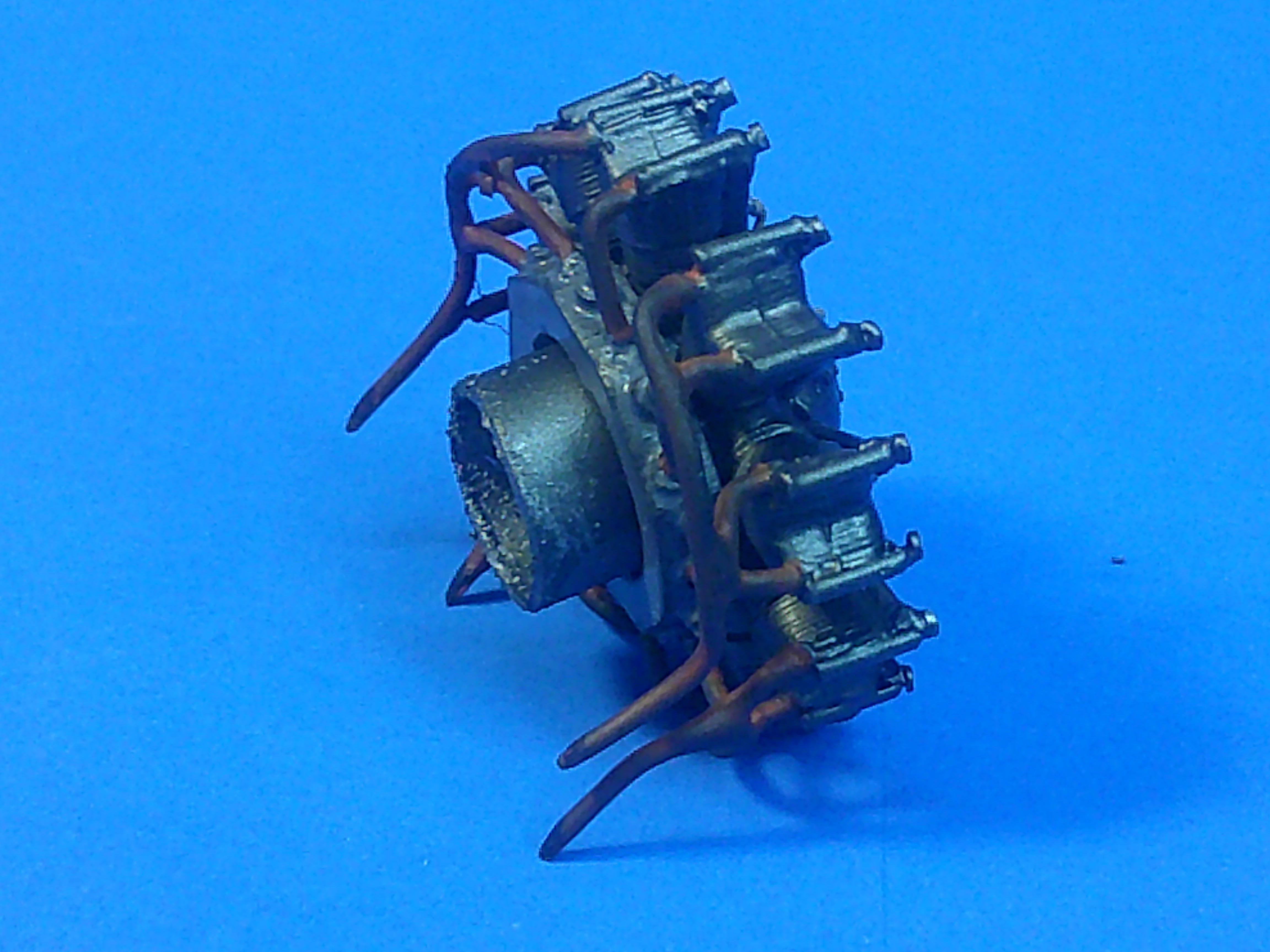
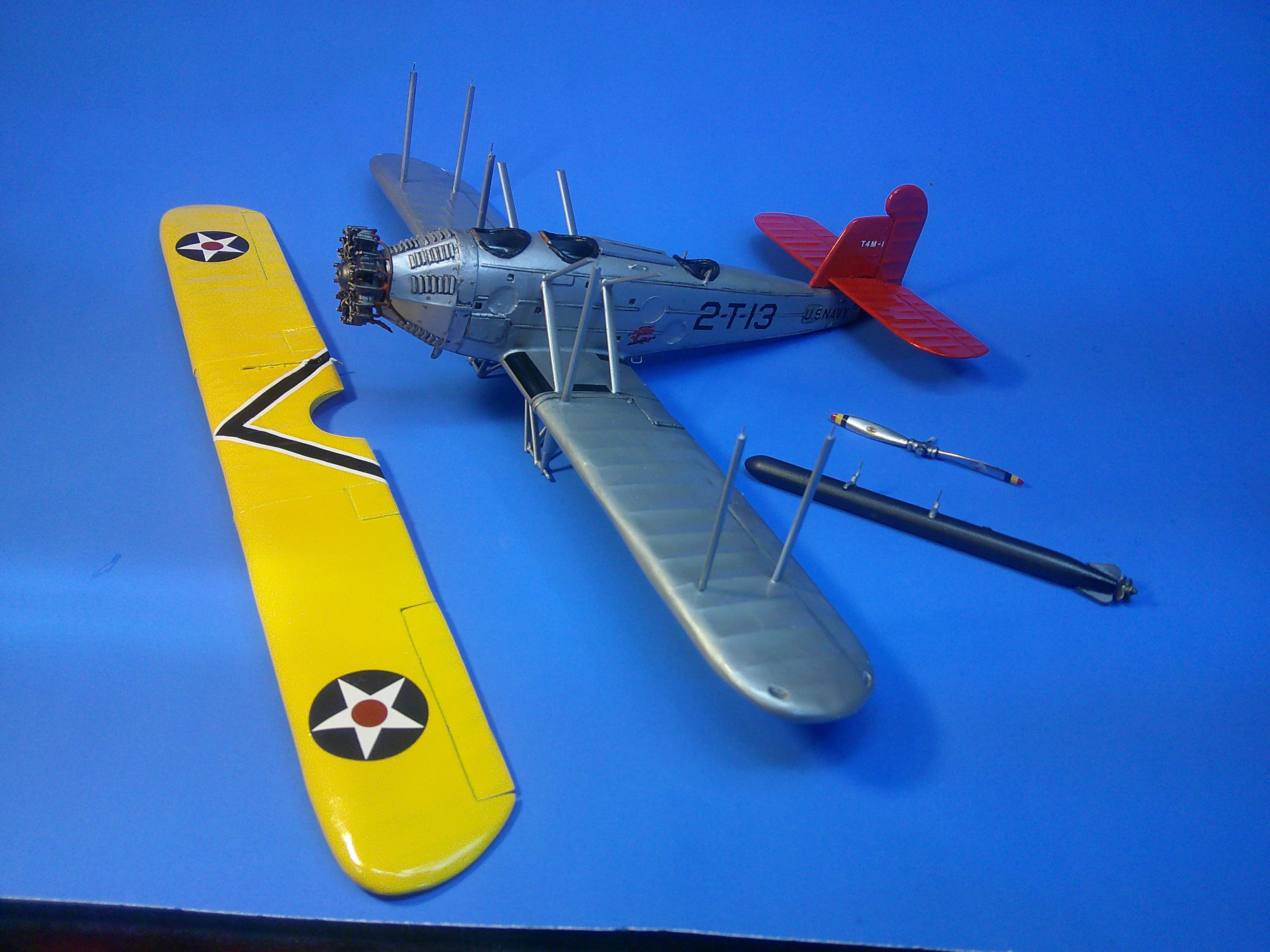
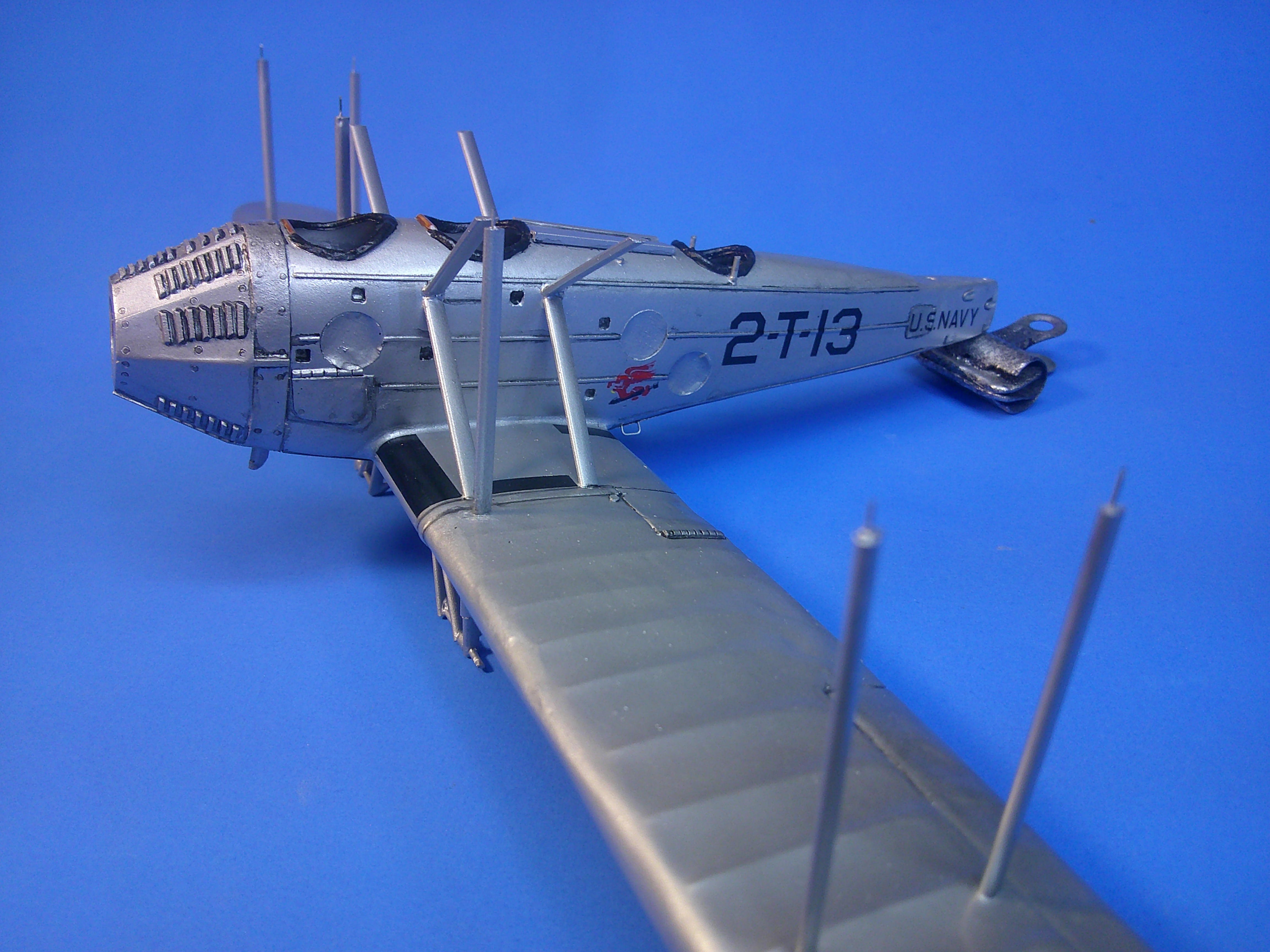
The paint and decals are all on! Just of pic of the overall progress. The black part of the chevron was painted but the white trim stripes are decals. Note the wing walks, which will need individual flat coating. The fuselage codes were cobbled together from spare decals and I was even lucky enough to have the squadron insignia in there! The "T4M-1" was added using water-slide individual letter and number decals. The dash was made by cutting a #1 in half. Pics of the painted engine front and back minus its red cooling cover. The "sealing" gloss coat is on and drying. Next up is rigging! Gil
2 points
-
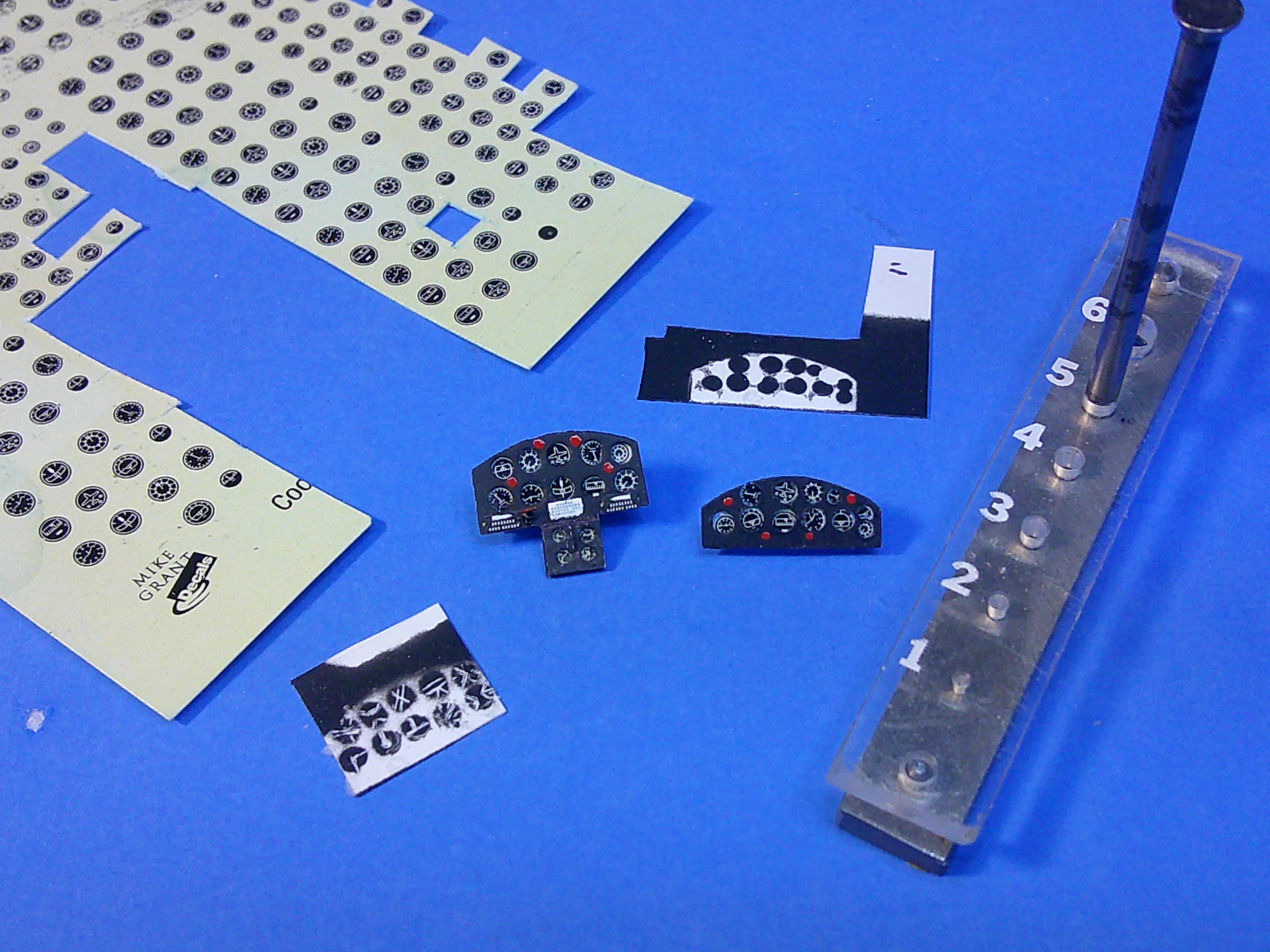
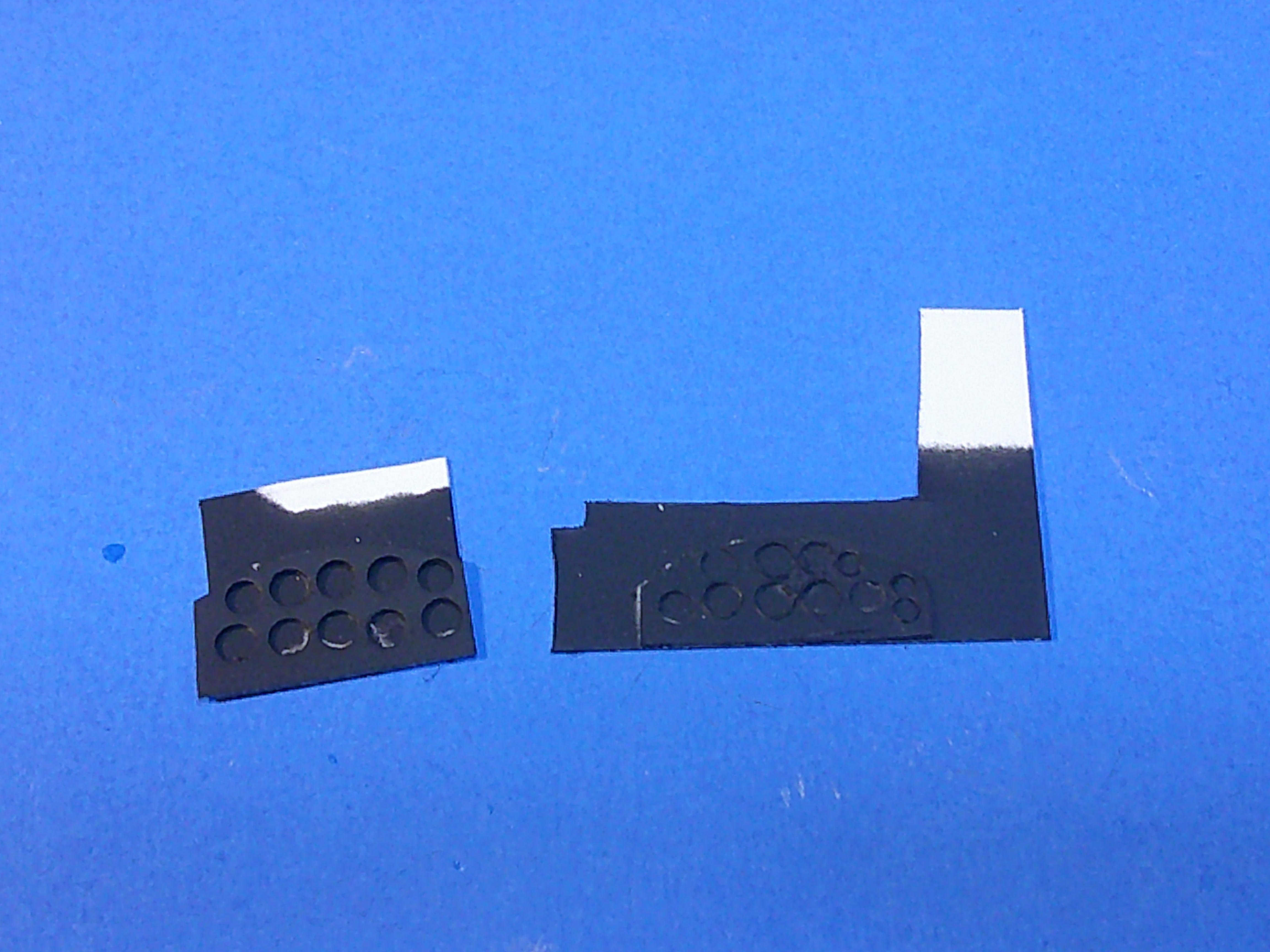
Main IPs are done (or as done as I'm gonna make 'em!).... I started by painting the IPs Tamiya flat black.... I then pried them apart so I could scratch off the markings on each painted black dial..... However! THAT didn't go as well as planned so I switched gears, dug out some Mike Grant instrument decals and punched out each individual instrument and white glued them onto the back of each panel. I then added some spare PE parts and some painted red buttons to finish them up. Interestingly, I believe using the spray can Tamiya flat black may have hindered my initial idea. The scratch-off dial method was originally developed using enamel paint back in the '70s and I think it actually scratches off easier than the Tamiya acrylic/lacquer paint. All I know is I was having more trouble scratching off the paint to make the dials than I have in the past and that's the only difference I could think of. Just file that away for future reference! No pics.... but I also got the interior frame and fuselage interior sides sprayed with their initial coat of metallic aluminum! Perhaps I might have the interior "done" and the fuselage glued together by the end of the week! Gil
2 points
-
I'm pronouncing "phase 1" of my scratchbuilt 1/48 Martin T4M-1 torpedo bomber as done! These pics show the wings, empennage, and landing gear mocked up with the balsa fuselage. I went this route reasoning "why bother vacking a fuselage if I couldn't build the rest"? Now I believe it's time for phase 2 and to turn my attention to the fuselage to determine what details need to be added before splitting it apart to be vacked. More pics after THAT's been done! Gil
2 points
-
Got the main landing gear built for the T4M-1 torpedo bomber. Each one consists of 11 pieces of airfoil strut, wire, and a small bit of tubing. More pics after I get the tail wheel built! Gil
2 points
-
I have a love of all things Battle of Midway, and I like building planes crewed by people I knew. This scratches both itches - this is Torpedo 3's T-3, flown by MACH Harry Corl and ARM2c Lloyd Childers. I got to know Lloyd through the Battle of Midway Roundtable, an on-line study group, and as it turned out he lived over in the LaMoraDa area (Lafayette/Moraga/Morinda - just through the Caldecott Tunnel here in the San Francisco Bay Area). His favorite restaurant was Acapulco, a Mexican place in my hometown of Alameda! Not only did Lloyd enjoy homey Mexican places, he happened to be the only rear-seater in Torpedo 3 to attack the Japanese Mobile Fleet (Kido Butai) at Midway and live to tell about it. I wrote his story for the December 2005 issue of Flight Journal Magazine (you can read an updated version at https://obscureco.wordpress.com/2026/01 ... or-in-172/), but I dilly-dallied on building the TBD, maybe because I was hoping a new AND accurate kit would come out in 1:72. Alas, no (not yet, at least). I'm working on a Midway display at the USS Hornet Sea, Air and Space Museum, and I took on the TBD; I had collected as many TBD models and parts as I could over the years, so I thought I'd be best to tackle it. So here it is. The basic airframe is Airfix, with the rivets NEARLY sanded all the way off, and some scribing lines added. The interior is mostly the White Ensign photoetched set, with the seats, bombardier/second pilots side consoles and radioman gunner's floor taken from the Valom kit, which also contribute the torpedo, landing gear (cut to the right height), wheels and radio antenna mast. The instrument panel was scratch-built; belts came from photoetched parts intended for an SB2U Vindicator. The flexible .30-caliber gun is a Miniworld item modified with the right grips and the flash suppressor on the real thing. There's also the small windage sight on the barrel, made from a 1:700 photoetched anemometer. The clear parts are from a Falcon vacuformed set. There's a scratch-built set of radio gear under the turtledeck ahead of the radioman/gunner if you look hard enough. In the bombardier/co-pilot's seat is a scratch-made life raft. Lloyd told me that standard operating procedure on torpedo missions was to remove the Norden bombsight (in a compartment under the pilot, which the bombadier was crawl into, and then open a set of doors just behind the cowling to sight) and to take the life raft out of its compartment and belt it into the unused seat, where it could be accessed easily in the event of ditching. In the case of T-3, the engine had thrown so much oil Corl couldn't get the rear canopy open, and they had to swim for it (Corl dragged the badly wounded Childers to the safety of the whaleboat from USS Monaghan). It came out OK for a kit from 1969!
2 points
-
I had some Christmas money this year as well as a $100.00 Gift Card for Brookhurst that my SoCal AMPS group bought me. So I took them to Brookhurst Hobbies where I got a lot of glues, some putties, some blades and these: Time to restart my Maddog Manufacturing tours again!2 points
-
The end of the year has arrived and so now is the time to see all the finished models that came out of Maddog Manufacturing. It's been a long, but productive year and so this might have to be done in two parts. I also want to stress that several sets of models look a lot like others; I assure you they all have subtle differences and are not the same. I don't want people thinking that I'm padding my count. I took a lot of time and work to get to this and was determined to do so honestly. So, without further ado, let's sit back and watch the show. Here they are in no particular order: To start out with, I only completed two aircraft all this year. These are the two Testor's 1/72 scale B-2 Stealth Bombers; bringing my total 1/72 scale aircraft count to 500 completed aircraft: B-2 Spirit BuNo 21066; the original kit decals: The second B-2 Spirit BuNo 90127 "Spirit of Missouri" in honor of Bob Letterman. These are the 2006 IPMS Nationals decals: Next up, I did complete two Sci-Fi models in 2025. First is the Bandai 1/72 scale T.I.E. Interceptor: Followed by the Bandai 1/72 scale Millennium Falcon, complete with crew: Next up, the Shipyards have been launching a good number of ships and boats, this is probably a record for me when it comes to the number of ships completed in one year: First up: Trumpeter 1/700 scale HMS Westminster Type 23 Frigate: Followed by the Pit Road 1/700 scale USS John C Butler destroyer escort: Another Butler class DE, the Pit Road 1/700 scale USS Doyle C Barnes: Next is the Pit Road 1/700 scale USS Fletcher, late class: And another Fletcher-class destroyer the Pit Road 1/700 scale USS McCord: Back to the Royal Navy with the Airfix 1/600 scale HMS Tiger: The next one is the Trumpeter 1/700 scale USS Mount Whitney Command and Control ship: Followed by the Trumpeter 1/700 scale French battleship Jean Bart, 1955 fit: Another Trumpeter kit, the 1/700 scale German Aircraft Carrier Peter Strasser: Next is the Hasegawa 1/700 scale Japanese cruise liner Hikawa Maru: Last but not least, the Trumpeter 1/72 scale US Marine LCAC: [IMG"]https://modelersalliance.org/galleries/us-marine-lcac-ii-jpg.132070/full[/IMG] Now for an additional miscellaneous model I finished up. Here's a Pola HO/OO scale Gazebo I finished up: Moving on from here we have a serious number of civilian and military vehicles all in 1/72 scale that allowed me to achieve the 1000 finished vehicle kits milestone. Here they are in no particular order.... A few softskins first, this is the ESCI 1/72 scale German Opel Fuel Truck: Another ancient ESCI 1/72 scale German Schwimmwagen: Next my Canadians got a few new vehicles: IBG 1/72 scale Chevy CWT 15 Fuel truck: IBG 1/72 scale Chevy CWT 15 Troop Carrier: ESCI 1/72 scale Canadian M-3 White Scout car: ESCI 1/72 scale Canadian Morris Quad with 25lb Gun: ACE 1/72 scale French VBL with Milan AT missile: Trumpeter 1/72 scale early German SdKfz 9 with crane: Another Trumpeter 1/72 scale, a late German SdKfz 9 with crane: IBG 1/72 scale Italian Lance 3Ro cargo truck: IBG 1/72 scale Italian 3Ro Truck with 100mm Gun: width="800px" height="576px"https://modelersalliance.org/galleries/italian-lance-3ro-with-100mm-howitzer-iii-jpg.131422/full[/IMG] IBG 1/72 scale Chevy CWT 15 all purpose truck RAF: Tiger Models 1/72 scale US Marine M1240 MRAP: Hobby Boss 1/72 scale German Landwasserschlepper: IBG 1/72 scale German Maultier halftrack: ESCI 1/72 scale Opel Ambulance: ESCI 1/72 scale German LKW 3-ton Truck: Attack 1/72 scale German Tatra T-111 cargo truck: PST 1/72 scale Russian Zis-42 Halftrack: PST 1/72 scale Russian Zis-42M Halftrack: ZZ Models 1/72 scale Russian PRV-10 Radar System: ZZ Models 1/72 scale Russian P-15 Radar System: ZZ Models 1/72 scale Russian P-18 "Spoon Rest" Radar System: PST 1/72 scale Russian Zis-10 Tractor with trailer: PST 1/72 scale Russian Zis-5 cargo Truck: Dragon 1/72 scale British LRDG Chevy Gun Truck: Heller 1/72 scale US Army Chevy 2.5 ton Red Ball Express truck: Trumpeter 1/72 scale German Panzerjaegerwagen: Trumpeter 1/72 scale German FAUN SLT 56 Tank Transporter: Modelcollect 1/72 scale US Army MAN KAT 1014 Tank Transporter: Takom 1/72 scale Russian MAZ 537 Tank Transporter: Takom 1/72 scale C911 HET Tank Transporter: UM Models 1/72 scale US Army M35 with Mine Rollers: Master Box 1/72 scale WWI British Mk. I Male: And that's about all I can fit on this page, see the following post for the rest of the models I finished this year..... And now for part Two of the Duke’s Pass in Review. The soft skins were posted so now we’ll post the artillery and heavy metal! First off, Aoshima 1/72 scale Japanese Type 12 Anti-Ship Missile Truck: Armory 1/72 scale US Army MGM-56 Lance: Modelcollect 1/72 scale German Twin 128mm AA Gun: PST 1/72 scale Russian M30 120mm Howitzer: PST 1/72 scale Russian 37mm AA Gun Towed: German Selbstfahrlafette auf Fahrgestell VOMAG AA Gun: Modelcollect 1/72 scale US Army MAN Tractor with Cruise Missile TEL: Dragon 1/72 scale US Marine M142 HIMARS: Foreart 1/72 scale US Army M142 HIMARS: US Army Patriot PAC III: US Army M997 HEMMTT with TPY Radar: US Army THAAD: PST 1/72 scale Russian ISU-122 Assault Gun: PST 1/72 scale Russian KV-1S: PST 1/72 scale Russian KV-1C: Revell 1/72 scale Russian BTR-50PK APC: Academy 1/72 scale Australian M1A1 Abrams: Trumpeter 1/72 scale Canadian Leopard: ESCI 1/72 scale Canadian Churchill Mk.III: ESCI 1/72 scale Canadian M113 APC: Academy 1/72 scale British Challenger I Mk.III: Heller 1/72 scale French AMX-13 105: Dragon 1/72 scale Syrian Panzerjaeger IV L70 Dragon 1/72 scale Syrian Hummel: Takom 1/72 scale Iranian Chieftain: ESCI 1/72 scale Iranian M60 Patton: ACE 1/72 scale Egyptian BTR-50PK APC: Trumpeter 1/72 scale Egyptian SA-6 Gainful: ESCI 1/72 scale Italian Leopard 1A2: Riich Models 1/72 scale Italian M109A2 Paladin: Pegasus Hobbies 1/72 scale German Maus: ESCI 1/72 scale German M113 APC: ACE 1/72 scale Civilian Forlite Sedan: ACE 1/72 scale British Salamander Mk.6 Crash Tender: Hasegawa 1/72 scale Japanese Rosenbaur Panther 6x6 Crash Tender: And finally, we wrap this up with this: AMT Box Scale Budweiser Clydesdale Eight-Horse Hitch: And that completes my 2025 Pass in Review. Man, I need a hobby! LOL!2 points
-
Here's a sampling of some of my models from 2025. Different genres, different scales, some OOTB others conversions or detailed. All were fun and that's what it's all about.
2 points
-
As 2025 comes to a close here is a review of the eight builds completed over the last year. Four of these were commission builds. Three of them were larger projects that took up a lot of time to build to get the details correct for the clients. The first build of 2025 I built was Academy’s 1/48 PBJ-1D (B-25D). The scheme is the “The Fork-Tailed Devils” of VMB-433 for the U.S. Marines located on Emirau Island, New Guinea 1944. I added some resin seats as well as photo etch details to compliment the model. I had to scratch build the boarding ladders and many details in the nose. For a reference I used William Wolf’s “B-25 Mitchell – The ultimate look” book. This covers everything on the B-25 from drawing board to flying arsenal as well as all versions including the PBJ versions. You can see all the photos and details from start to finish in the build log at: https://davidsscalemodels.com/build-log/1-48-pbj-1d-b-25-mitchell/ The second build and the first commission build was of Trumpeter’s 1/25 scale American LaFrance Eagle Fire Pumper Fire Truck was for a client who trained and served as a volunteer fireman on this truck. This was the first time I built a fire truck and interesting build for me. The client also furnished many photos of the actual fire truck. I used some resin accessories from “Three Inches under” as well as scratch built many details like the fire hoses and nozzles, SCBA packs, and custom decals. Below are photos of the completed model as well as a short video of the model on a turntable. You can see all the photos, details, and final video from start to finish in the build log at: https://davidsscalemodels.com/build-log/1-25-american-lafrance-eagle-fire-truck/ The third build and second commission I replicated a 1922 Ford Model T Touring for a close friend whose father recently passed away. The car was his pride and joy as he spent many years restoring it. The problem is there were no 1922 Model T Touring kits available. So after doing some research I found two kits that I used to “kit bash” most of the parts and sections to replicate most of the vehicle and scratch built other specific parts for the 1922 Ford. I used multiple photos of the actual vehicle so it was easy to replicate. This was then mounted in a display case made by Grandpa’s Cabinets. The term “Kit Bash” is a modeling term where multiple parts from multiple kits are used to make a specific model. This was the first time I used the kit bash method to create a fantastic replica for this memorial project. You can see all the photos, details, and a video of the build in the build log at: https://davidsscalemodels.com/build-log/1-25-scale-1922-model-t-touring-car/ The fourth build I used an old kit made by Testors. Testors was known for doing some of the unique subjects over the years. This is their 1/32 scale H-43B Huskie helicopter. It was originally released in 1961 by Hawk Models and re-issued in 1967 to include Viet Nam Era parts. The version I built is the final release of the kit in 1998. I scratch built all of the interior details. The Kaman Aircraft H-43B Huskie is a very distinctive helicopter. It uses twin main intermeshing rotors. These were counter-rotating so a tail rotor was not required. It was first flown in 1953 and was in service until the early 1970’s. During the Viet Nam War it was utilized as an Air Rescue and Recovery helicopter which were part of the Pacific Air Rescue Center. You can see all the photos and details from start to finish in the build log at: https://davidsscalemodels.com/build-log/1-32-kaman-h-43b-huskie-helicopter/ The fifth build I went back to 1/48 World War II aircraft. This build was Tamiya’s 1/48 RAF Mustang III. I used Kagero Decals to replicate the aircraft flown by the Polish Pilot F/L Mieczystaw Gorzula of the 309 squadron based at RAF Andrews Field. This was the aircraft that F/L Gorzula shot down a Me-262 jet fighter on April 9th 1945. The build required some minor modifications to add the dorsal fillet in front of the tail and I did my usual of adding details. I enjoyed this build and am happy with the final results. I would recommend this kit to anyone who is looking to build the RAF version of the Mustang. You can see all the photos and details from start to finish in the build log at: https://davidsscalemodels.com/build-log/1-48-tamiya-raf-mustang-iii/ The sixth build and third commission build was done for a client who requests/schedules a build every year. He was a Harrier pilot for VMA-214 also known as the “Blacksheep”. For this build he requested a build of the famous F4U Corsair the Blacksheep flew and it is set in a diorama of a Pacific Island Airfield. The F4U I used was the 1/48 Tamiya F4U-1A Corsair which is mounted in a custom display case From Grandpa’s Cabinet’s featuring a typical island airfield with a Mini-Art Marston tarmac, a couple of rows of palm trees to line the back of the display, a background behind the trees of a beach/ocean view, and mounts that the client’s squadron patch and his name tag sit. I also used Eduard photo etch details to add to the realism. You can see all the photos and details from start to finish in the build log at: https://davidsscalemodels.com/build-log/1-48-f4u-1a-corsair/ The seventh build and last commission build was a fun little project. I built Hasegawa’s Space Shuttle Orbiter on the Boeing 747 Egg Plane! I built this for a friend who is a fan of the Egg planes. This will sit next to the SR-71 Egg Plane that I previously built for him. It only took a few days from start to finish. You can see all the build photos and details in the build log at: https://davidsscalemodels.com/build-log/shuttle-and-boeing-747-egg-plane/ The eighth and final build was Hasegawa’s 1/48 A-4M Skyhawk. The scheme was that of VMA-214 as they flew out of MCAS Iwakuni during the early 1980’s. I used Eduard’s photo etch set for detailing the aircraft. The scheme decals were a mix of kit decals and Cutting Edge’s A-4M Skyhawk Part 2 decal set. You can see all the photos and details from start to finish in the build log at: https://davidsscalemodels.com/build-log/1-48-a-4m-skyhawk-vma-214/ This has been a good year for some interesting builds. I am already planning and scheduling builds for 2026. Thank you all for following along – Happy Modeling! LINK to photos : https://davidsscalemodels.com/2025/12/27/davids-scale-models-2025-the-year-in-review/
2 points
-
And the final grouping.... 1/48 Wings vacuform O2U-1 Corsair with a scratchbuilt cockpit, replacement resin engine, and aftermarket Scarf ring and Lewis gun. 1/48 UMa AV-8B Harrier Plus II, OOTB. 1/144 Minicraft Boeing 727, OOTB. 1/32 Trumpeter P-51D Mustang with some 3D printed parts added. 1/48 Tamiya Ki-61 Tony, OOTB. 1/48 Monogram AV-8B Harrier with some 3D printed cockpit placards and a home-vacked windscreen to replace the cracked one in the kit. 1/32 Revell P-51D-5 with some 3D printed additions. 1/48 F-100C conversion built using the Cutting Edge resin set and a Monogram F-100D kit. All in all I'm happy with the year, especially considering almost 1/3 of the builds were not injection molded kits (4 resin and 3 vacs)! Here's wishing everyone a boatload of modeling FUN in 2026! Gil
2 points
-
Update #1 Ok here we go.. I do apologize for the delay but the mancave needed some attention.. 🙄 So I got the interior all painted up, installed and I went ahead and buttoned up the fuselage halves. One thing I did and it was my fault sort of speak. I wanted to drill out the side air vents just in front of the engine access panels and my hand started shaking. Before I knew it, I essentially removed the vent lol. I had a spare clear spure from a Tamiya Spit lying around and so I used both the fuselage lights and voila, I have side engine vents! Before I forget, the P-39N-5 had armored platting behind the pilots head instead of the armored glass and the sole pic of the aircraft that I'm doing had the platting installed. Not sure why Hasegawa raised the main fuel caps(one on each side) on the wings but they did. It took a bit but I sanded the one cap rim down and I'm pleased on how it looks. It's not 100% accurate but at least its flush with the wing! One down, one to go.. Now it's time to start cleaning up the seams and rescribing the panel lines if need be. YAY Glad to be back at my happy place! Happy Modeling, Mike
2 points
-
The fourth week of the A-4M I worked on getting the base coat of paint applied and also worked on more details on the aircraft. The guns mounted at the wing root leading edge were detailed with photo etch and installed. The refueling probe was painted and installed, and the wing leading edge slats were installed in their extended position. I decided to paint the tail rather than applying the kit decals. This was because the details on the rudder would make it difficult to lay down the full decal. The aftermarket decal set gives you just the white stars which would be easier to apply. I also assembled and painted the drop tanks. The upcoming week I will start applying the numerous decals. Once these are done I need to detail the canopy, mount the HUD, install the light lenses and drop tanks to complete the model before the Holidays. You can see all the photos and details from the start in the build log at: https://davidsscalemodels.com/build-log/1-48-a-4m-skyhawk-vma-214/2 points
-
Thanks for following this WIP , it's quite appreciated LINDBERG KNIGHT TWISTER (NOV 26th) ..Today ,I completed the sanding and apply a coat of primer !! If you like to view the complete WIP of this project , just follow this Google link : https://photos.app.goo.gl/PHiSWZwEPTxCbNr77 If you are curious and like to view the 1/48 civils aircrafts I have build so far , just follow this Google link: https://photos.app.goo.gl/R5EibRLDyihRmC6i6 Hope youl'le enjoy the project Jmarc
2 points
-
Started and finished in the same calendar year! This is the Special Hobby kit, which is the basis of a bunch of Griffon-powered Spitfire kits. I took off the Seafire-specific features (the RATO attachments, primarily) and detailed the cockpit with Special Hobby's own photoetched set, plus a Barracuda Studios control column. The exhausts are from Quickboost and the wheels and from Barracuda Studios. I used the kit decals to build Roy Cruickshank's N0. 91 Squadron aircraft in which he was shot down by flak on April 10, 1945; he and his wingman were rescued by a USAAF OA-10 Catalina. Only 120 Mk. 21s were built - it debuted the new laminar flow wing, full wheel covers and a retractable tail wheel. The paints were ModelMaster dark green and ocean grey, with Floquil medium sea grey, all from my Museum of Extinct Paints (aka Evidence I Used to Habitually Overpurchase at the Hobby Shop). It was weathered with oils - I tried to keep it light since the plane didn't last more than three missions.
2 points
-
I still think you need to write up one of these step by step builds for a Journal article. Looking great so far. I've always on the lookout for Vacs as you can get kits of things no one else has ever done.2 points
-
FeR Dracula 1/12 posed in front of a photo of West Boylston's Old Stone Church edited in Lightroom to change it from daylight to nighttime.
2 points
-
This is the 1/48 CollectAire resin F3D Skynight which I built as a Marine EF-10B. I bought the kit second handed with the fuselage already assembled. Unfortunately there were very large gaps (which I filled with strip plastic and superglue) and the original builder didn't add any (or enough) nose weight so I had to add a clear plastic tail prop to keep it on its gear. Otherwise it's a 10 day "quickie" OOTB build just to diminish the stash. The markings are from the kit and I do like the Playboy bunny on the tail fin! On to the rest of the pics! This gives me a gray and white Skynight to go with the all dark blue F3D I already had on the shelf. Questions, comments, and critiques welcome, as always! Gil
2 points
-
This is the brand new 1/48 UMA AV-8B Harrier II Plus, and I believe the first subject from this new company. While I cannot make a definitive statement to its accuracy, I can say that it seems UMA went the extra mile to try to present as accurate a kit of the most modernized Harrier that they could and they include a lot of options for the builder. The fit is excellent for the most part and the engineering breakdown of the parts works very well. Kit options include 2 different 1-piece engine intakes (one with open bleed air doors and the other with them all closed), clear canopies with and without the det cord embedded, optional up or down flaps, gun/ammo pod or strakes for the bottom, and full or depleted chaff/flare dispensers. The cockpit can be built 3 different ways as the kit provides traditional side consoles and a main panel with molded in details that can either be painted or have the appropriate water-slide decal applied over them; but also includes smooth surfaced side consoles and main panels designed to have the included 3D printed color cockpit decals applied to them. The kit also has a very small set of PE parts (without frets!), masks for the clear parts/wheels/engine intake, and polycaps for securing the tail planes and engine exhaust nozzles. Decals are provided for 3 Harriers, all belonging to the Blacksheep of VMF-214. The decals are some of the best I've used with minimal clear edges and in some cases no clear interior connectors, making it a challenge to apply some of the smaller stencils. On to the rest of the pics! These are the main subassemblies.... there are plenty of inserts for them but they fit very well. All of the parts seen here practically "click" together and all along natural fuselage seams. I needed no filler on any part of the kit. If you're looking to do a modern AV-8B.... this may be the kit for you! Critiques, comments and questions welcome as always! Gil
2 points
-
Thanks for following this WIP , it's quite appreciated LINDBERG KNIGHT TWISTER (OCT 24th) ..Today ,I gave a coat of primeur on the fuselage !! LINDBERG KNIGHT TWISTER RACER (OCT 24th ) Today I completed the work on the exhaust If you like to view the complete WIP of this project , just follow this Google link : https://photos.app.goo.gl/PHiSWZwEPTxCbNr77 If you are curious and like to view the 1/48 civils aircrafts I have build so far , just follow this Google link: https://photos.app.goo.gl/R5EibRLDyihRmC6i6 Hope youl'le enjoy the project Jmarc
2 points
-
I would hope it would be relatively straight forward to set an appropriate 'cadence' to the slide show presentation, since the amount of time allowed for the banquet is "known". Regarding entry into the banquet hall is more the function of the concession staff than anything else. If it is set to start at 'x' time, then the staff is geared to that and it is *not* flexible. Each NATS has a 'lessons learned' document. As such, I'd suspect much actual documented experience is there for the 'taking' and for analysis by a working group, best by those with direct experience running and organizing the 'banquet/awards ceremony' part of the conventions, in cohots with other stakeholders such as those from the 'end user' side of the events. Due to the constraints, time, financial and otherwise, that are involved, this is not something that comes off well if attempted as 'AD HOC' in any way. Keeping to the set schedule is probably key since that little Schedule sheet we all get is what is expected. In short, the Schedule should be 'the last word'. Whenever a deviation becomes likely, it should be treated very seriously and with a plan in place (such as those folks that had to retrieve their models early, there was a process in place to support them) to deal with an 'unplanned deviation in a planned manner'. Although ancedotal, awards placement, in which I personally participated for the first time, seemed to take longer than an hour, but not longer than two, so that is close. It was pretty well organized with perhaps the only critique I'd offer being the 'lists' seemed to not quite match the categories as they were physically arranged, so you couldn't just walk the aisles and have the list syncronized to same. It got done, but wasn't as smooth as I'd wish to see it. As the saying goes, the devil is in the details! Regardless of all the discussion here, the NATS did happen without any serious disaster or train wrecks happening, which is a testament to all the attendees and volunteers (yes, a major event pulled off by *volunteers*) who for the most part were very cooperative and supportive. After all, it was supposed to be fun! Kind Regards, Robert2 points
-
155mm self-propelled howitzer of South Africa done in acrylics. Kit by Takom in 1/35. This weapon platform features stabilizing hydraulics towards the front and at rear and is able to fire 2-4 HE rounds per minute at a range of 41.63 miles.
2 points
-
I decided to go back some 40+ years and re-visit some kits I had when in high school and got lost to the time of history when I went in the service 2 weeks after graduation. Re-purchased the kit and dove into the same Matilda kit I had back then rubber band tracks included! So here’s to the good ol’ days with yesterday’s kit using today’s techniques and supplies…
2 points
-
Got a bit more done after realigning the frame and radiator. Hood pieces are done with the exception of the louvers and some pins to hold it down. Headlights are on temporary and the fuel filler has been added to the left rear. This is a late '43 version of the ambulance when the filler was enlarged to make it easier and faster to fill the gas tank.
2 points
-
Hotels usually have a "food and drink" minimum that has little if anything to do with the individual room rate although it may affect any fees they charge for use of meeting/ball rooms. Usually the hotel's convention facilities are free if you guarantee a certain number of room nights. That being said about hotels, some convention centers do give a discount on facility charges that can be tied to a group's "food and drink" usage. In at least one case, the local convention authority gave a discount on the city's convention center if a certain number of local hotel room nights were used and they kept track of them. In short, every place is a little bit different.2 points
-
I know a number of people on this thread can remember the banquets from years past, the banquets for the last few years were HUGE improvements over our “slide show” days, so continuing updating and improving is not an issue with me. That said I think there is an unequal divide concerning perceptions of the awards show, between those that regularly go to the banquet and those that don’t. I have always gone to the banquet, it’s part of the convention for me, I could care less how long it goes as I have no plans after except going to the contest room for a bit and then maybe the bar and then my room. Sitting, eating, seeing models I may have missed and talking with both old and new friends has never been a problem for me. I believe it was mentioned that next year Fort Wayne will not have a banquet, OK, but it was also mentioned that it will not be the norm for every convention. While FW doesn’t have a requirement for a banquet in order to get a much better rate on the rooms we need for the vendors and content rooms that will not always be the case, eliminating some sort of banquet is probably not in the cards, but keeping it relevant so it will be well attended and satisfy the requirements is. It seems to me that the banquet is attended by a large percentage of longer term members, and those that attend the entire convention, not exclusively, just mostly. It would be interesting to me anyway to see the difference of opinions between those that go to the banquet and those that don’t, and/or go to a “telecast” version of the awards show. It seems to me the perspectives are different. The answers will certainly be a trial and error process, and tweak along the way, however with the requirements of some sort of dinner maybe the solution is something completely different (to quote Monty Python) like a banquet on a different night with a different presentation, geared to new/continuing members. Congratulations to Hampton on a great convention, they deserve it. For the record, my main critiques of the banquet would be adherence to the posted schedule, the speed of the slide show being too fast and no screens for the people not facing the front of the room, for what it may be worth.2 points
-
I thought the awards were put on the table during the banquet and that's why the room is closed, is that incorrect?2 points
-
I also want to thank Scott and Joe for jumping in to let us know that members of the Eboard, and particularly those who are involved in shaping the Nats, are paying attention and making notes. However.... NO ONE is asking to go back to a 4hr awards program. Valid complaints about what was done THIS year are NOT expressions of desire to return to that rut. I find THAT comment to be derisive and dismissive of the problems that have been pointed out. It's also very dismissive and condescending to say that the problems that have been pointed out aren't "real" problems because the "majority" of attendees haven't complained. There's any number of reasons why you don't hear from dis-satisfied attendees, especially if they're so po'd they want nothing more to do with things. What's missing above is WHY the schedule was not stuck to and WHY banquet attendees were kept out of the room for at least 30mins longer than needed. The fact the awards pics ran faster than planned did NOT prevent them from being run again at 7:30. And keep in mind that THAT lack of their being re-run is what caused the people to think that the awards were over and the contest room SHOULD be open. Who can blame them for pounding on the doors? I'm just glad that (for once) there was a door guard with enough common sense to let them in! And whoever the local host was that felt they needed to go in and YELL at everyone to get out needs to reexamine their actions, as it did NOTHING to alleviate the situation or make the people who'd missed the awards ceremony happier! In fact, I think the ENTIRE IDEA of having the contest room closed until after the banquet is over needs to be rethought. Why do we do this? To prevent people from "knowing what won unless they attend the banquet"? I find that to be a VERY faulty line of thought! The majority of banquet attendees go for the social event that it is, not to get awards seats and especially not for the food! Most years it does gets you a seat for the awards, but more and more often it doesn't, especially with the live streaming nowadays. WHY are we trying to keep people out of the contest room until after the awards ceremony? Is it so that when everyone finally does get in they can wander around and see what won because the awards are beside the models? THAT can't be it because everyone immediately starts pulling the awards and models off the tables in a rush to get packed up! And even with the THREE extra hours provided to attendees this year that STILL happened! Is it to "provide security" and make sure no one steals models and/or awards? Frankly, that is actually impossible for any host to do! Although it has happened, the rarity of it is such that it's actually a "non-problem". Besides, IF the contest room doors were opened at 8pm whether or not the banquet and awards were over and some people started packing their models, what reason is there to think they're not just non-banquet attendees who want to get a jump on getting as much rest as possible before they leave the next day? Why are we to assume that people are trying to get in early for nefarious reasons? And last of all...... although it may be nice to have a "rule" or tradition of not letting people in until a certain time, IPMS has NO LEGAL RIGHT to prevent anyone from retrieving their own personal property if and when they say they need to do so. I suggest we start opening up the contest room at 8pm at every Nats unless someone can provide a valid concrete reason not to do so. I think that trying new ways to shorten the awards ceremony is the RIGHT way to go. It'll probably take a few tries to hit upon the new way to do things. I do think that there needs to be a recognition of at least the FIRST PLACE winners with a name announcement, but that's just my take on things. Nick (and others) have a VERY salient point in that THIS is the premier IPMS contest and investing SOME time and extra effort in the ceremony is justified. The efforts to streamline and shorten the ceremony shouldn't sacrifice all of the prestige of participating and winning at the Nats. In other words..... we should be looking for a shorter ceremony, but NOT the shortest possible! And lastly.... going forward.... although there will be no banquet next year, there WILL BE more going forward. Can we make it a standard policy that the banquet room is OPEN when the cash bar/social hour starts??? Yes, I realize that some venues require clearing a vendor room and resetting it for the banquet and that can make the timetable tighter than desired and the venue can run late (but Hampton DID NOT have that problem!).... BUT, absent THAT I cannot fathom ANY reason to keep people standing outside and then create a stampede for the tables when the doors are finally opened! Arrange with the banquet staff to have all of the tables set at an earlier time. Arrange for possibly needing to refill tea, coffee, and water a little more IF that's a concern for the venue. Remind them that their staff has to reach around people to serve the meals and having to do so to finish placing some items if they're running a bit late isn't going to bother the banquet attendees. If IPMS wants their "graying membership" to keep buying banquet tickets they need to avoid creating crowded situations where people have to stand for long periods of time.... especially at the end of a week walking the contest and vendor rooms and where most have already stretched their legs every day beyond their normal limits! Gil2 points