


Chris Bucholtz
-
Posts
335 -
Joined
-
Last visited
-
Days Won
55
5 Followers


Recent Profile Visitors
10,826 profile views




-
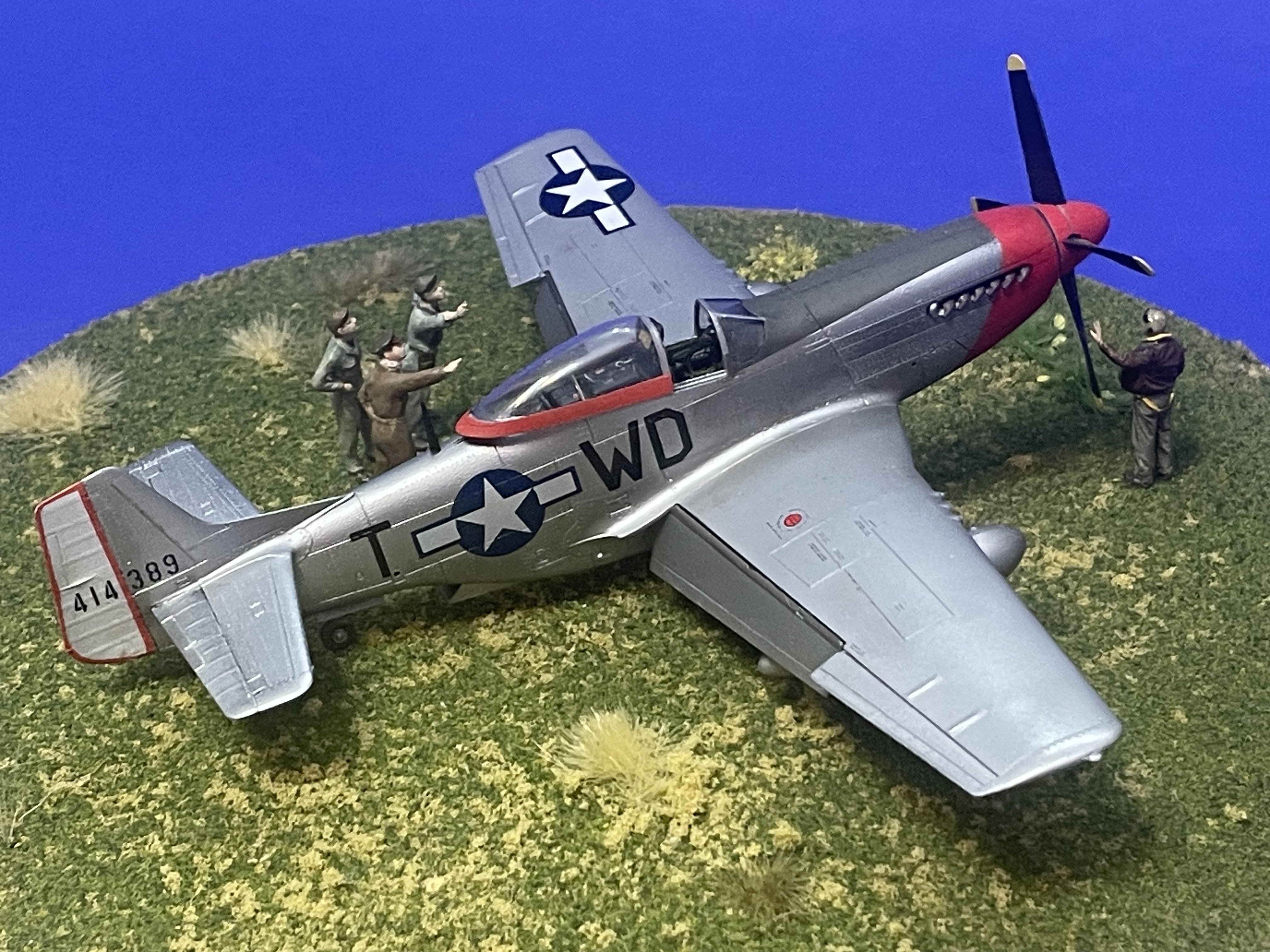
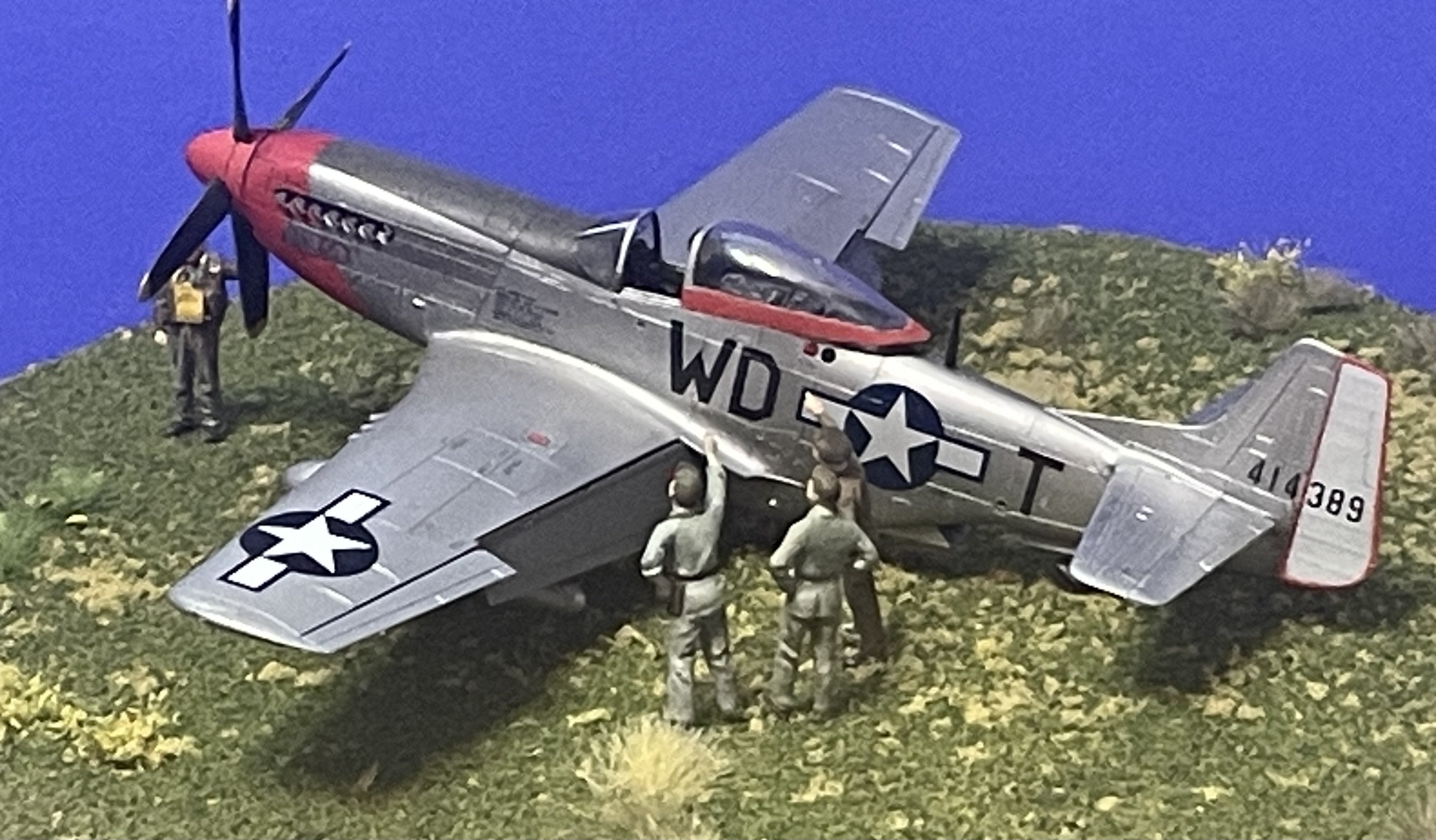
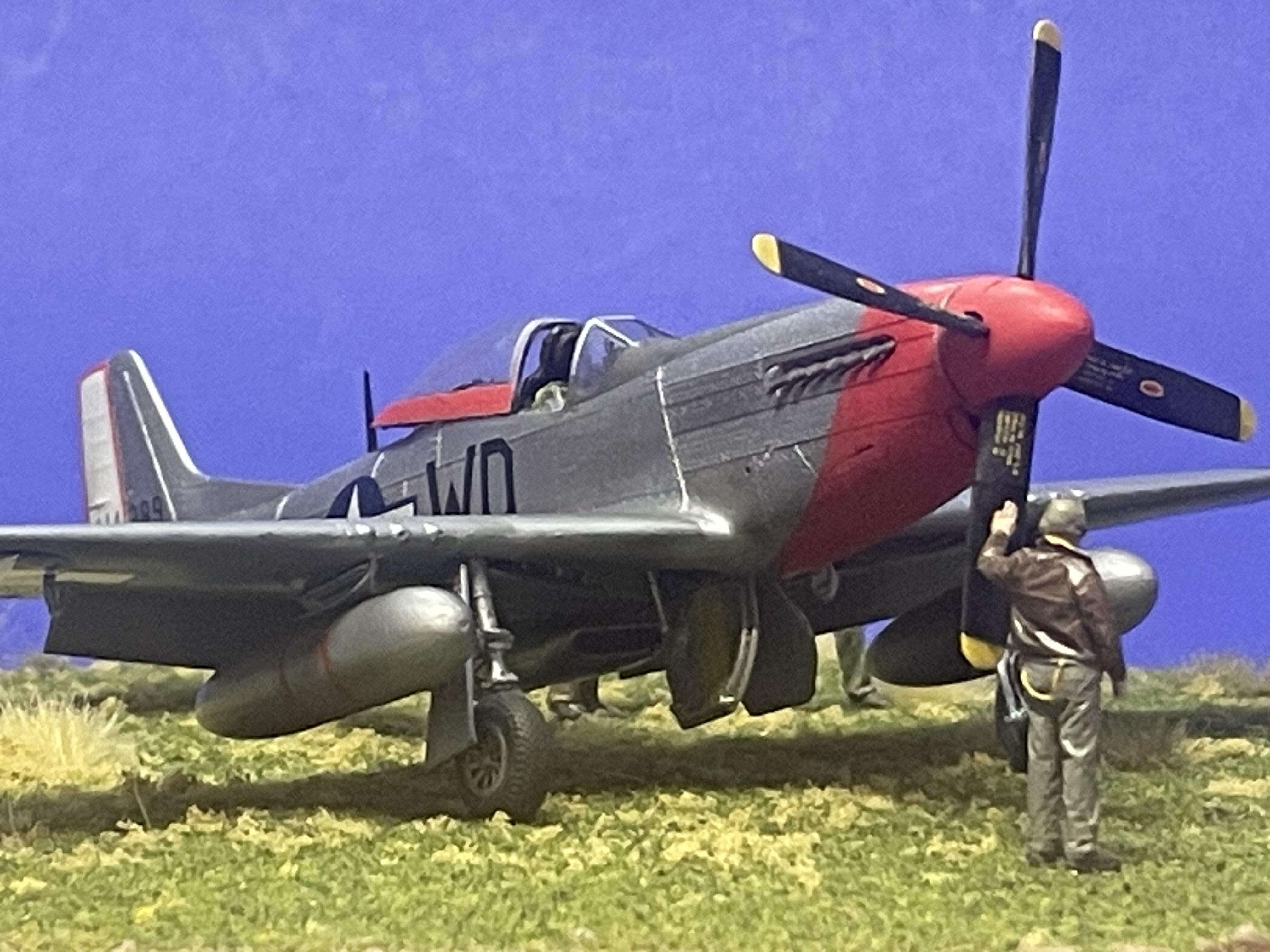
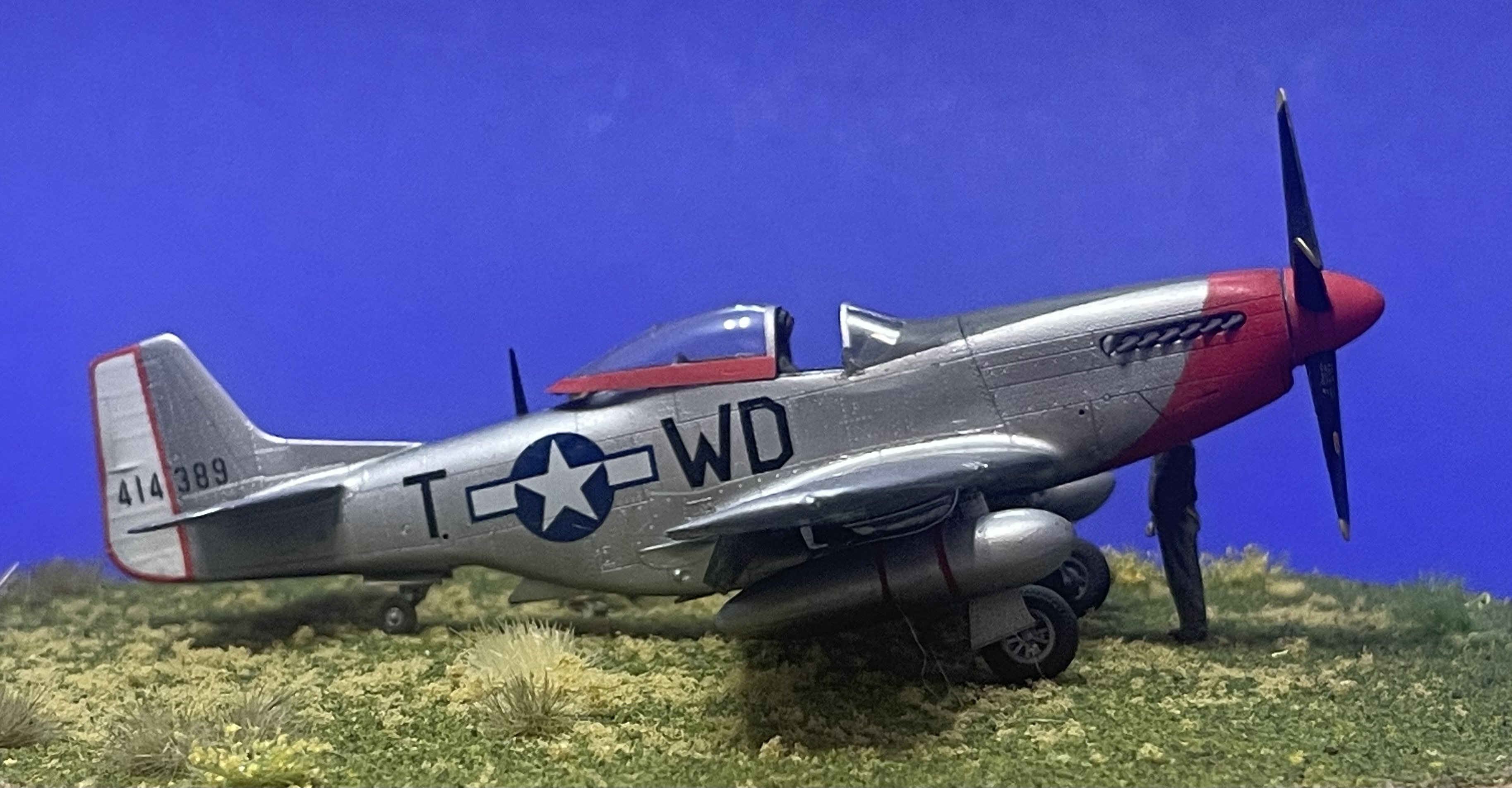
The Silicon Valley Scale Modelers had a contest called "Build Your Name." Unlike Frank Babbitt (who did a Ki-84) or Eugenie Ray (whose pre-marriage initials were E.T., hence her little spaceship), I had no obvious options. I built the plane flown by Robert C. Buchholz of the Fourth Fighter Group (you can read his full story here: https://obscureco.wordpress.com/2026/04/12/metronymic-mustang-building-lt-robert-buchholz-p-51d-10-from-the-eduard-172-kit/ ) who was not a close relation (although his name is spelled like my family's was before they immigrated from Hamburg in the 1880s). The Eduard kit is a step up in detail and accuracy from the Tamiya kit, but a step down in ease of construction. The surface is detail is... well, a bit overdone. Some areas of construction, like the instrument panel/rudder/windscreen, don't fit very well. The 108-gallon tanks in the kit don't fit particularly well; with Eduard's Brassin line, one could be cynical and say there was a reason for that. Different variants need you to scribe or fill lines; pay particular attention if you do a D-5 with a fillet. All that said, the cockpit looks great, they give you tank options we've never had before, and a bit of modeling is rewarded. I used True North paint for the red and white trim and Alclad II for the fuselage. The wings were puttied, sanded and painted with Floquil old silver.

-
I just learned this about four months ago, Ron. It's very helpful for getting clothes on figures to not be glossy. I probably saw this tip in the same place you did!
-
Terrific work, Gil! One question: how did you make the bottle cap? 🙂
-
Academy 1:72 PV-1 Ventura - "Eyes of the Empire Express"
Chris Bucholtz replied to Chris Bucholtz's topic in Aircraft
That's art applied at the factory. PV-1s were built at the Vega plant at El Segundo, and artists from Disney and Warner Brothers would come by and apply cartoons to the airframes during construction. Some featured well-known characters, others were one-off originals. This one features a palm tree and of course, the plane was set to the Aleutians. There are other cases with snowy scenes based in the Marshalls. 🙂 Here's the art Boris Ilchenko worked up, plus a shot of the plane with an unknown crew (not the Patteson crew).
-
Academy 1:72 PV-1 Ventura - "Eyes of the Empire Express"
Chris Bucholtz replied to Chris Bucholtz's topic in Aircraft
Pat passed away in 2024, unfortunately. He already had a model PV-1 built by Boris Ilchenko; Boris helped with this build. I have it documented on my blog: https://obscureco.wordpress.com/category/pv-1-ventura/ -
In 2022, I met Lewis "Pat" Patteson at the Spirit of '45 event in San Jose - at the time, a spry 102-year old. He kidded us that we didn't have the best plane of World War II on the table, the Lockheed Vega PV-1 Ventura. I asked how he came about that opinion, and he said he flew them. I'd met a guy who flew PV-1s from Attu in the Aleutians to the Kuriles in Japan, and Pat said, "I did that, too!" That evening I went home and hit my PV-1 references and found multiple references to Pat. He flew two dozen 1400-mile trips to Shimushu and Paramushiro in the Kuriles, including flying the crucial photo mission to survey Paramushiro's air bases. Pat and I got to be friendly and he shared his stories, gave me a mess of photos, and even gave me two VPB-135 patched (have to get a Navy G-1 to sew one on!).
-
Jan/Feb. has been out for a while, and March/April's at the printers.
-
I have a love of all things Battle of Midway, and I like building planes crewed by people I knew. This scratches both itches - this is Torpedo 3's T-3, flown by MACH Harry Corl and ARM2c Lloyd Childers. I got to know Lloyd through the Battle of Midway Roundtable, an on-line study group, and as it turned out he lived over in the LaMoraDa area (Lafayette/Moraga/Morinda - just through the Caldecott Tunnel here in the San Francisco Bay Area). His favorite restaurant was Acapulco, a Mexican place in my hometown of Alameda! Not only did Lloyd enjoy homey Mexican places, he happened to be the only rear-seater in Torpedo 3 to attack the Japanese Mobile Fleet (Kido Butai) at Midway and live to tell about it. I wrote his story for the December 2005 issue of Flight Journal Magazine (you can read an updated version at https://obscureco.wordpress.com/2026/01 ... or-in-172/), but I dilly-dallied on building the TBD, maybe because I was hoping a new AND accurate kit would come out in 1:72. Alas, no (not yet, at least). I'm working on a Midway display at the USS Hornet Sea, Air and Space Museum, and I took on the TBD; I had collected as many TBD models and parts as I could over the years, so I thought I'd be best to tackle it. So here it is. The basic airframe is Airfix, with the rivets NEARLY sanded all the way off, and some scribing lines added. The interior is mostly the White Ensign photoetched set, with the seats, bombardier/second pilots side consoles and radioman gunner's floor taken from the Valom kit, which also contribute the torpedo, landing gear (cut to the right height), wheels and radio antenna mast. The instrument panel was scratch-built; belts came from photoetched parts intended for an SB2U Vindicator. The flexible .30-caliber gun is a Miniworld item modified with the right grips and the flash suppressor on the real thing. There's also the small windage sight on the barrel, made from a 1:700 photoetched anemometer. The clear parts are from a Falcon vacuformed set. There's a scratch-built set of radio gear under the turtledeck ahead of the radioman/gunner if you look hard enough. In the bombardier/co-pilot's seat is a scratch-made life raft. Lloyd told me that standard operating procedure on torpedo missions was to remove the Norden bombsight (in a compartment under the pilot, which the bombadier was crawl into, and then open a set of doors just behind the cowling to sight) and to take the life raft out of its compartment and belt it into the unused seat, where it could be accessed easily in the event of ditching. In the case of T-3, the engine had thrown so much oil Corl couldn't get the rear canopy open, and they had to swim for it (Corl dragged the badly wounded Childers to the safety of the whaleboat from USS Monaghan). It came out OK for a kit from 1969!
-
This is the Muroc Models 1:72 kit of this weird test article, a glider used to verify the aerodynamic qualities of the JB-1A unmanned flying bomb (which flew for a total of five seconds when it was finally tested). Apparently, it didn't like slowing down - landing it was a challenge, and its landing gear was unsprung, giving it a suspension not unlike that of a shopping cart. I built it in three days - it's a simple kit, and I added detail to the cockpit, plus some nose weight so it sat right. The yellow is ModelMaster deep yellow.
- 1 reply
-
- 3
-

-
This year was pretty productive for me - partially because I went back to the shelf of doom and rescued a couple of projects! First, I finished up this Arma 1:72 P-51B, in the colors of my friend Woodie Spears' Mustang. Yes, he inherited Charles McGee's "Kitten" after it went through depot maintenance, where it received its fillet on the tail, and where depot personnel exposed the serial number on the tail by removing a patch of red on each side. Next came this 1:20 diorama of a Smilodon family in 1:20. All the cats were 3D printed; the cubs are modified modern lion cubs. The foreground cub, I came to learn, was commissioned originally to go with Franz Werra's Bf 109! Next, I converted a Monogram 1L72 F7F-3 into an F7F-3N, using Cobra Company parts and a bunch of scratch-building. This was the first F7F to score a victory in the Korean War. This is Airfix's early Hurricane Mk. I in 1:72, rescued after six or seven years on the shelf. The figures are Peddinghaus - 3D-printed of course. The plane depicted is George "Grumpy" Unwin's plane from the Battle of France; I made the serials on my printer since the Xtradecals sheet used the wrong font. Another shelf-of-doom escapee - IBG's CMP 1:72 C15 15cwt truck converted into a CMP C60L three-ton truck. Everything aft of the spare - and the entire frame - is scratch-built; wheels came from the IBG Holmes Breakdown kit. The cover is simply toilet tissue, cut to shape, wet with diluted white glue and painted when dry. And finally, Special Hobby's 1:72 Spitfire F. Mk. 21, with some Master Models cannon fairings and Barracuda wheels. This plane made it into World War II barely; this example was shot down strafing boats off the coast of Holland in April 1945, but the pilot was rescued. Six? Isn't that enough? 🙂
-
Filling and sanding - I don't think it required any re-scribing! My kit had a hairline fracture in the rear fixed transparency, and I couldn't get any response out of Special Hobby so I did the only logical thing: I bought their Seafire 47 and used the unnecessary part on the 21! When I build the 47, the RATO attachments will be left as-is!
-
Started and finished in the same calendar year! This is the Special Hobby kit, which is the basis of a bunch of Griffon-powered Spitfire kits. I took off the Seafire-specific features (the RATO attachments, primarily) and detailed the cockpit with Special Hobby's own photoetched set, plus a Barracuda Studios control column. The exhausts are from Quickboost and the wheels and from Barracuda Studios. I used the kit decals to build Roy Cruickshank's N0. 91 Squadron aircraft in which he was shot down by flak on April 10, 1945; he and his wingman were rescued by a USAAF OA-10 Catalina. Only 120 Mk. 21s were built - it debuted the new laminar flow wing, full wheel covers and a retractable tail wheel. The paints were ModelMaster dark green and ocean grey, with Floquil medium sea grey, all from my Museum of Extinct Paints (aka Evidence I Used to Habitually Overpurchase at the Hobby Shop). It was weathered with oils - I tried to keep it light since the plane didn't last more than three missions.
-
There is not enough pain in my life yet, so I'm looking for these kits to build. :) If you have either of these neat vacuform kits you'd like to part with, ping me at bucholtzc (at) aol (dot) com, please! I have plans for 'em. The Hall PH-3 is just a builder - it came up in my random selection process. The AT-10 is for an off the wall club contest called "Build Your Name." That's great if your name is Zeke or Kate, or Ray (Skyray!), or Arthur T. Stratofortress. In my case, there was no Japanese plane codenamed "Chris," and "Bucholtz" doesn't appear in any plane names, obviously. But "Bucholtz" means "Beech Wood" (actually, "Buchholz", as every hotel clerk at every hotel I have ever stayed at in Germany has pointed out). The AT-10 was an all-wood plane built by Beech - I think that would qualify nicely. If you happen to have one of these and your ambition has waned since you picked it up, let me know!
-
Chevrolet of Canada CMP C60L 3-ton Truck (No. 13 Cab) conversion
Chris Bucholtz replied to Chris Bucholtz's topic in Armor
"Can you give a little more detail on how you used the toilet tissue to make the canvas cover so convincing?" It's brutally simple, Nick. I had good photos of the cover on the real thing, so I cut two pieces - a front piece, for the cab-facing forward part of the cover, and another piece that covered the rest of the bed, with a slit in the back for the opening. It was a little like sewing, actually! I placed the pieced on the stays, and then applied a diluted white glue mixture carefully with a brush. I have a spray bottle I use for scenery with clear matte "dissolved" into solution, but if you don't use it for a couple of weeks much of the matte medium settles out, leaving a cloudy, watery solution on top. The weight of the water caused the tissue to droop with gravity into place. I carefully nudged the front piece into place, and arranged the rear opening the way I wanted it, and then left it overnight. About six hours later, it had dried tight as a drum. I painted it with slightly-thinned enamel (faded OD, ModelMaster). It's a technique I used when I built 1:32 armor as a kid - I had a lot of armor that was heavily overloaded with bedrolls, duffel bags, etc. made from tissue. I've seen ship builder use a similar approach for sails, so the cover on the truck seemed like a good application. It would also work well for tarps over stowage, tents, tablecloths, draperies, etc. For an far more amazing application of paper, ask Vladimir Vakubov about his CA-impregnated 1:700 3-inch gun shields. Good grief! -
I started this 11 years ago, but my cat got ahold of it and chewed apart the stretched chassis and ate the fuel tanks. The cat is still alive. It started as IBG's 15cwt C15A, and everything behind the spare is scratch-built. The larger wheels came from IBG's Holmes Breakdown kit; details from PART helped dress it up. Decals were pieced together from the Matchbox Monty's caravan, various 1:72 sheets, and the IBG sheet. The unit sign was made by trimming the corners off a Portuguese flag decal, with white "72" numbers swiped from the numbers jungle on the Airfix USAAF Bomber Service set's decal sheet. Something I learned was that, when the Commonwealth forces were ordered to paint the white star on their vehicles prior to the Normandy landings, many Canadian units applied the markings crooked to differentiate themselves from the Americans! (A good website for Canadian vehicle markings is https://www.canadiansoldiers.com/vehicles/markings/vehiclemarkings.htm.) Weathering included everything from oils to MIG pigments. The bed's cover was made from toilet tissue, and the stores in the bed came from Italeri, Academy, Prieser and my own scratch-building. Note the cases of beer back there - since it's a Canadian truck, I'm saying they're Elsinores.


.jpeg.7c40284f25acd8257cfe90b6e75a5724.jpeg)


.jpg.a52ab5632c72a161f4816160dd7815c3.jpg)

.jpg.bdb61f81e6e4d3498f587f448ca32877.jpg)
.jpg.3dd0b4369bb408a0030876e69c64de56.jpg)
.jpg.48569f331be4d86186bbef9e494c8fe9.jpg)
.jpg.b10a7cc9dcba9e9ce7b46a39f033a27b.jpg)


