
Ron Bell
-
Posts
2,109 -
Joined
-
Last visited
-
Days Won
249
Content Type
Profiles
Forums
Events
Everything posted by Ron Bell
-
I've read the minutes but no reason why is given. I'm not arguing, just asking.
-
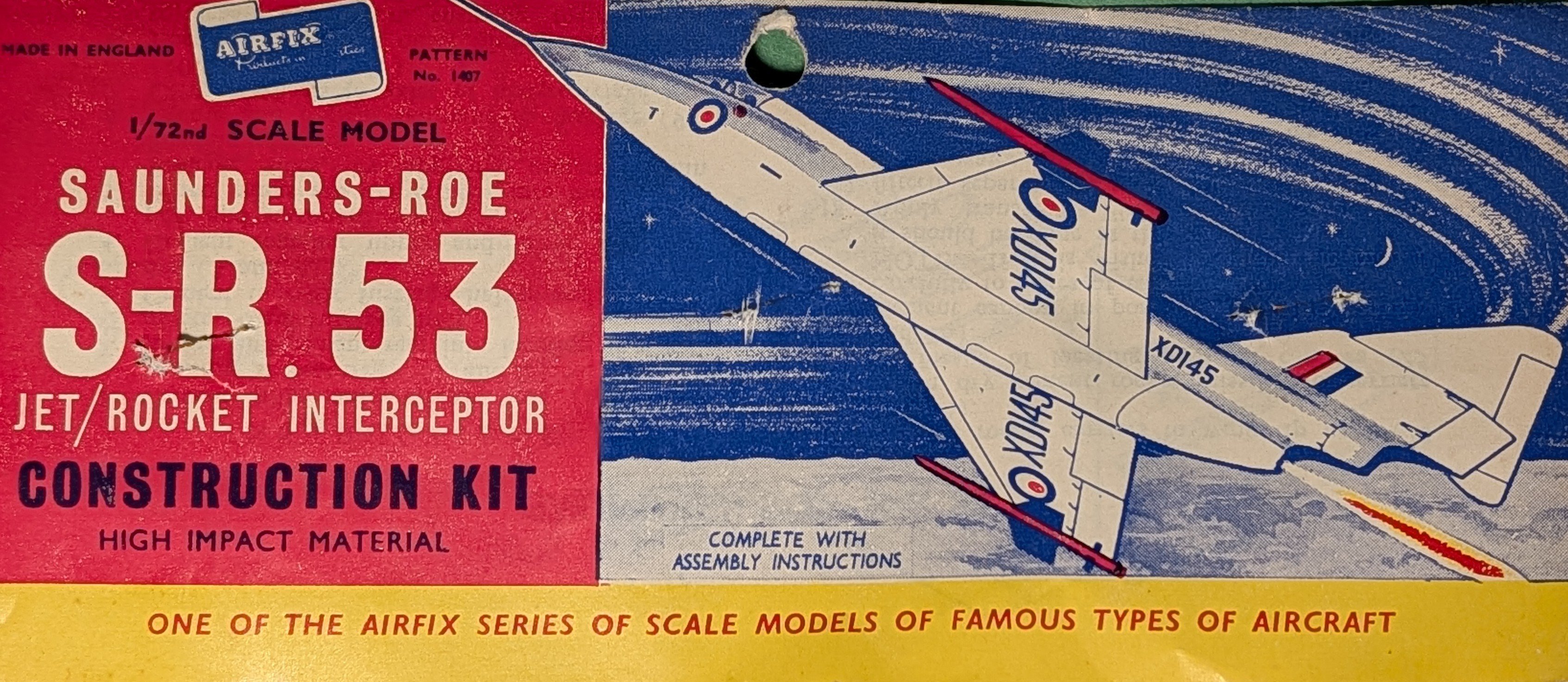
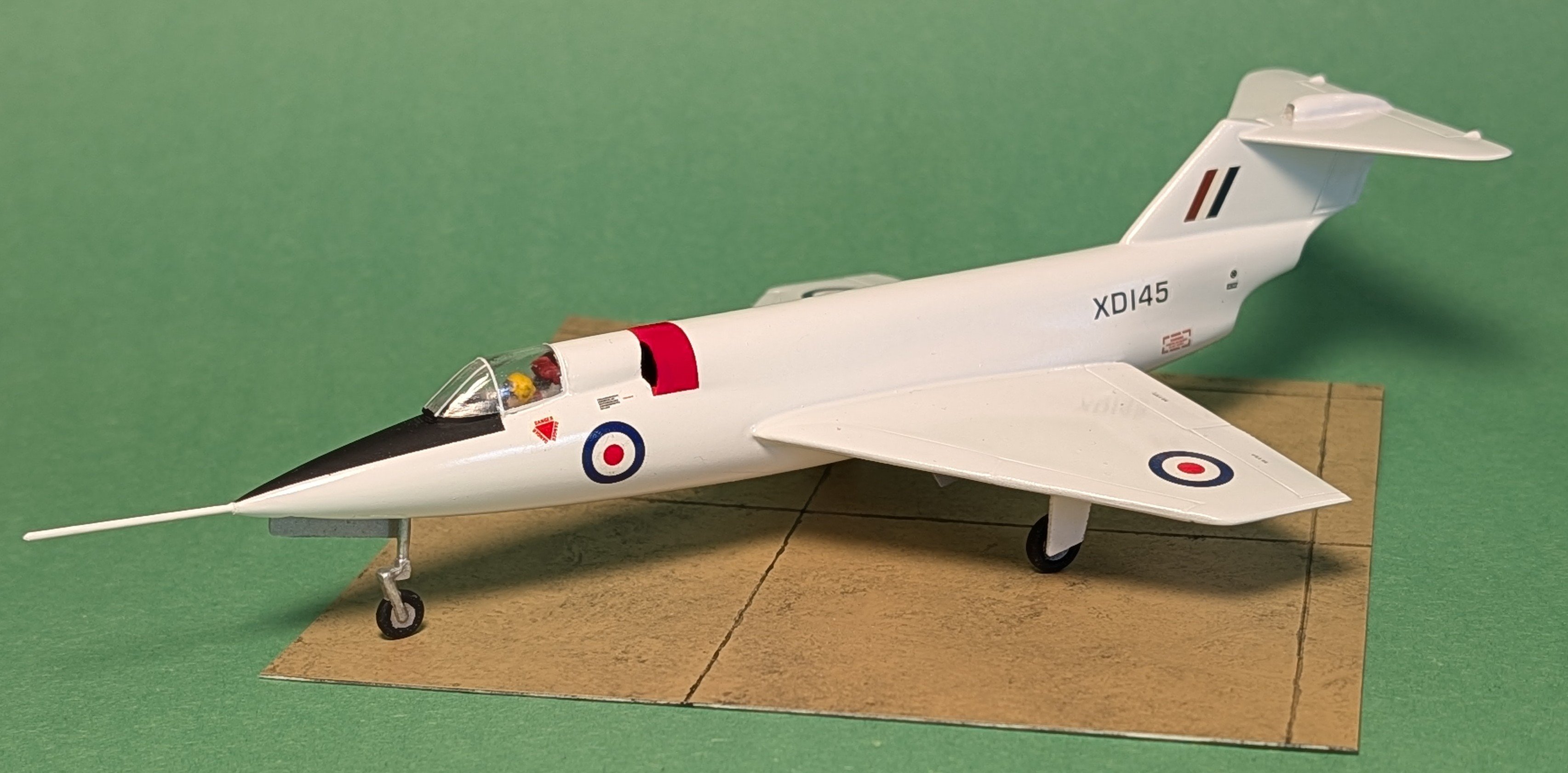
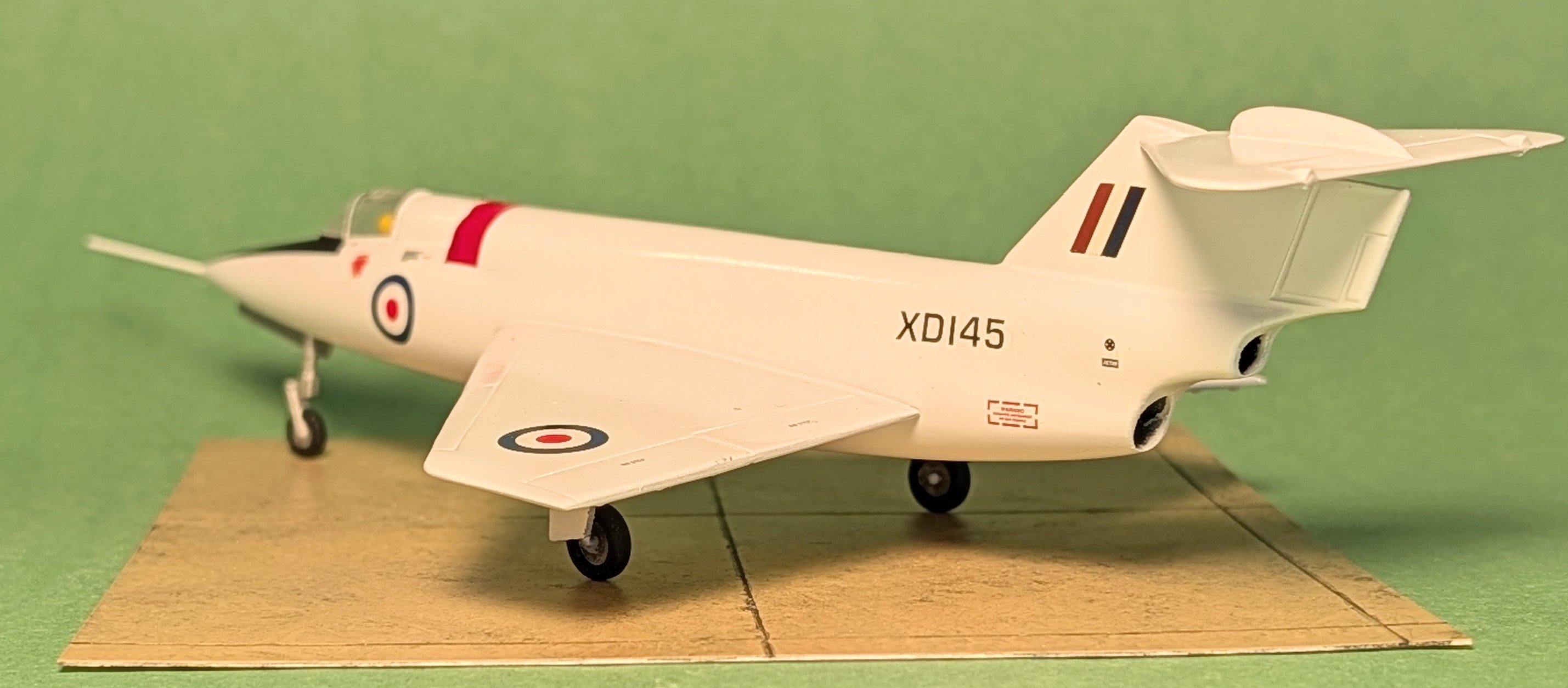
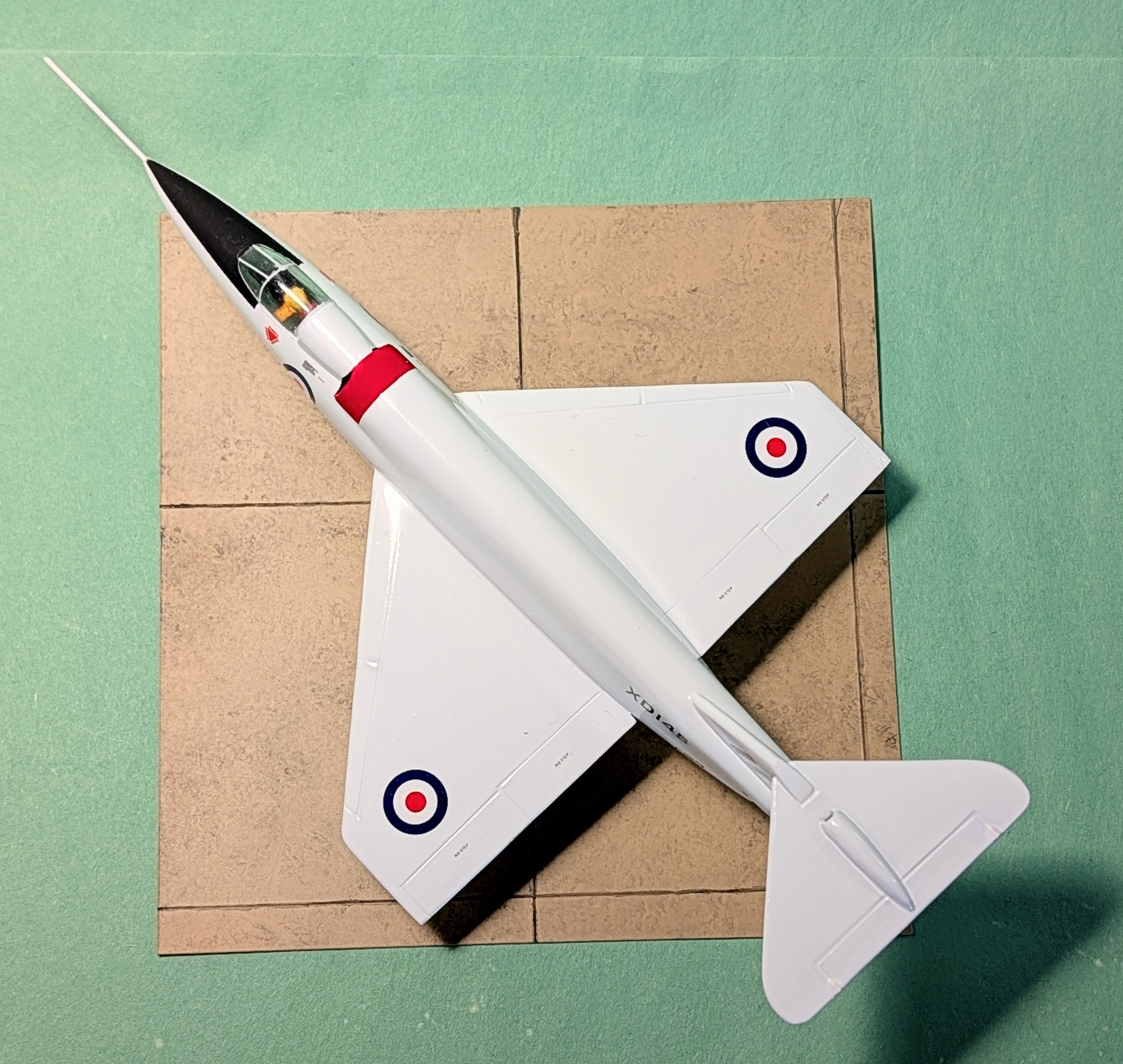
In the early 1950's the West was scrambling to develop an intercepter that could take out Russian bombers before they could nuke U.S. cities. At that time, the problem was that with the radar at hand at the time, the speed of the bombers and the climb rate of the aircraft then in service, the bombers would be over their targets before the intercepters got to their altitude. So, the search was on for an aircraft that could climb very fast to get up there to get the job done. However, none of the jet engines available had the power to do so fast enough so thought turned to using a rocket motor. But the rockets at that time did not have the staying power to last through an entire interception and not wanting to repeat the almost suicidal ME-153 concept, thoughts turned to a hybrid with the rocket motor providing the thrust to get the aircraft to altitude and then a second, jet, engine to power the aircraft through the interception and return flight. The US had several examples such as the F-91 Thunderceptor and this is the British answer to the question, the Saunders-Roe H-53. It was to be armed with the Firestreak missile carried on rails on the wing tips much like the U.S. Sidewinder often is. Despite the crash of one of the two prototypes, the aircraft proved to climb very fast and was maneuverable as well. However, more powerful jet engines and other new more capable aircraft designs were coming on line that made the concept un-necessary so the project, like those in the U.S, was cancelled. This kit dates from 1958 and was pretty primitive. It comes with two very chunky looking Firestreak missiles and since the aircraft was just a prototype I assumed they were either dummies or inert so I left them off. I just did it OOTB with extensive cleaning up including removing the trench-like panel lines one the fuselage but leaving the control surface ones. The pilot looked like the villain in the 1950's Sci Fi movie "Robot Monster" so I used one I got from the spares box. The decals were shot, so put some together from the spares box, cobbling together the serial numbers piece by piece from rub-on lettering. In the end, it produced a very pleasing looking aircraft I believe.

-
My congratulations to Ft. Wayne on a job well done. I have some experience with National Conventions on several levels and from what I saw it ran flawlessly. And even if there were flaws, the attendees didn't see them so that means they were handled well. As the Brits might say (sort of), "Well done, that man, Ft. Wayne".
-
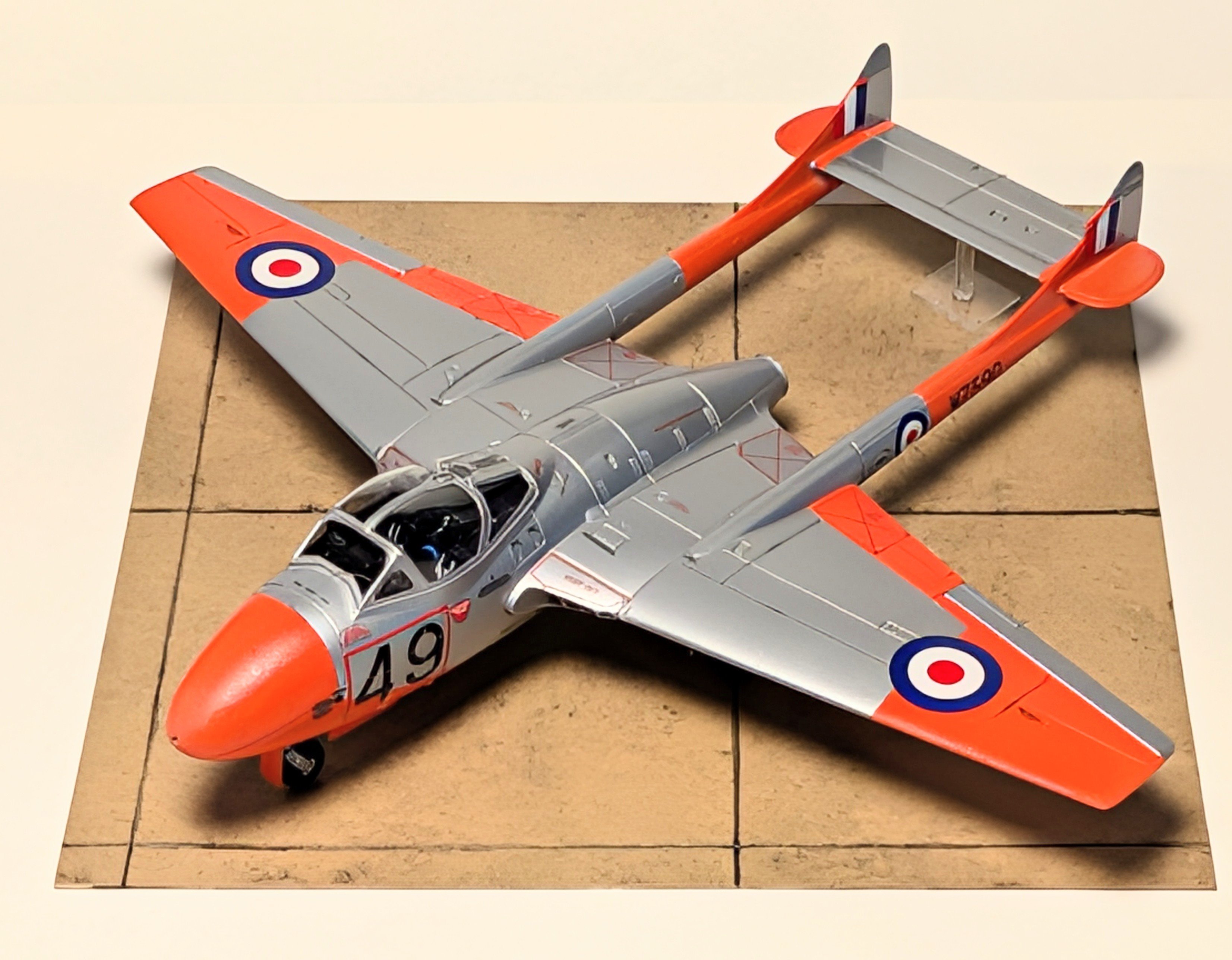
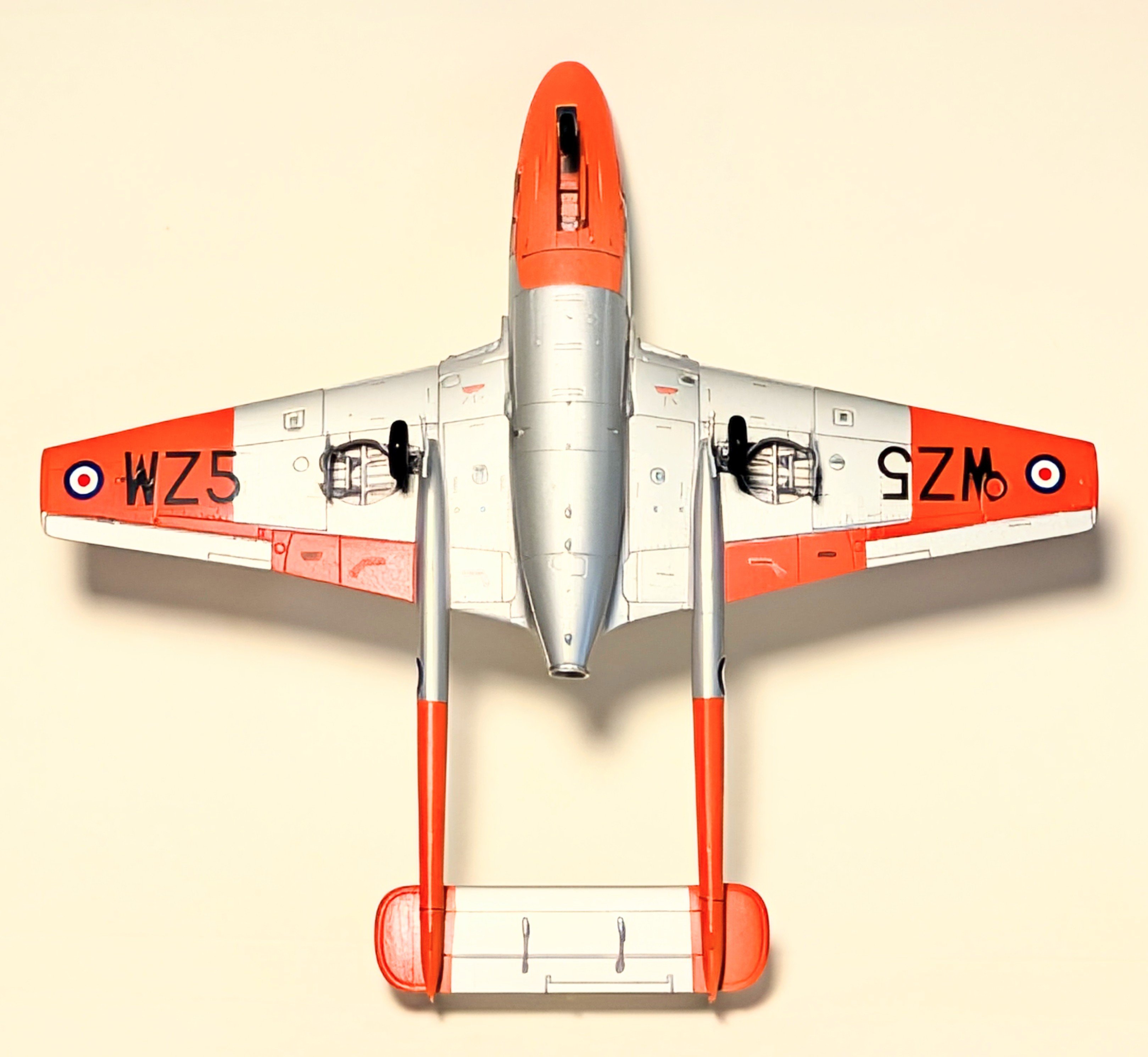
A friend gave me some models that a friend of his had already started. In this case, the center "pod" was together, the cockpit done and the canopy was in place. It sat on my shelf for a few months (years?), but being between projects, I dragged it out to fiddle with. One thing led to another and, voila, I got it finished. That's Tamiya AS-12 silver and Testers Florescent Orange. I used the Testers because I didn't have access to the Humbrol color that was called out and it was as close as I could get. It may be a little too light, but, meh, it's just going to sit on my shelf. After having done some of these new Airfix kits I have learned to go slowly, study the instructions and do what they tell you when they tell you. If you don't, well, bad things can happen. In this case the only really bad thing was the previous owner hadn't put any weight in the nose so it's a tail sitter, thus the clear plastic prop under the tail. This little bugger has somewhere north of 60 odd decals on it, some literally the size of a pin head. Tedious work, that. In the end, it turned out pretty nice I think.
-
Recently I airbrushed some Testers Fluorescent Orange paint and had something strange happen. While the paint went on well, as soon as I started spraying, gossamer strands were floating in the air all around me. At first I thought the moving air had stirred up some old cobwebs, but I noticed that they had a slight tint of color similar to what I was spraying. They didn't seem to be emanating from where I was spraying, they just sort of "appeared" all around me. They settled on things and did, indeed, look like cobwebs but were easily brushed away and did not leave any residue. Have I unleashed some portal to hell or can someone give me a more scientific explanation.
-
Ya know, it wasn't all that much work. Lot's of clean up, sure. Check for fit, yup an you need to think through the angle of the interplane struts (I used an angle gauge and made a cardboard jig). The fiddliest part, actually, was the three part landing gear. The rest was paint and washes.
-
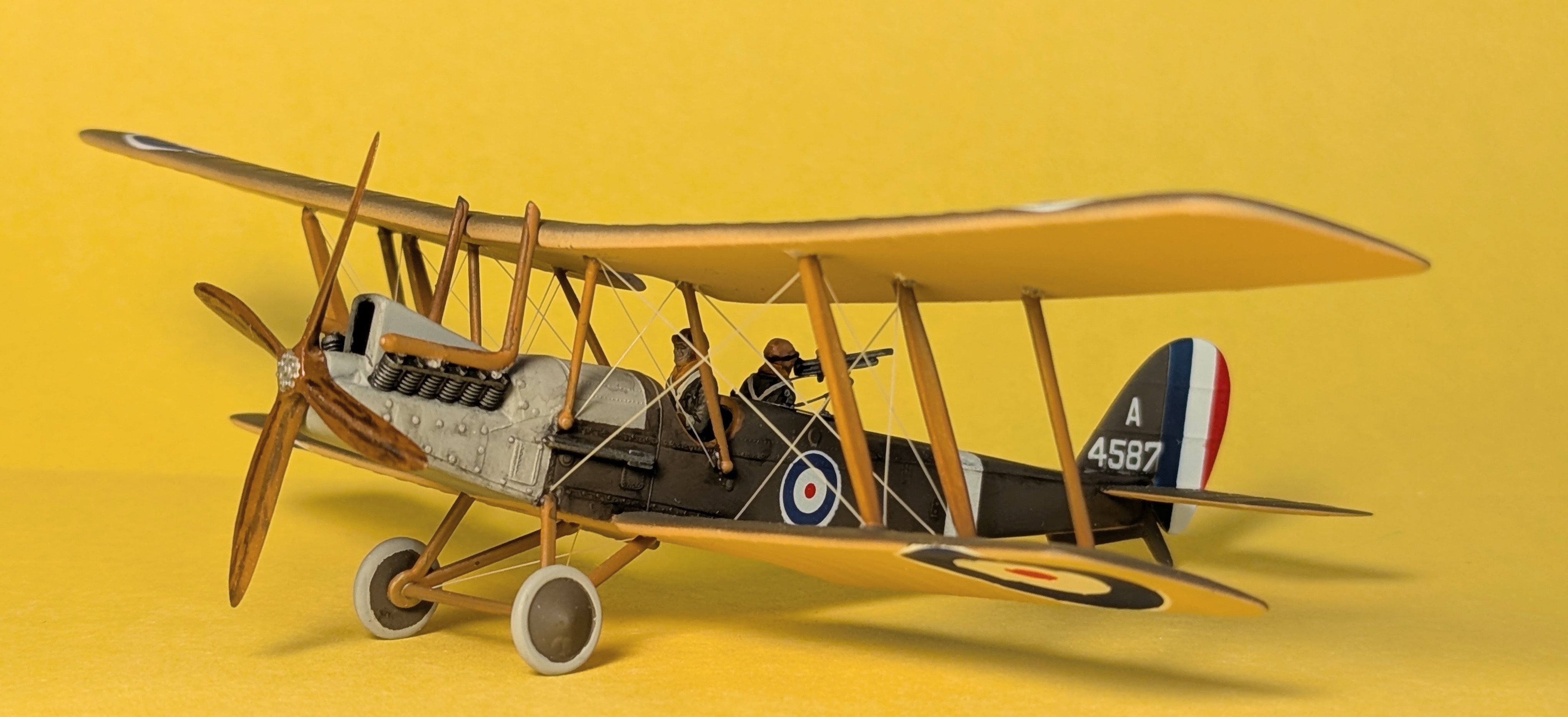
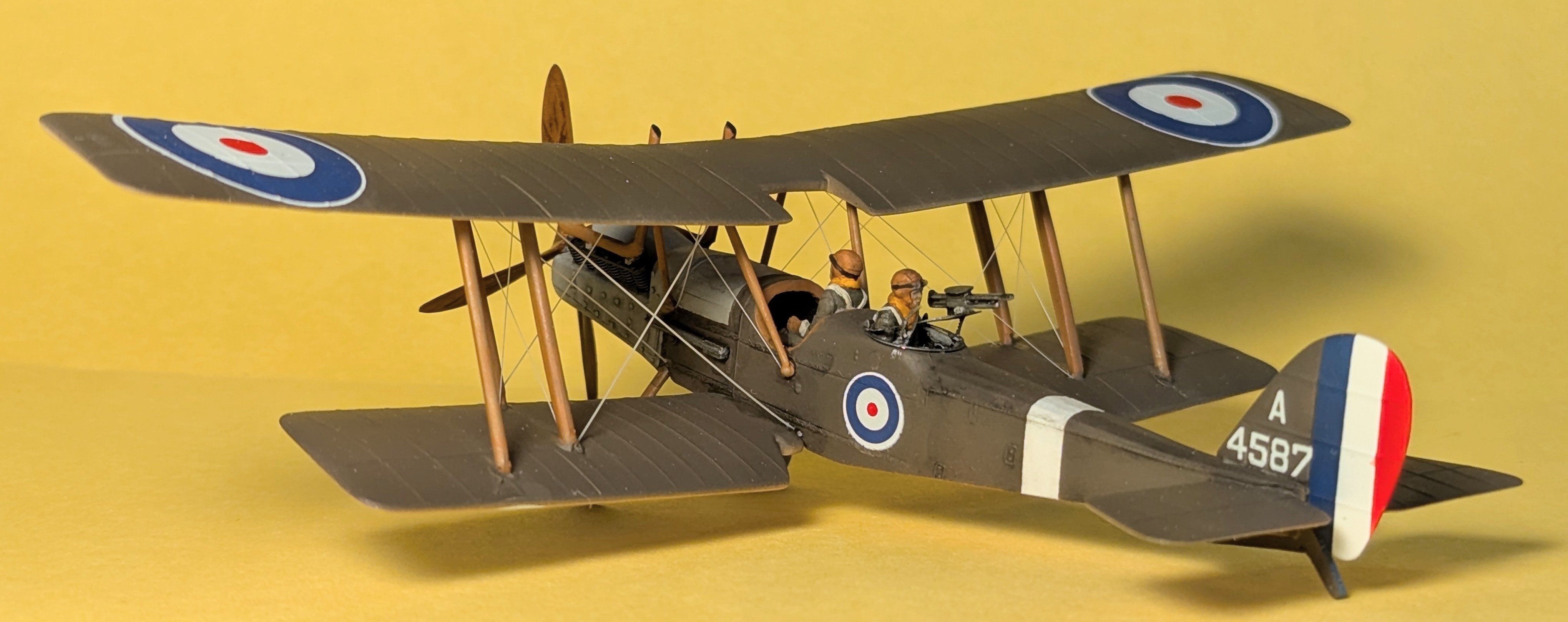
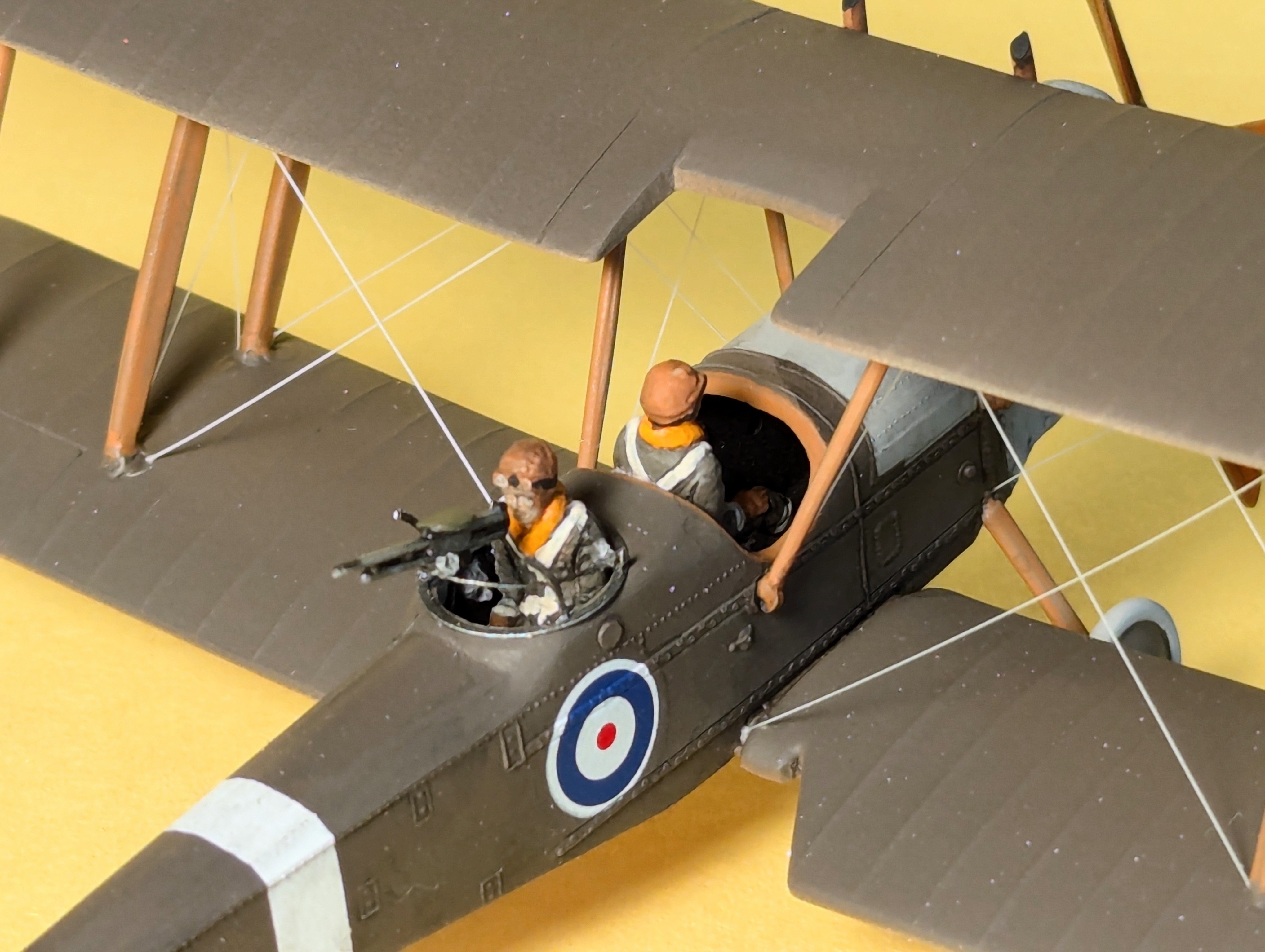
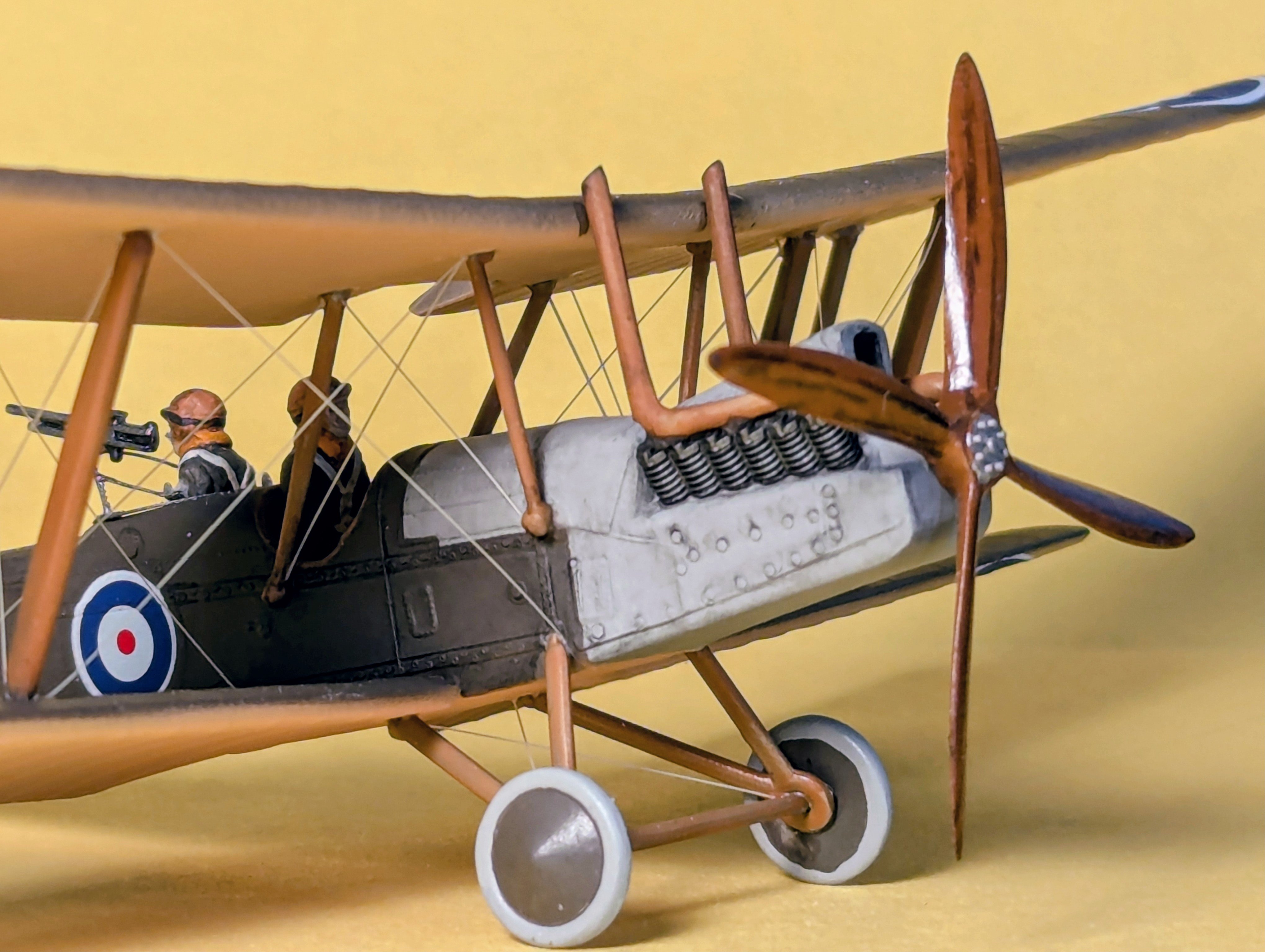
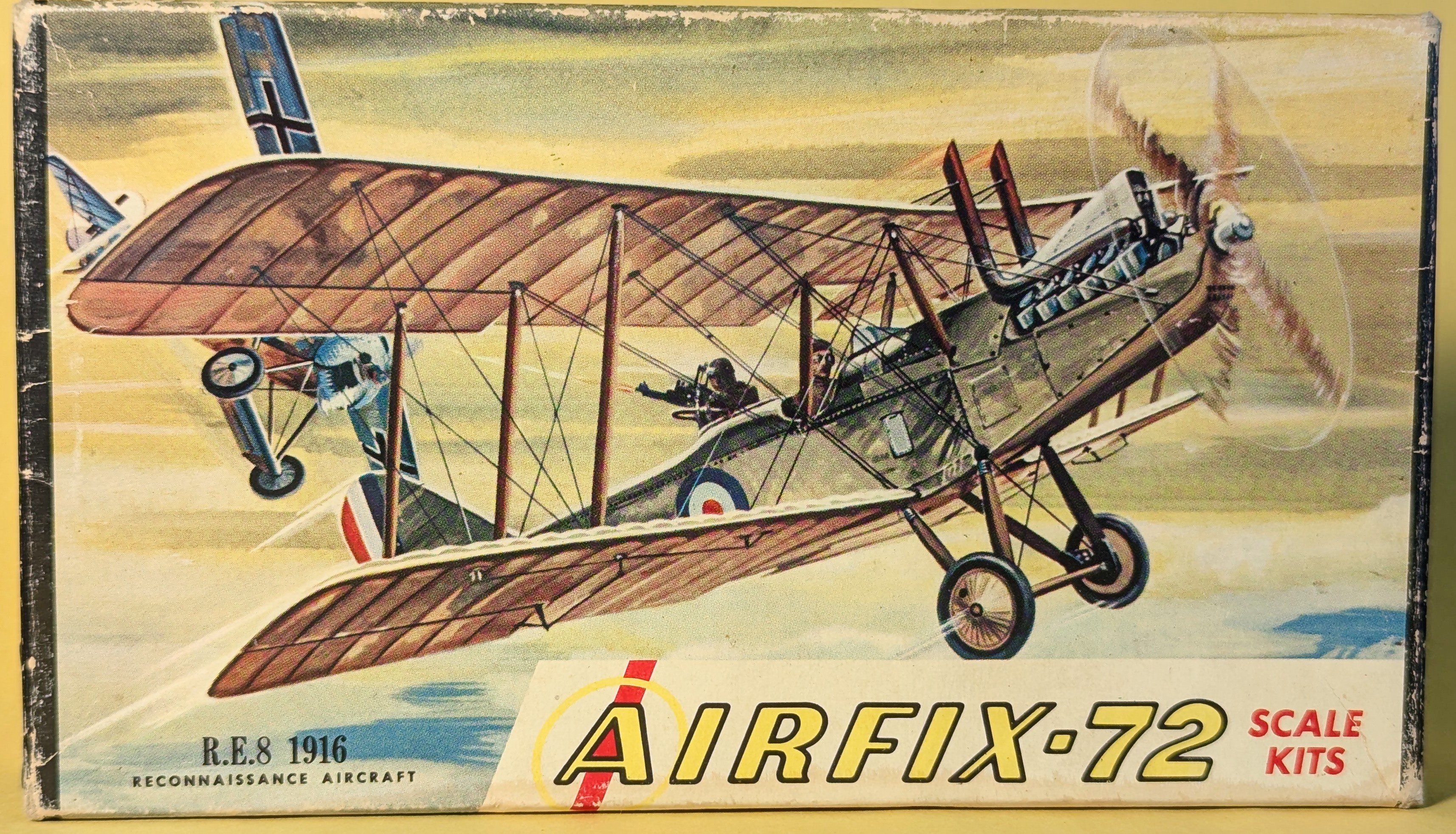
This is the rather old (ancient) Airfix Re-8 kit. It's not very detailed by today's standards but with care it builds up into a nice display model. The only thing I did to it besides the rigging is to replace the kit's scarf mount as it looked like it was made from 2 inch pipe and used different figures for the crew as the old Airfix one's looked deformed.
-

Maddog Manufacturing Opening for 2026
Ron Bell replied to Mark Deliduka's topic in Photos: On the Bench
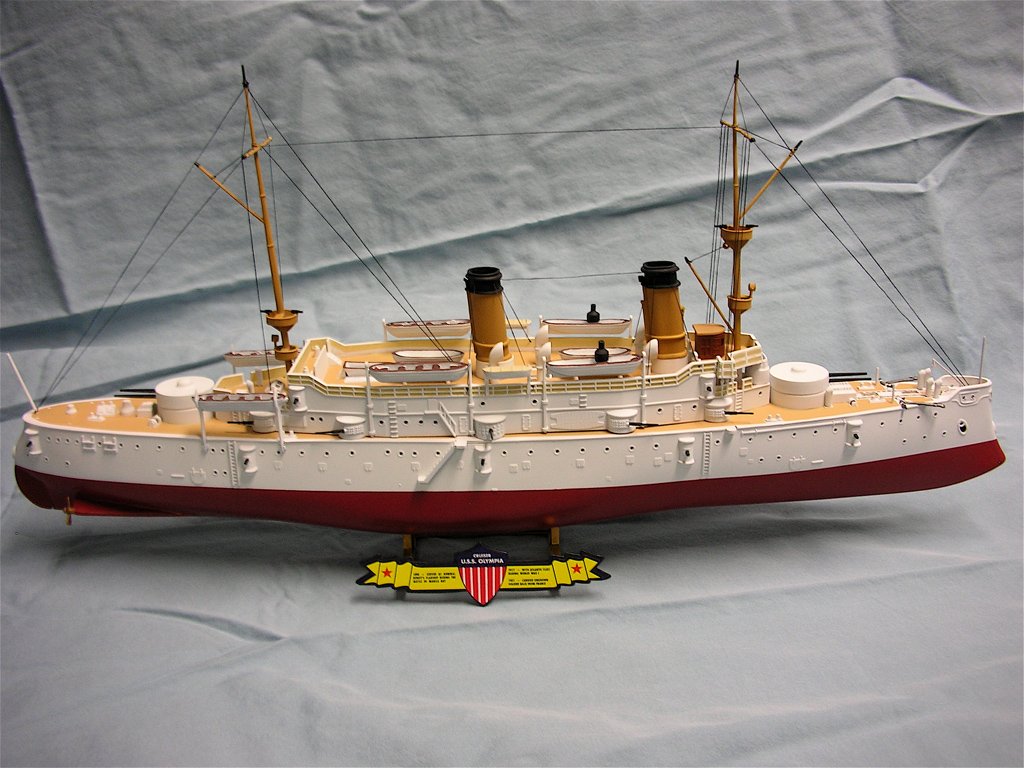
That is one busy workshop. I did the Olympia a while back. It's a very old kit but was a fun build and makes a nice "mantle model" over a fireplace or on a decorator shelf.
-
Excellent job. When I do carrier models it takes me as long to do the air wing as it does the ship.
-
Trivial fact about glider pilots. The British pilots were trained as infantrymen and were expected to join and fight with the infantry they were bringing in. The American pilots, however, were considered "speciaiist" and after landing were expected to make their own way back to the beaches to be evacuated to England. Of course it didn't quite work out that way for them what with the Germans objecting to the whole affair.
-
How can you beat those Monogram 1/48 kits for 'bang for the buck'? This is excellent despite the decal travails. If you have a decal do that again, try coating one of the remaining decals with Micro Liquid Decal Film and see if that helps. It does make the decals a little thicker, but may help with edge curling. Just remember that now you have carrier film and will need to trim the decal closely. Listen to me giving you advice. That's rich.
-
No, those are the kit decals. I, too, was a bit surprised that they did them in the lighter blue. Super Hobby has a set. You get two sheets. https://www.super-hobby.com/products/British-WWI-Roundels-2-sheets.html?srsltid=AfmBOorgXVQZq-obhTb4mj-3wZuabaREDKxpUmNNSyEjwv0dFAI11qUl
-
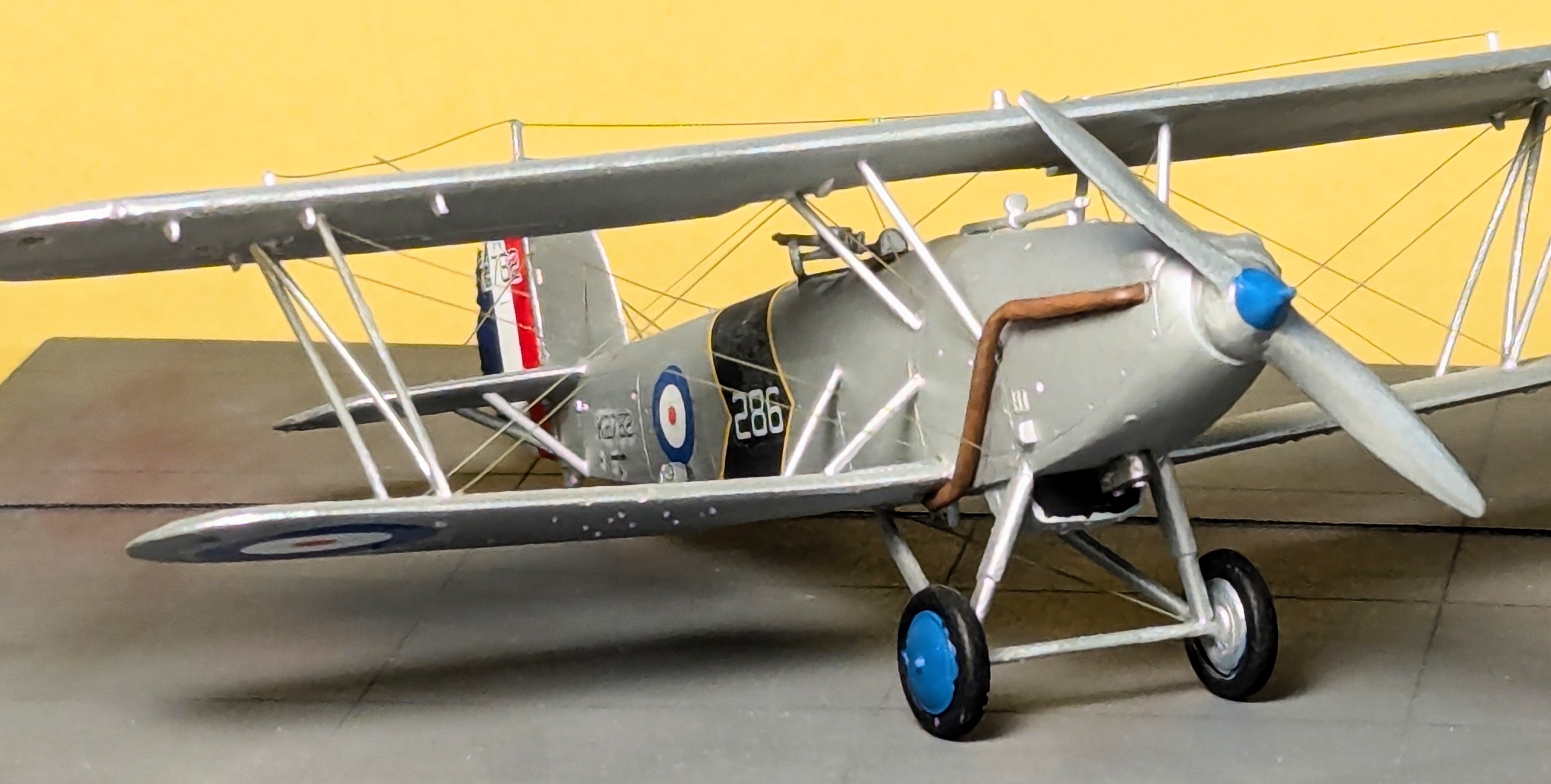
The Osprey was a navalized version of the Hawker Hart series. It was flown off of cruisers mainly. This is a detailed little kit but some of the parts, like the struts, are very fragile. It has a nice interior, which of course is hard to see. Everything fit pretty well if you were careful and did lots of dry fitting. The decals were very good except after dull coating there was some 'blush' on some so my bad on that. Amodel makes a float plane version of this a/c as well, which I have attempted, the but the directions for the float assembly are vague and the parts fragile and fiddly so it defeated me. This is my second attempt so I opted for wheels.
-
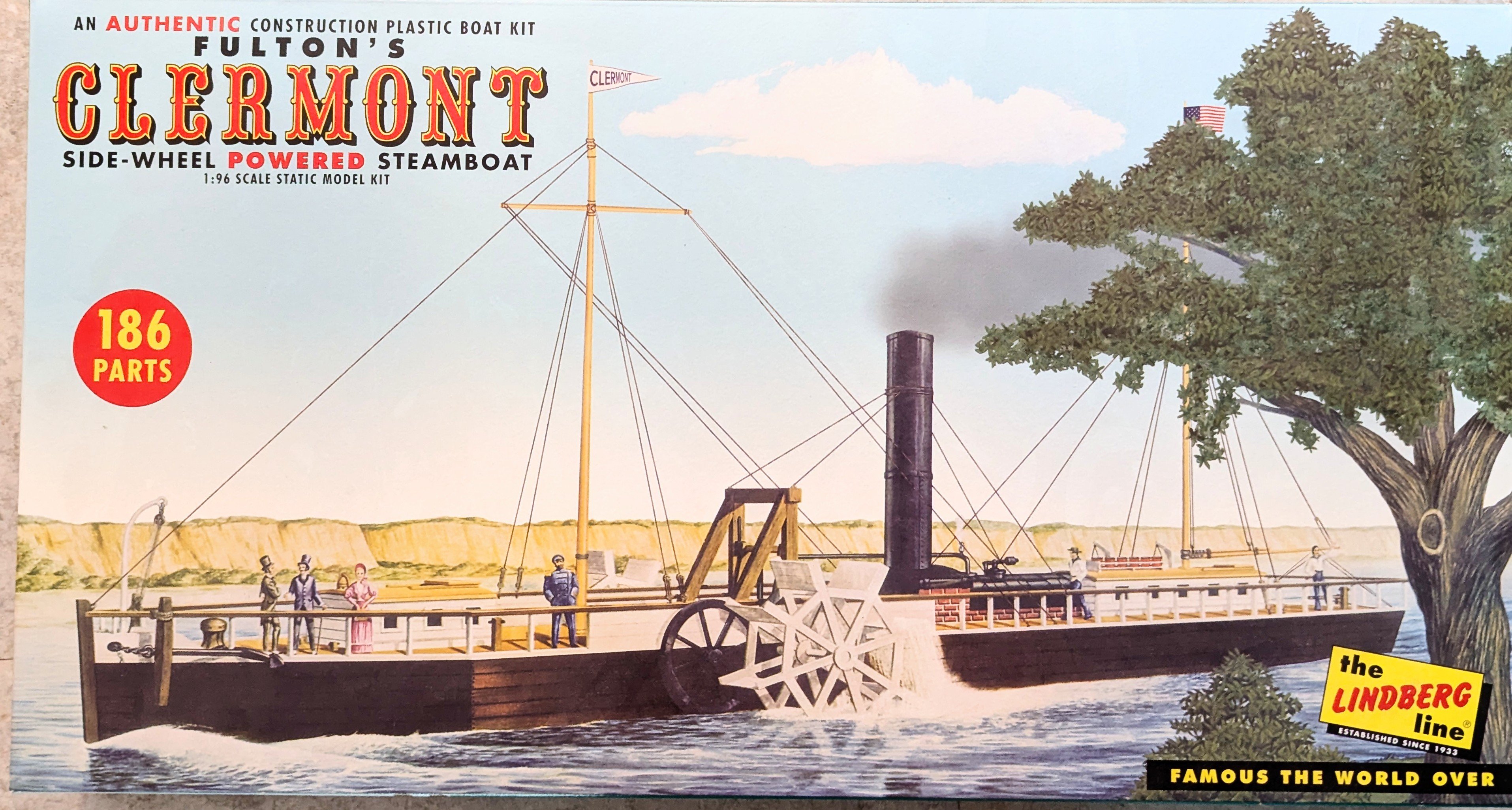
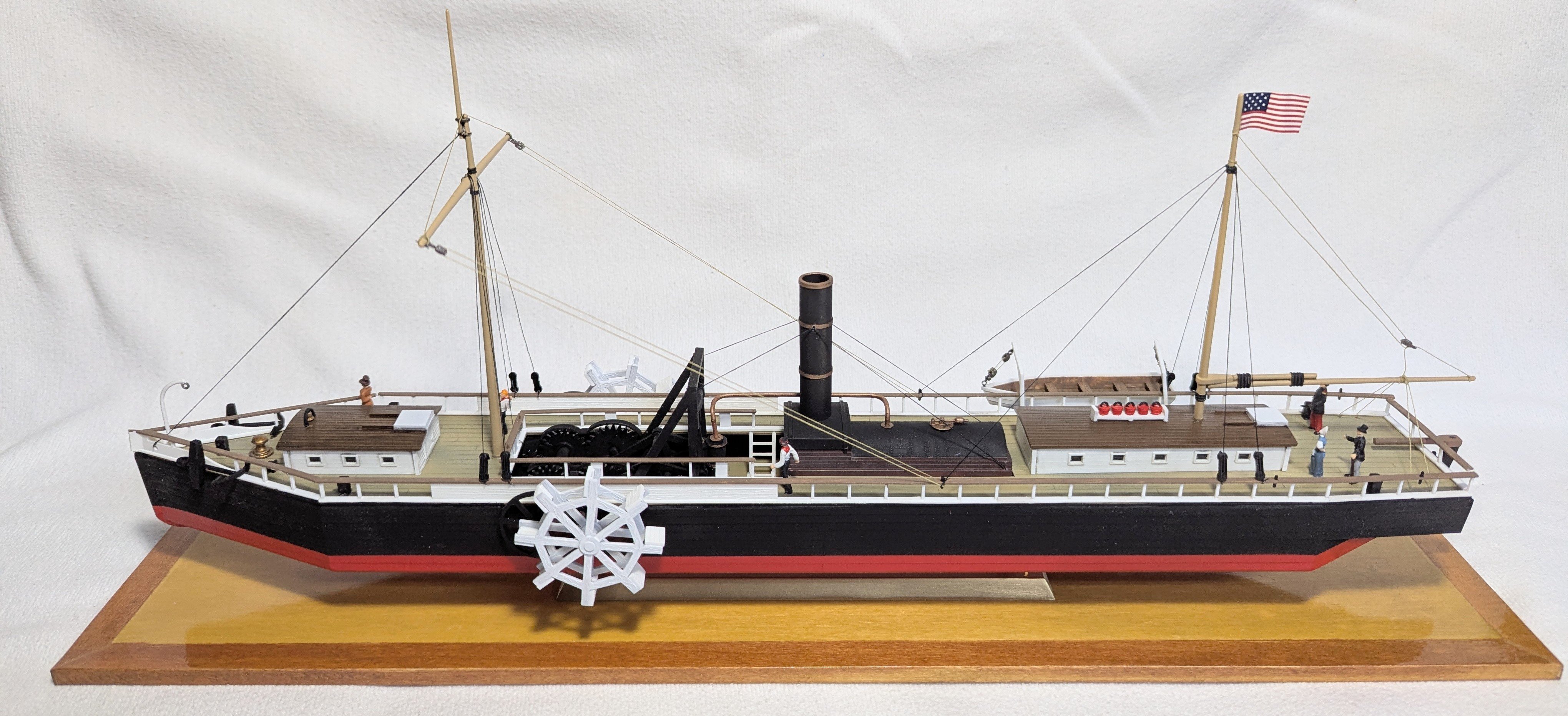
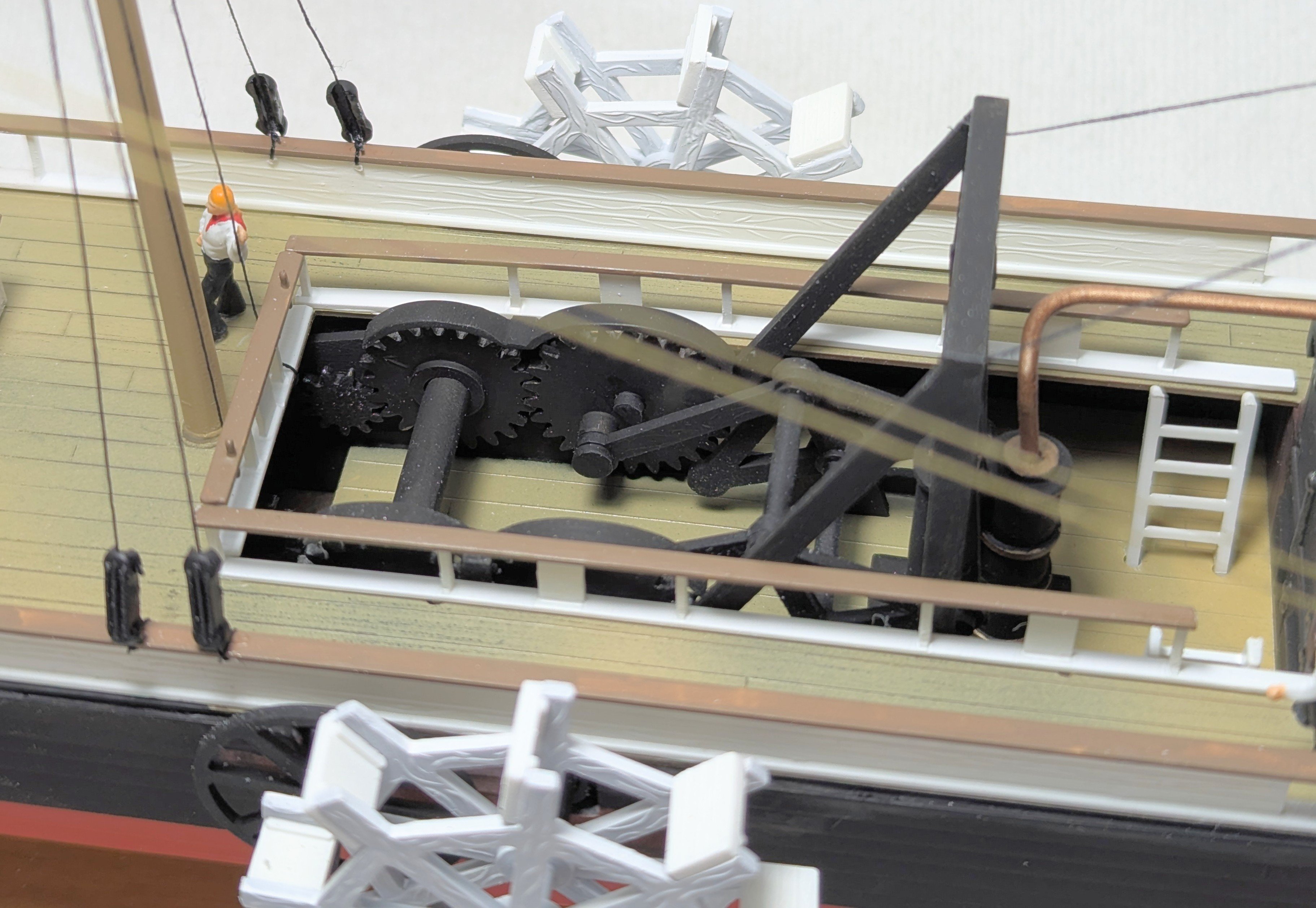
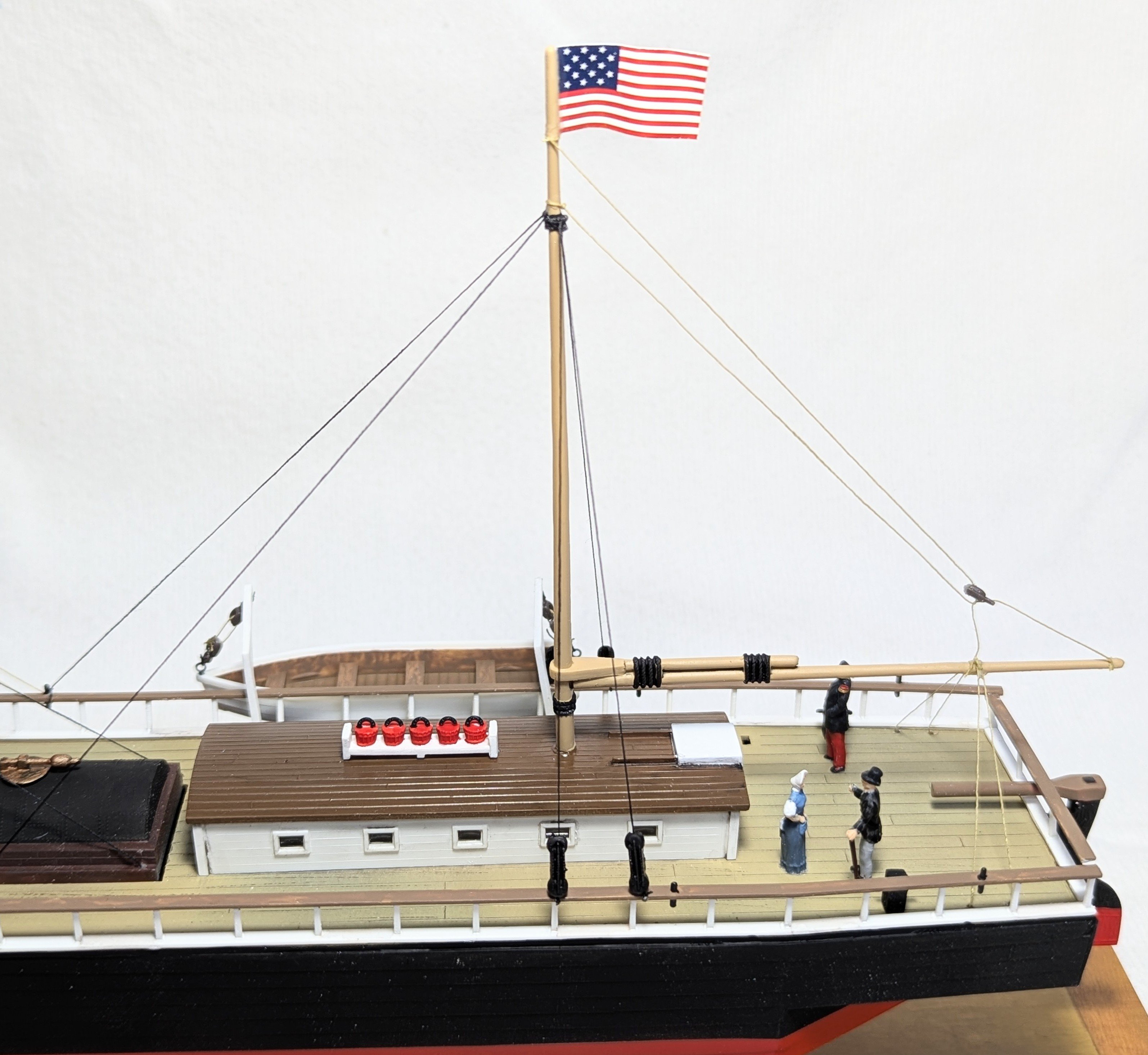
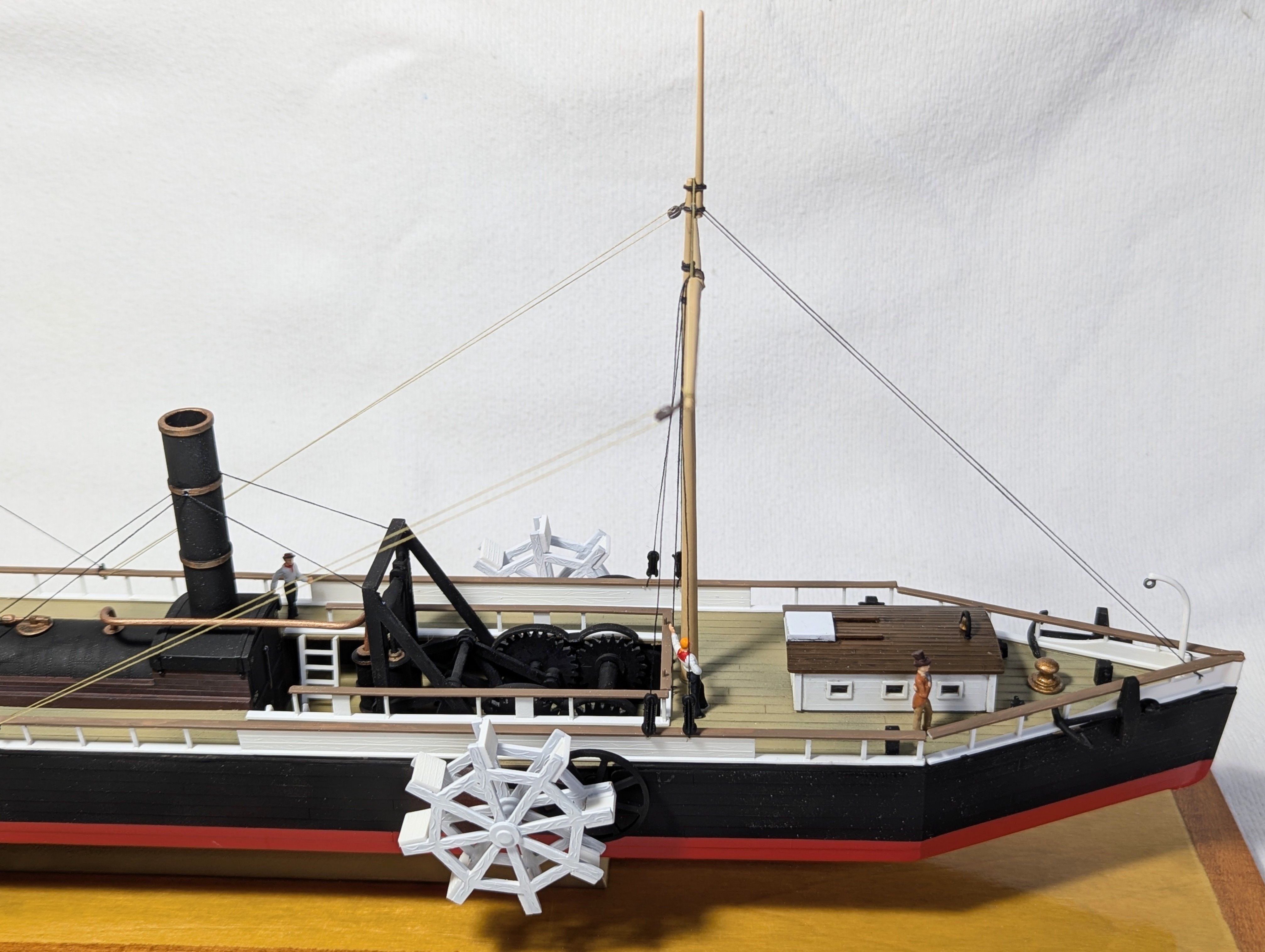
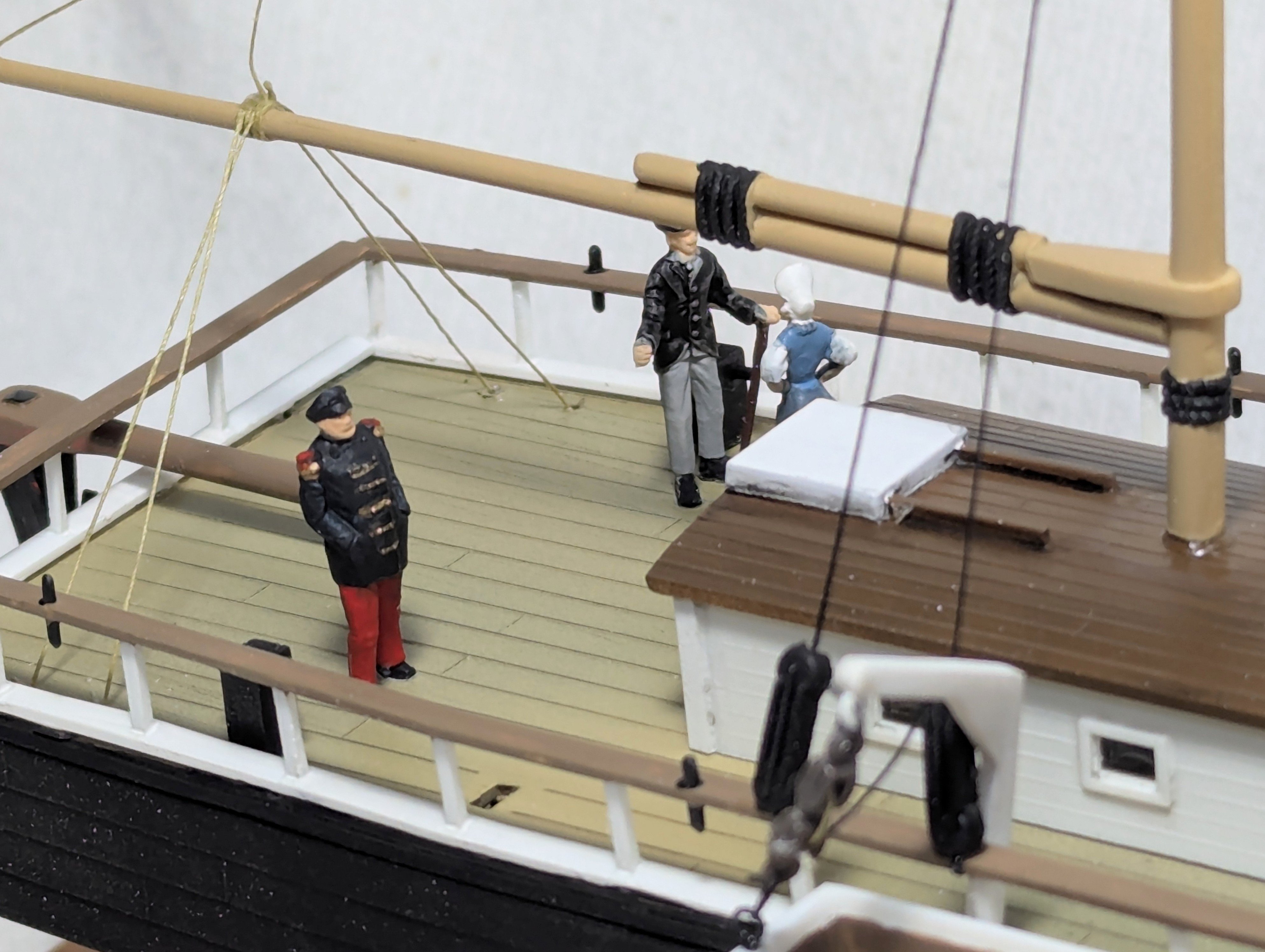
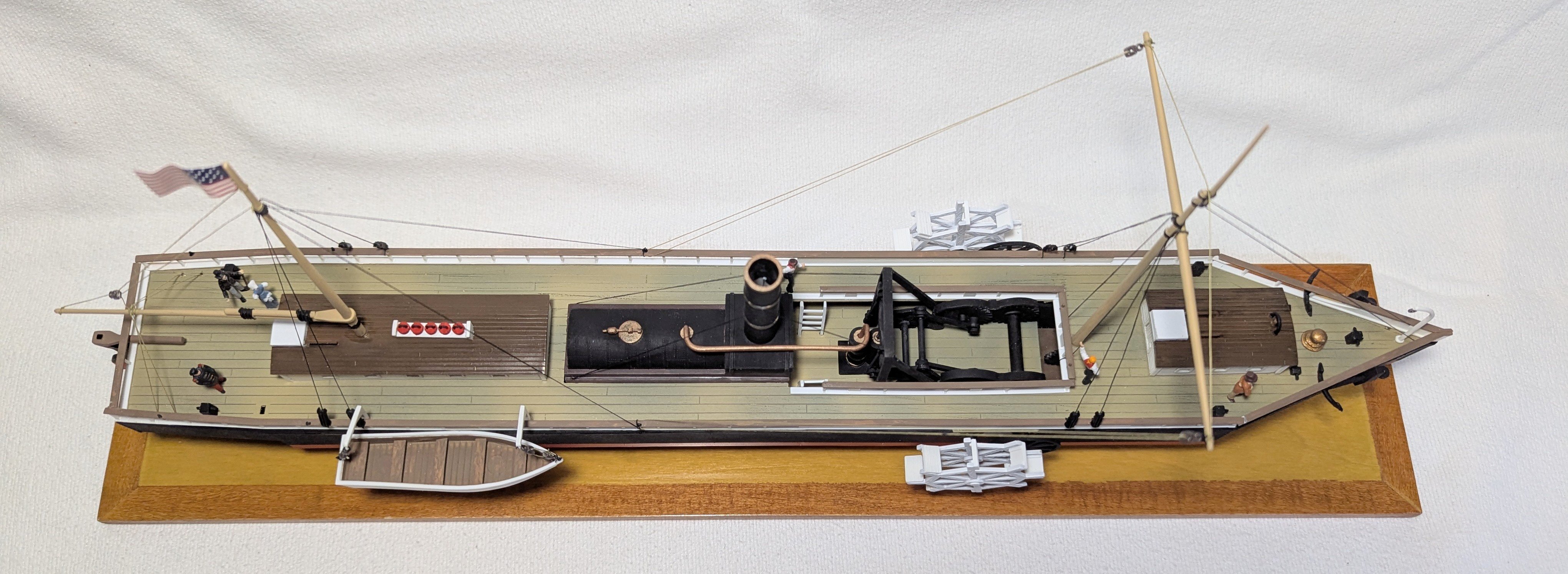
I needed a boat for my emplty mantle so I chose the Lindberg Fulton's Folly, the Claremont. It wasn't called that at first. It had the rather unromantic name of "North River Steamboat". Much later it was referred to in one report as the "North River Steamboat of Clermont" and that last moniker stuck for no real reason. There are no photos of the boat but from the various drawings it would seem that Lindberg's guess as to her appearance is as good as anyone else's. It was released in a motorized version, but after doing the non-motorized one's engine, I would think that getting the motorized one to operate smoothly would be quite a challenge. Most of my time was spent on cleaning up mold seams, sink holes, flash and other 'stuff' to try to ensure good easy assembly once paint was applied. The little figures were remarkably well molded for 1/96 scale and were kind of fun to paint. So, here it is as it will sit over my fireplace. It was at least something very different to put together.
-
Could that engine have been more fiddly to do? While doing all that piping where did you get the extra hands/fingers to hold stuff in place?
-
After messing with this a bit, my advice is to start slowly taking out carrier like maybe only 1/8 to 1/4 at first. Test it out and if necessary take out more or less to find the concentration you like. I have also found that each bottle of this stuff varies in the amount of flattening agent in it so you have to be conscious of that variable as well.
-
I have a Paache "H" model that I have been using for over 30 years and it still works fine. I'm sure it can't do all the intricate fancy stuff that other airbrushes can, but then again, I'm not skilled enough to pull that off anyway.
-
I have always liked Tester's Dullcoat, but sometimes it dries to a semi-matte rather than a dead flat finish. I recently read on-line another modeler say that he lets a bottle of Tester's Dullcoat sit until the "flattening agent" (you know what I mean, all that 'stuff' that gathers at the bottom of the bottle) settles to the bottom. Then he draws/pours off a quantity of the solvent. This increases the concentration of the flattening agent and depending on how much you draw off, the finish that can vary all the way up to dead flat. I decided to give this a try. I took a new bottle of Dullcoat which had settled completely and poured off about 1/3 to 1/2 of the carrier/solvent. I was a bit afraid that it might be spotty or have flecks of flattening agent in the finish so I tested it on a scrap piece of plastic with a flat paint on one side and a high gloss black on the other. i thinned the Dullcoat as normal for my airbrush and gave each finish a coat. The matte finish was still matte, no surprise. But the high gloss dried to a DEAD FLAT and there was no flaking or spotting on either finish. I then tried it on my current project that had gloss and matte surfaces plus decals and I got an even dead flat finish over all. 60 some odd years of modeling and I am still learning.
-
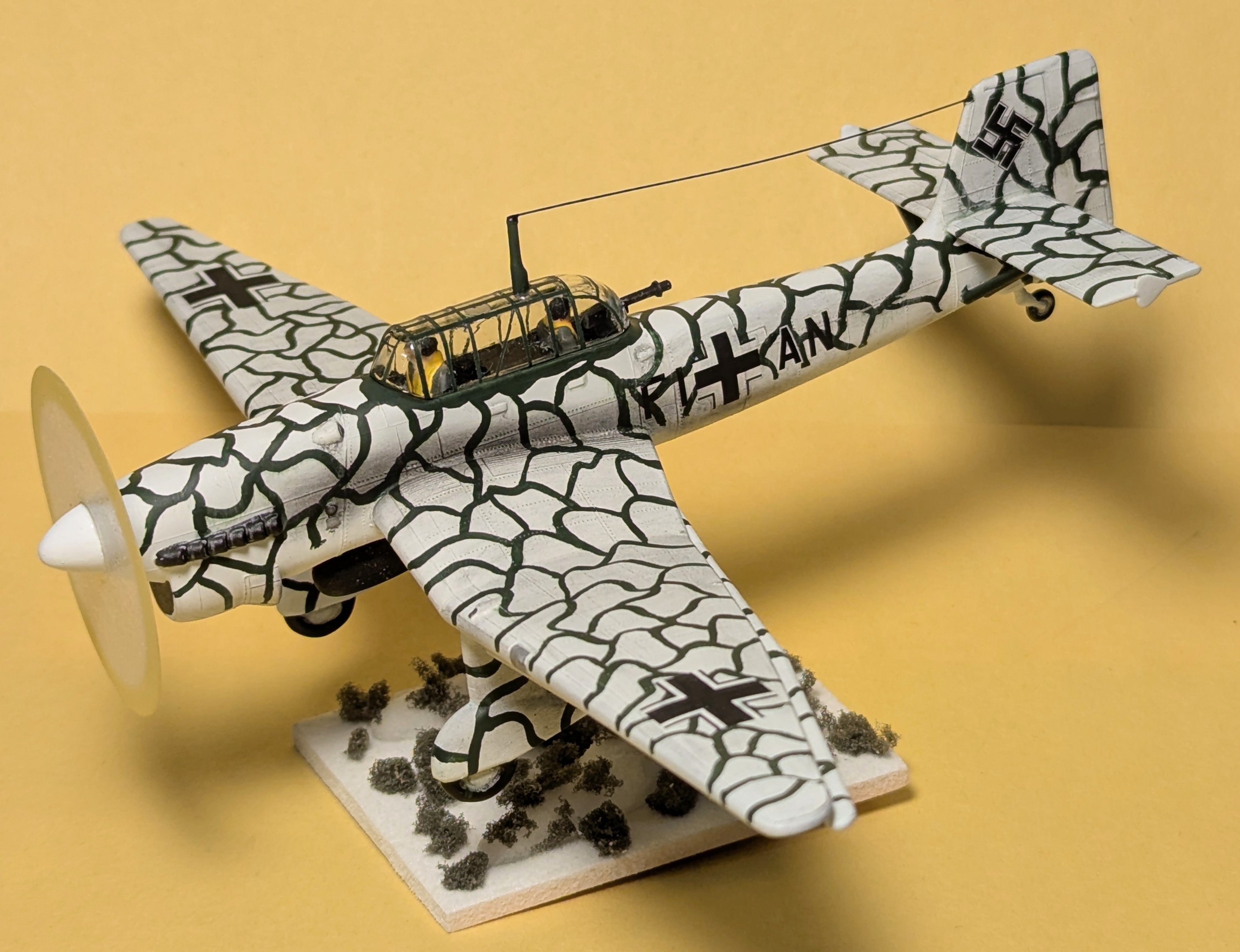
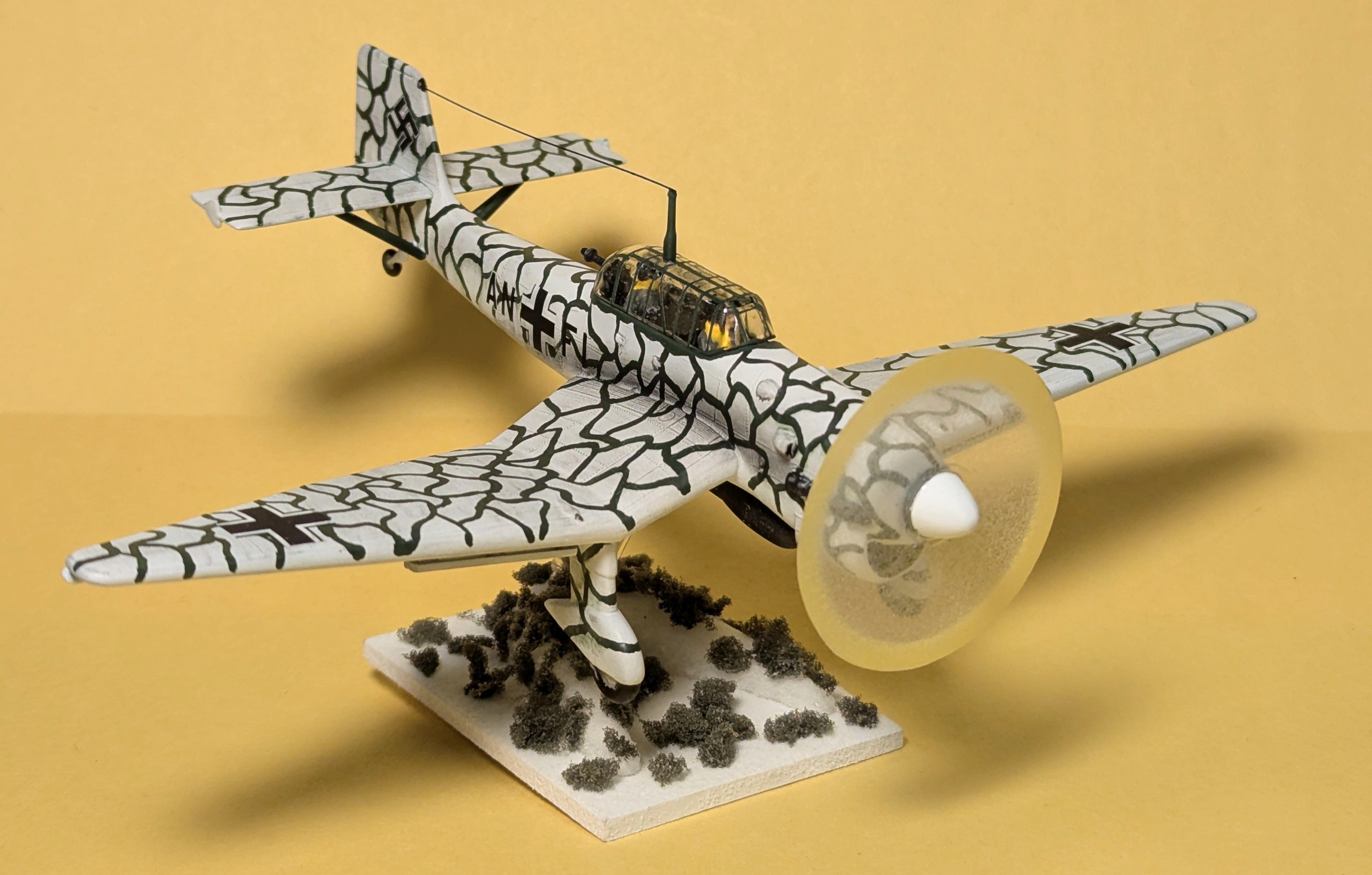
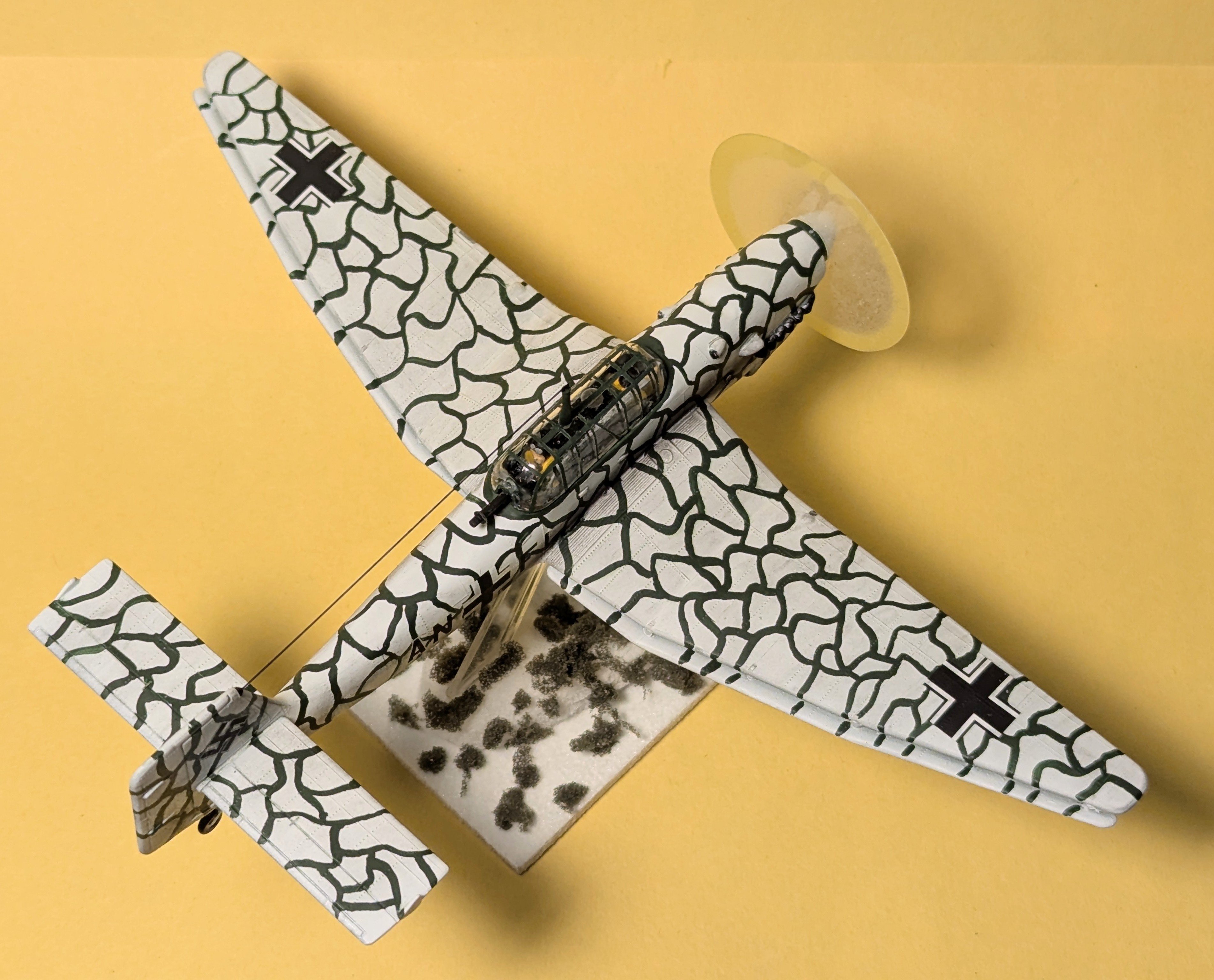
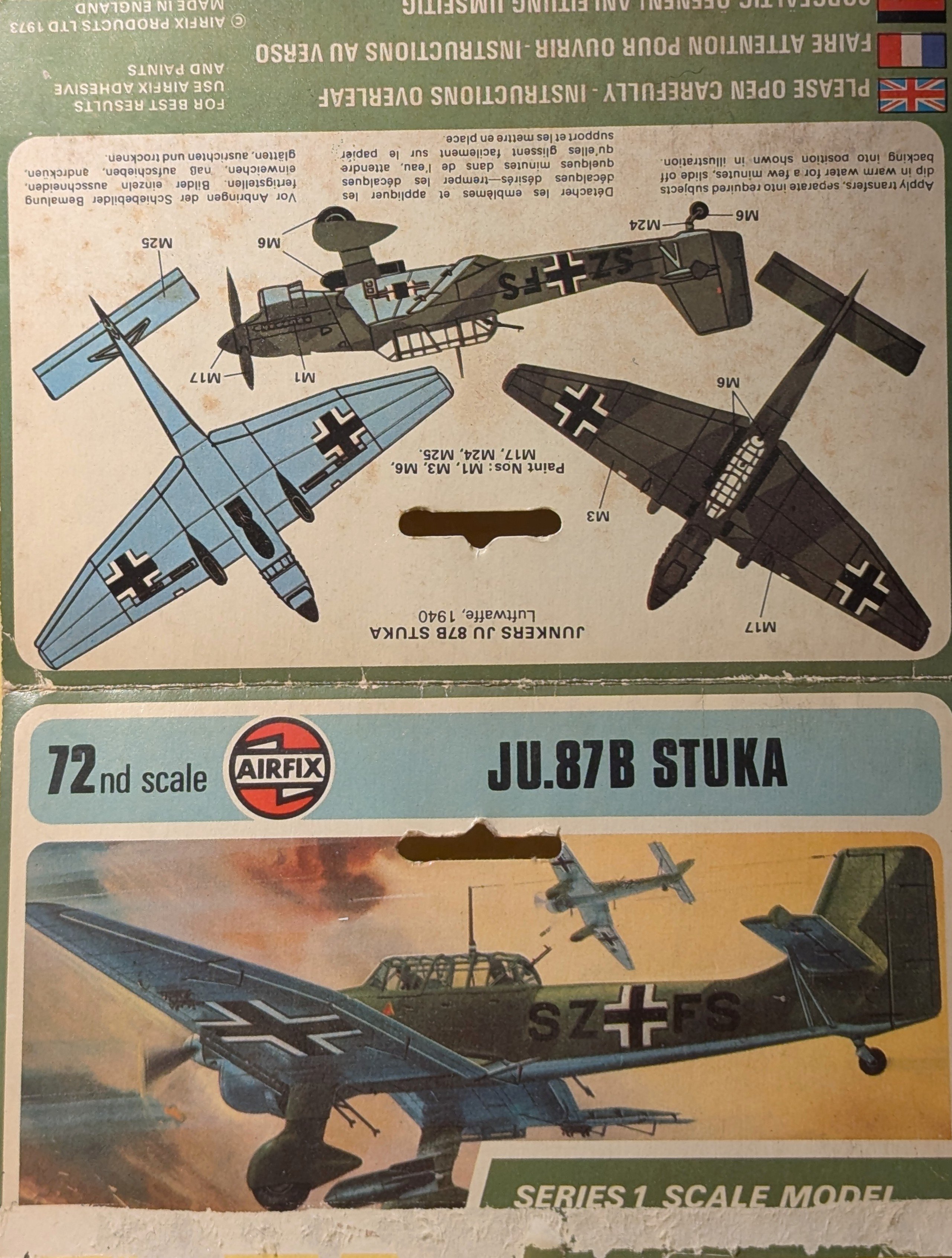
This is the 1973 release of Airfix's Ju-87 Stuka done in a winter camo scheme. It's OOTB with the exception of the prop disc. I also worked on the stand to make it look like frozen terrain from the air. Very basic kit, of course, but went together well with care. Decals were no good so those are after market ones.
-
Sharp paint job. At least it isn't natural metal, eh?
-
Plus, by shrinking the area, you should get better suction in the remaining holes, no?
-
Many denigrate Matchbox kits as overly simple and toylike. For the aircraft ones they add in overly done panel lines. However, there must have been a different sort of designer that worked on their biplane kits 'cause they are pretty nice. Well engineered, they go together easily and as the Brits say they "look the part". Maybe not the most detailed, but pleasing to the eye. Plus they did kits of subjects other companies wouldn't touch such as the Stranraer and Heyford and this one, the Siskin. It's OOTB and the rigging is stretched sprue.
-
For comparison, here's the Thor.
-
This is Glencoe's rerelease of the 1958 Adams Vanguard rocket kit. The launch pad and 'crew' are identical to those in their Thor missile kit. The difference here is in the addition of the tower and the actual missile itself. The launch pad and tower are full of mold seams that need to be removed and you have to make sure everything fits before you paint it. The tower was pretty fiddly as it is in 11 pieces and the instructions aren't the clearest. But with care it actually went together rather easily. However, to get the inside painted, you need to paint the parts first before assembly, contrary to my usual practice. The decals went on nicely, but the color scheme is problematic. They give you decals for six different missiles and each one has a different scheme illustrated on the back of the box. The odd thing is that the colors called out in the instructions do not match any of these. Only 11 Vanguards were produced in reality, so I took some liberty and used the instruction colors to make one of the later missiles. In a brief interweb search I actually did find one photo of these colors in use, so I don't feel too bad. The launch pad and the one officer figure are fixed to the base, which I made, but the missile and tower are not to facilitate possible moving or storage. There should be some cables between the tower and the rocket but I couldn't put them in place and keep the rocket and tower removable so you'll have to use your imagination.
-
Where did you get the airfoil strip stock? I have some really old stuff I'm hoarding but can't find any new supplier. I've used aluminum stuff but it doesn't come in smaller sizes.