Navairfan
-
Posts
54 -
Joined
-
Last visited
-
Days Won
5
Content Type
Profiles
Forums
Events
Everything posted by Navairfan
-
Your Tomcat is just superb, Gil. I bought the kit recently, but haven't started it yet. When I do, I finish it as a VF-41 bird, too, one of the 'Fitter-killers' of the first Gulf of Sidra incident. Glad to hear you can confirm reports that the fit is darn near perfect. That will be a pleasant change from the Academy Tomcat I build years ago!
-
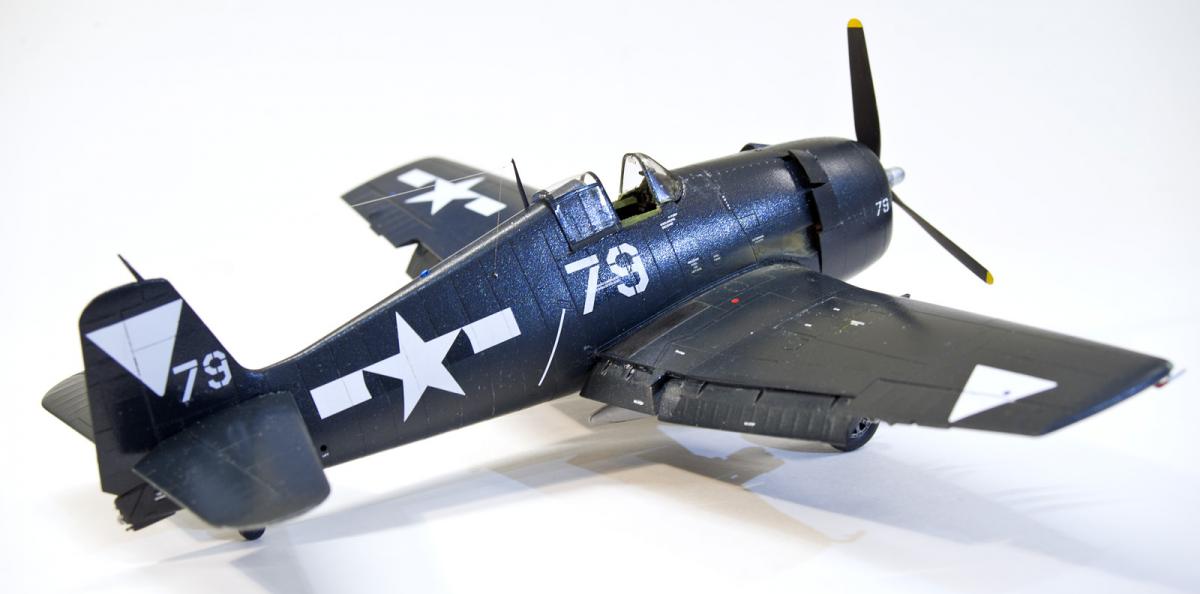
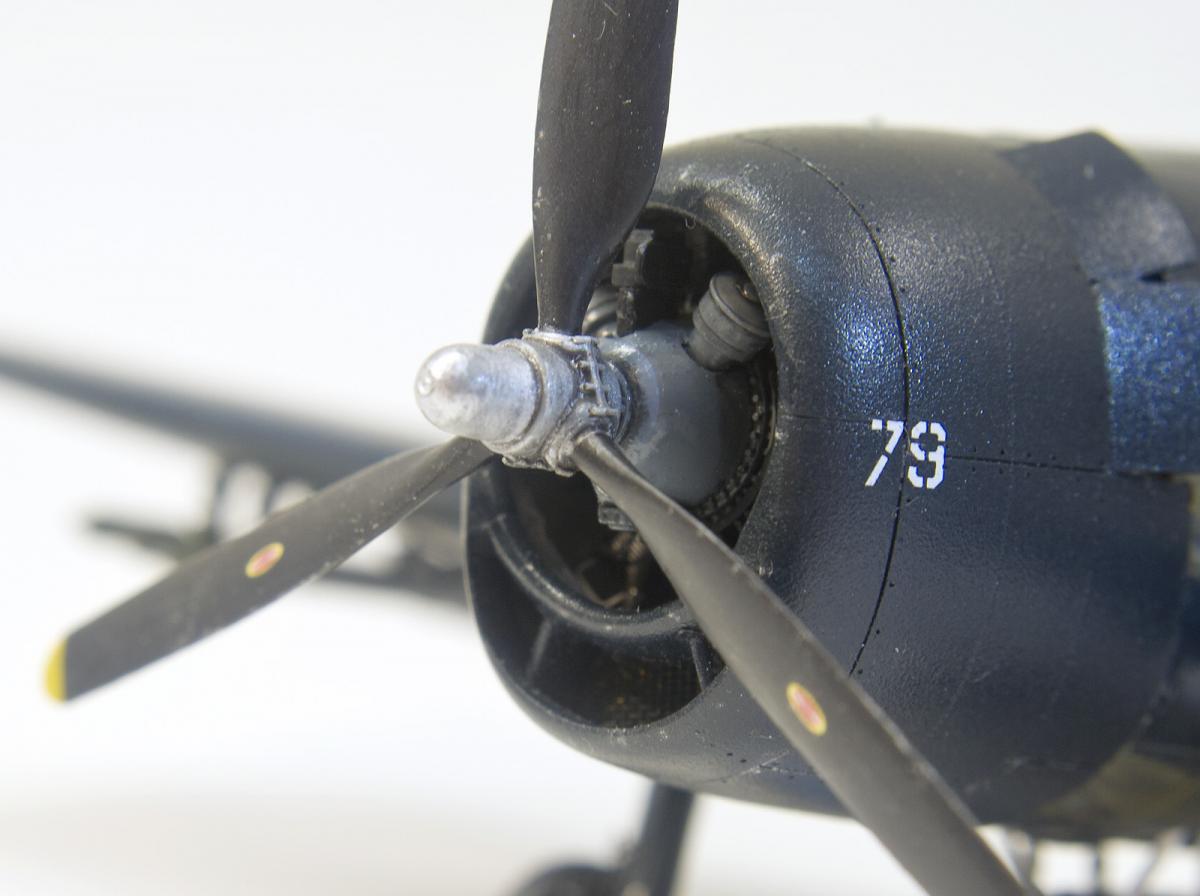
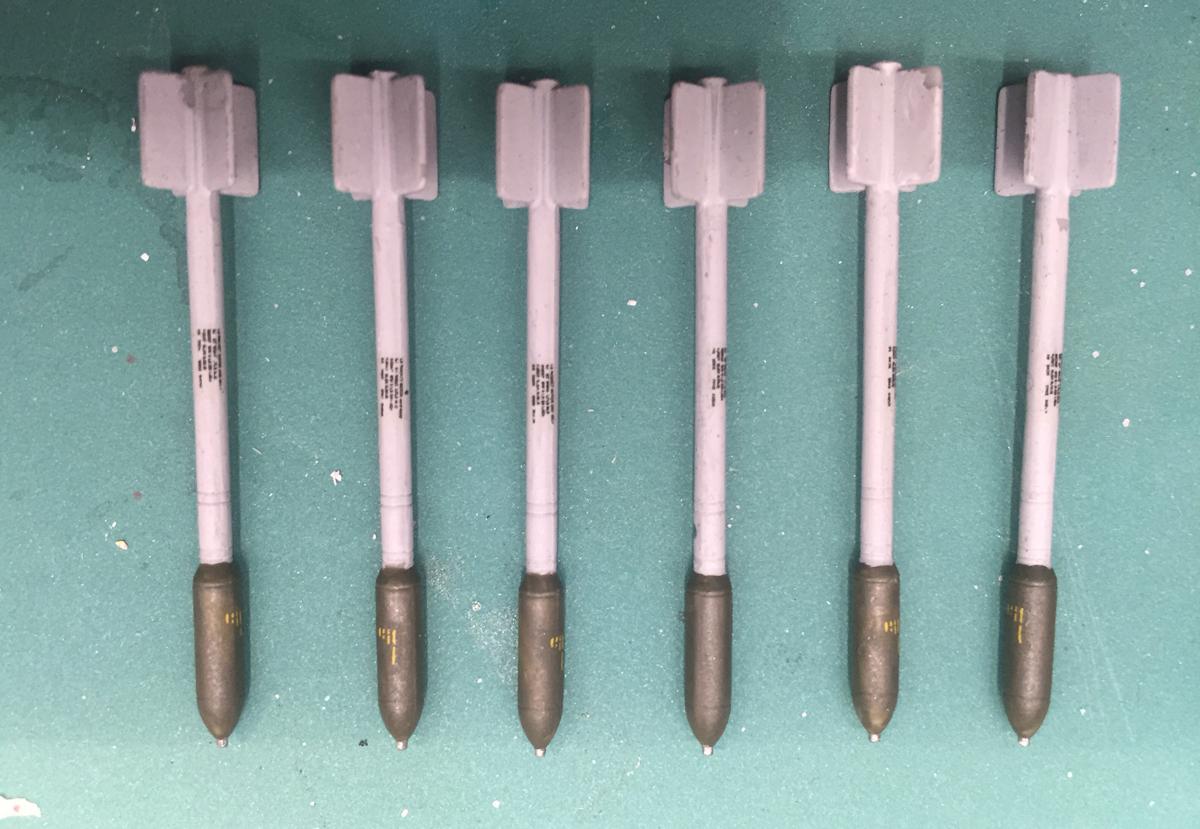
Here’s my latest effort, Eduard’s 1:48 scale F6F-5 Hellcat ‘Weekend Edition’ (which, ironically, took me six months to complete.) The Eduard series of 1:48 scale Hellcats were hailed as the best in scale when they were released in 2008. They are great kits, but after building one, I’m not convinced it’s the best. The kit features excellent surface detail and good-to-average parts fit. The wings and horizontal stabilizers are basically butt-joined to the fuselage, leading to some gaps along the left wing root, which I filled with Mr Surfacer 500. It also makes getting the correct dihedral a challenge. The kit has separate flaps and control surfaces, but has no provision to display them in any position but neutral. This just complicates the build, and creates extra seams that have to be filled and sanded. The Weekend Edition doesn’t have the photo-etched and resin parts that come in the standard kits. To dress up the cockpit, I bought a photo-etched cockpit set from Eduard, a replacement seat from Ultracast, and painted the cockpit Tamiya NATO green. Not technically the correct color, but it looks good to my eye. New wheels came from Ultracast, too, since the kit wheels are way too thin. In photos, you often see Hellcats in the overall gloss sea blue scheme with aluminum or even white wheel hubs, so to add a bit of color, I painted the hubs Model Master Metalizer Titanium, to give a weathered and oxidized metal effect. Unlike Hasegawa Hellcats, The Eduard kits come with two canopies, one designed to fit open, and another for a closed canopy – something all kit makers should do. The engine is good, but needs a wiring harness, which I added from thin copper wire. The kit prop is really poor, with soft or missing details, and blades that are too wide at the base. I replaced it with the excellent prop from an old Arii Hellcat. The drop tank in the Weekend Edition is poor as well, with no representation of the prominent vertical or horizontal seam, and without the bracing straps provided in the standard kit. The fit of the forward tank brace piece was really bad, needing filling and sanding. I used thin strip styrene to replicate bracing straps and the horizontal seam seen on the early version of the tank. I added a small round photo-etched piece from the spare parts box to represent the fuel tank filler cap. Again to add more color, I painted the tank white. Photos indicate this was seen often, too. You get two sets of HVAR’s – the earlier 2.5 inch rocket with a 5-inch warhead, and the later 5-inch rocket. Both sets are very well detailed, but the mounting pylons are molded with the rockets, and have little detail. I used the later version HVAR’s on my kit, with the warheads painted olive drab, and the rocket bodies painted light grey. I recently switched to acrylics, and boy, did I make a big mistake by not priming this kit before spraying the overall gloss sea blue paint scheme. While the Model Master paint sprayed beautifully once I arrived at the right thinning ratio, the finish was extremely delicate, and the paint would scratch off easily. I spent a few hours re-spraying scratches in the finish. Lesson learned – always use primer! I kept weathering to a minimum, since the aircraft I was modeling had been in combat just a few months. To recreate the ever-present exhaust stains, I used Tamiya Weathering Master sets, made for armor modelers. These powders, applied with a make-up type brush and pad, give me greater control than doing applying stains with an airbrush. I also think it's easier to blend the colors to get the effect you want with these sets. It's hard to see in the photos, but for the antenna wires, I used my wife's hair. I've never had much luck stretching sprue - it always broke, and never looked in scale. To my eye, hair is just right for antenna wires. The Eduard kit decals are outstanding, with walkways and full stenciling, and features a Hellcat from VF-20 deployed aboard USS Enterprise in October of 1944. I wanted something a little more eye-catching, so I chose the flamboyant checkerboard markings of VF-27 deployed aboard USS Independence in the final months of the war. VF-27 was famous for their earlier ‘cat-mouth’ squadron markings that adorned the cowls of their Hellcats. After their carrier, USS Princeton, was sunk, the squadron was sent stateside for a while, then re-deployed aboard USS Independence from June to August of 1945. The checkerboard tail and wing markings came from SuperScale sheet #481239. The checkerboard markings on the sheet are for VF-46, but VF-27 was deployed aboard Independence at the same time and used the same checkerboard carrier ID markings. The only difference was VF-46 used a single small plane number on the tails, and VF-27 used the more common large plane number beneath the cockpit, and also on the upper right wing. My main reference for the markings is an outstanding little booklet, ‘Markings of The Aces, Part 2, U.S. Navy, Book 1, by Richard Hill. It was published by Kookaburra Technical Publications in 1969, and provides a detailed look at the markings and combat record of VF-2, VF-9, VF-17, and VF-27. Once everything was decaled, I airbrushed a coat of Testor semigloss clear coat over the model, which I think has more scale accuracy than a gloss coat. Having built a Hasegawa and Eduard Hellcat back to back now, I can say that neither kit has a big advantage over the other. Both kits have great points, and weak ones, but I think I prefer the Hasegawa Hellcats for overall ease of construction.
-
Terrific work, as per your usual, Gil. I've never built a Collect-Aire kit, but many years ago I did purchase their F2H-3/4 Banshee kit, but was disappointed with the poor quality of the resin castings and cast metal parts, so I ended up selling it. Your B-66 is shaping up to be another stellar build from you.
-
Thanks, Gil! I appreciate the kind words. I've been a fan of yours since you were doing articles for Scale Modeler magazine. I even have a Hodgepodge cockpit detailing set in one of my Hobby room drawers.
-
Beautifully done T-2C, Gil! I have this kit in the stash, but I don't have the courage to attempt a camo scheme like yours. How easily - or not - does it go together?
-
Great save, and outstanding work as always, Gil!
-
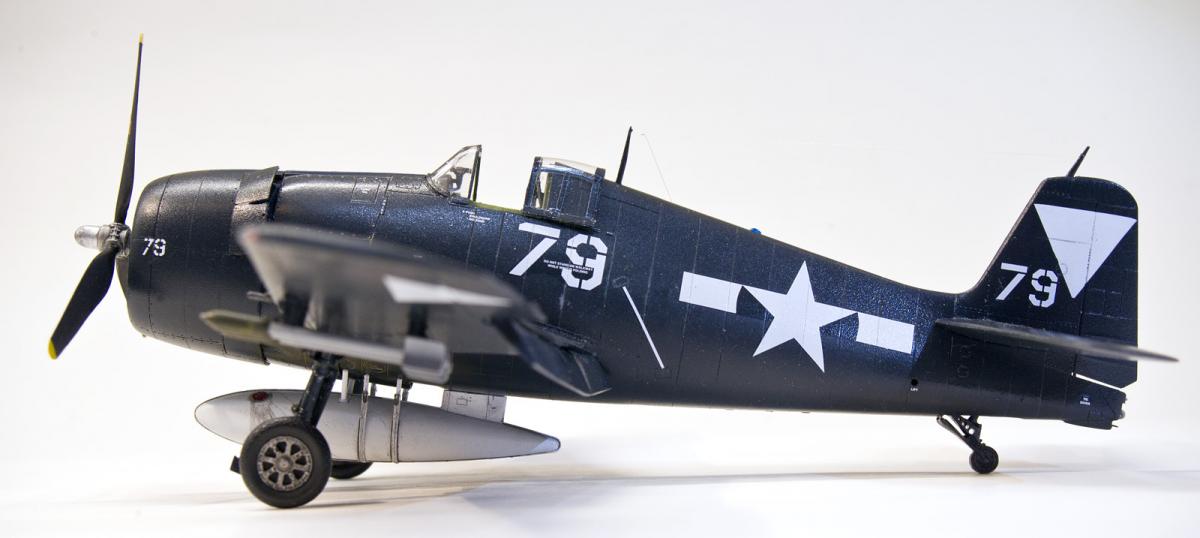
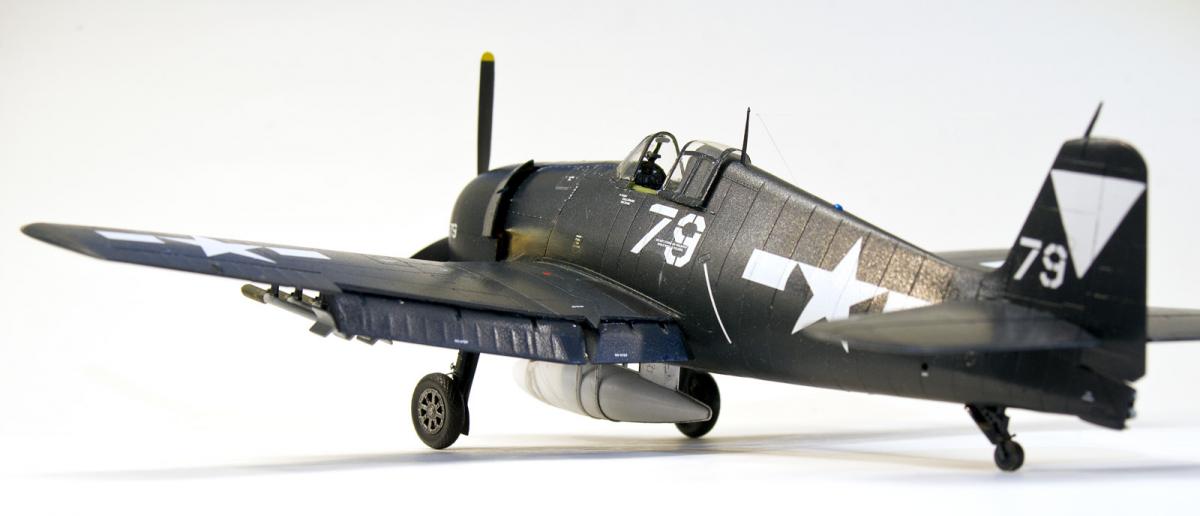
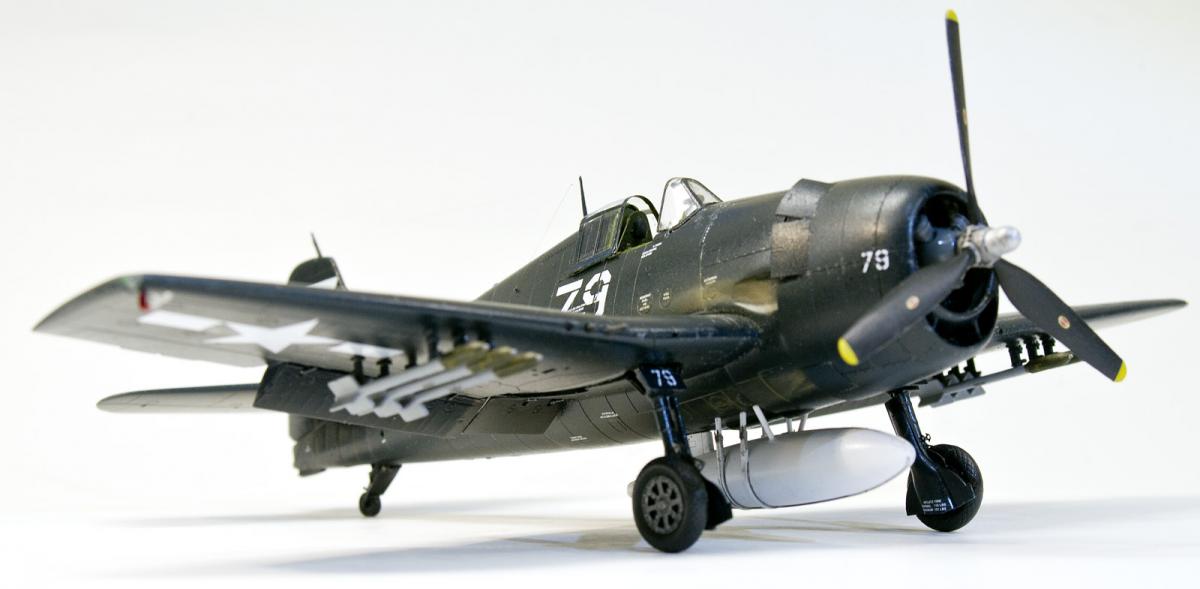
Here’s my latest build, hot off the bench – Hasegawa’s 1:48 F6F-5, the “10,000th Hellcat” boxing. The Hasegawa kit can be made into a fine model straight from the box, but I made a few additions and corrections. Good points are excellent parts fit, accurate outline and shapes, finely recessed panel lines, early HVAR’s, and a drop tank. Drawbacks are a canopy that cannot be posed open, average cockpit detail, very basic wheel well detail and off-color decals. Anyone who has built a Hasegawa kit will be familiar with their baffling inability to print the color white on their decal sheets. On an all-blue airplane, the yellow-tinted markings will stand our starkly, so aftermarket decals are a must. Here are some of the corrections and additions I made during construction: I used a True Details cockpit, but soon regretted that decision. The parts fit poorly and threw off the fit of the fuselage, necessitating extra filling and sanding. I used two different Eduard photo-etched sets to add details, including a new instrument panel, rudder pedals, ignition wiring harness, landing gear and gear well details. Once assembled, the cockpit was painted Tamiya acrylic NATO Green. The “grin” of the Hasegawa chin scoop on the cowling is a little off, so I replaced it with a new cowl from Quickboost. Most people will be fine with the kit part, but the resin replacement also features opened cowl flaps, which gives a more animated look to the finished kit. I also added a small section of micro screen to the inside of the chin scoop. I cut away the flaps and replaced them in the lowered position with a CMK resin set. If you do this, you’ll need to scratch-build a well for the flaps, too. The kit machine gun barrels feature holes for cooling vents. They look good, but are incorrect. Gun barrels of F6F’s were in solid metal sleeves. I should have replaced them with styrene rod, but I got lazy and left them alone. For the wingtip navigation lights, I cut away the plastic, and replicated bulbs with small sections of thin styrene rod, painted red and green. I used Micro Krystal Kleer to make lenses for the lights. I made a towing bracket under the tail hook with a small section of wire bent to shape. To display the canopy open, I used a Squadron vac-formed canopy to replace the too-thick kit part, but used the kit windscreen. I painted the simple overall sea blue camouflage (FS #15042) with a Model Master spray can. Warming the can in a sink of warm water helped the paint to spray more evenly. Overall gloss sea blue aircraft can be rather drab, but there are ways to add color to this scheme. It was very common to see overall sea blue Hellcats sporting white drop tanks, holdovers from the previously used tri-color camouflage scheme, so that’s how I painted mine. Also, photos indicate that -5 Hellcats could have either sea blue, aluminum or sometimes white wheels. I painted my wheels Model Master Metalizer Steel, to replicate a weathered and oxidized aluminum look. The rockets were painted Tamiya Medium Grey, with Olive Drab warheads and Steel fuses. I finished the rockets with stencils from an old Pro Modeler decal sheet for US bombs and rockets. Finally, I used strands of my wife’s hair to rig the antenna wire. To recreate the exhaust stains on the fuselage, I used Tamiya Weathering Master sets. These are primarily used to weather tanks and armor models, but work well for aircraft exhaust stains. They are powders in different colors, and applied with a small make-up brush applicator. For the exhaust stains, I used soot, light sand, and rust. I’m not skilled enough with an airbrush to recreate these stains, but the weathering powders look good enough to me. The aircraft I was modeling was new and well-maintained, so I kept additional weathering to a minimum, with just minor paint chipping here and there. The aforementioned kit decals were not pure white, so I made my own geometric wing and tail carrier ID markings from a solid white decal sheet. The numbers, stencils and stars and bars came from various Super Scale sheets. The markings are for an F6F-5 from VBF-87, deployed aboard USS Ticonderoga from May through September of 1945. The squadron entered the war late, but did see combat while making strikes on the Japanese mainland during the final weeks of the war.

-
Simply stunning work, Gil! Especially considering how much scratchbuilding you did. This is right up there with your incredible B-47. I have yet to tackle a vac-formed kit. I've always shied away from them because of the inherent difficulties, and also because almost everything I want to build is - thankfully - available in injection-molded kits.
-
Thanks for the comments! I've gotten more interested the past few years in building specific aircraft. I have a long-term project to build as many Navy Mig-killing jets as I can.
-
Thanks, Gil! I visit the museum in Pensacola pretty often, so next time I'm there I'll look for Thatch's display.
-
I used the terrific 1:48 scale Tamiya Wildcat kit to build “White 23”, the F4F-4 that Lt. Cdr. John Thatch flew on June 4, 1942 during the battle of Midway. Thatch flew this plane, BuNo 5093, when he shot down three Zeros in one of the classic fighter combats of World War II. On that mission he also used his famous “Thatch weave” defensive maneuver for the first time. This particular Wildcat has quite a history: before being assigned to Fighting Three and participating in the Midway battle, this plane was assigned to Fighting Eight attached to USS Hornet, and was aboard for Doolittle’s B-25 raid on Tokyo. Sadly, 5093 was pushed over the side during unsuccessful efforts to save USS Yorktown from sinking after being torpedoed at Midway. The Tamiya Wildcat is the best F4F in 1:48 scale, but the HobbyBoss Wildcats are a close second. I used no filler, as there were no fit issues at all. Careful parts preparation and assembly will result in near-perfect fit. I built the kit almost straight from the box, with just a few corrections and additions. The cockpit is kit stock, with the addition of True Details lap belts and shoulder harneses. Shoulder straps were added to navy aircraft just prior to the Midway battle. I did correct the kit cockpit floor – the kit piece is solid, when in fact the actual cockpit had no floor, just foot troughs on each side of the stick. I cut away the sides of the kit floor to more accurately represent this. I substituted the kit wheels with True Details resin examples. The tail wheel appears to be the larger pneumatic tire, rather that the smaller solid rubber tire used on carrier-based aircraft, but I didn’t correct it. I cut away and dropped the flaps, and added an antenna wire made from my wife’s hair. I also added a small whip antenna made of thin wire to the fuselage spine behind the cockpit. I used Model Master enamels to paint the USN Blue Gray topside color and the flat gull grey underside color. The decals came from a long-out-of-production Three Guys Replicas sheet, ‘First Team Wildcats’.
-
Thanks, Gil! I've admired your work for years, and your comments are always appreciated.
-
Thanks, Ralph! Even after Tamiya released their outstanding 1:48 Corsairs, the Otaki kit still holds up realy well.
-
Here’s my rendition of the Arii 1:48 scale F4U-1A Corsair. Though this kit was originally released by Otaki in 1972 (!), it still builds into a nice Corsair. The good points are very accurate outline and shapes, finely recessed panel lines, and good parts fit. Drawbacks are a simple and inacurate cockpit, wheelwells and wheels, and an engine that doesen’t remotely resemble any engine ever used in any aircraft. Here’s how I upgraded the kit: I replaced the cartoonish engine with with a resin R-2800, updated the cockpit with Eduard photoetched insturment panel, seat and sidewall details, used seatbelts and wheels from True Details, and added a Falcon vacum-formed canopy I replaced the kit tail wheel with a more accurate-looking one from the spares box, and attached it at an angle for a more candid appearance. I also cut away the flaps and dropped them, added resin exhaust stacks from Ultracast, and added a small whip antenna to the fuselage spine. I couldn’t determine if this plane had the tail hook removed or not, so I left it on. VF-17’s Corsairs didn’t have the standard forward antenna mast, and photos indicate this aircraft had an unusual field-modified antenna. Based on photos, I built an antenna that runs fron the top if the vertical fin down to the tip of the right horizontal stabilizer. From there, it runs into the usual antenna lead-in on the right side of the fuselage, behind the cockpit. I don’t know for certain if it’s accurate, but that’s how I interpreted the antenna arrangment in photos. I used a Pasche VL airbrush to apply the three-toned camouflage scheme, though most photos of the actual aircraft indicate it was very weathered, with almost no distiction between the non-specular sea blue upper surfaces and the intermidiate blue sides. For markings, I used a SuperScale sheet to portray “White 29”, the plane flown by Lt. Ira Kepford of VF-17 while based at Ondonga, New Georgia, in the Solomon Islands in late 1943. I made a mistake in not placing the kill markings at the correct angle to the tape covering the seams of the forward fuselage cell. Finally, I used clear decal strips painted very light grey to replicate the six-inch-wide medical tape ground crews used to tape over the gunports to keep out coral dust and debris. VF-17 was the second navy squadron to be equipped with the Corsair, and the first to deploy aboard a carrier. Assigned briefly to USS Bunker Hill, the unit was soon transferred to the Solomon Islands to serve as a land-based squadron. In its two tours of duty in the Solomons, VF-17 was credited 156 aerial victories and produced 12 aces, the most of any squadron in the Navy when it completed its tour in 1944. Kepford was the U.S. Navy’s 6th highest ranking ace, with 16 victories and 8 probables.
-
Astounding work, Gil! How will you display this monster when finished???
-
Here’s my attempt at the 1:48 Accurate Miniatures Grumman F3F-1, and it’s built straight from the box. The only thing I added was the antenna wires. The kit is a real jewel – any flaws are mine alone. Accurate Miniatures was my favorite model company, and I really hate they went under. The kits they produced were – and still are – the best examples of their kind ever made. I finished it with kit decals to depict an F3F-1 from Fighting Four deployed aboard USS Ranger in 1937.
- 5 replies
-
- 1
-

-
- Naval aviation
- F3F-1
- (and 1 more)
-
Here’s another one of my collection of US Navy MiG-killers, a 1/48 Hasegawa F-8E Crusader. The Hasegawa F-8 is by far the best kit in this scale, but it does have issues. There are bumps on top of the wings at the wingfold joint that need to be removed, and you can't drop the flaps without serious sanding of the inside pieces to get them to clear the fuselage. The cockpit is really basic, especially for a kit of this price, and needs at least an aftermarket seat to dress things up. I tried to replicate a faded look by preshading with flat black over major panel lines, then lighlty applying the flat gull grey top color. I used the Aires cockpit and wheel well sets, and a Seamless Suckers intake – which had as many seems to fill as the kit intake. I also scratchbuilt a boarding ladder and steps, a standby compass, canopy restraint strap, and a few other cockpit details. The AIM-9B Sidewinders are from my spares box, and I used Quickboost afterburner scoops and pitot probe, and a few Eduard photoetched pieces. I finished it in the markings of ‘Nickel 103′, an F-8E from VF-211 when deployed aboard USS Hancock during an eventful Vietnam War cruise. Cmdr. Hal Marr piloted this jet when he shot down a MiG-17 on 12 June 1966, scoring the Crusader’s first kill of the Vietnam War.The decals are from an Eduard sheet of F-8 MiG-killers, though more accurate markings of this jet are available on the excellent Furball Designs sheet of F-8 MiG-killers. . All the resin aftermarket parts somehow threw off the fit – I had to do LOTS of filling and sanding on the fuselage seams, especially in the bottom of the fuselage, and I had to reposition the right main gear slightly to correct a list to starboard. I usually don’t use more than an aftermarket seat or cockpit, but I traded for this kit and it came with all these extra resin accessories, but they wound up causing lots of construction problems so I wouldn’t use them all again. Still, it was an enjoyable build of an attractive and historic aircraft.
-
Outstanding work, Gil! Looks like I'm going to have to replace my ancient Lindberg Stearman with this kit.
-
Thanks, Gil! I appreciate the comment. The C is my favorite version of the Skyhawk, too.
-
Here’s my attempt at Hasegawa’s 1:48 A-4C Skyhawk. It’s the best-detailed 1:48 Skyhawk to date, though quite expensive and hard to find now. It’s an out-of-the-box build, except for the True Details ESCAPAC aftermarket seat I added. I managed to snap off the kit nosewheel during construction, so I re-attached it at an angle for a more candid appearance. I used a very light wash of thinned black paint to subtley highlight the exquisite surface detail of the kit. I used kit decals to finish it the markings of VA-15 Vallions while deployed aboard USS Forrestal on their 1969 Mediterranean crusie. The only major problem I had was trying to get the many small decals that make up the gold and black tail colors to settle down into all the nooks and crannies. I wound up getting a second set of kit decals to cover up several mistakes. For weapons, I wanted something different, so took a bit of artistic license and educated guess and loaded it with a B43 nuclear weapon on the centerline pylon. At the time (1969), A-4's were an important part of SIOP, or the Single Integrated Operational Plan, which was the was the United States' general plan for nuclear war from 1961 to 2003. In case of nuclear war, carriers stationed in the Med were tasked with destroying targets in Baltic and other Soviet satellite countries, and A-4's were to be used to deliver nuclear weapons to some of these targets. In fact, the US had a 'Broken Arrow' incident (loss of a nuclear weapon) during a 'special weapons' loading exercise off Japan on Dec. 5, 1965. An A-4E of VA-56 rolled off a deck-edge elevator into 16,000 feet of water about 80 miles off Okinawa. The pilot, plane and weapon were never recovered.
-
Beautiful work, Mark!
-
Thanks for the comments, Mark!
-
Here’s another 1/48 Monogram F-8E Crusader that I converted to a J model, which I have ugraded over time. I added an aftermarket seat, and an out-of-production flap/droop/underwing bay set by High Flight. I scribed additional panel lines lines on the leading edges to at least suggest the appearance of the extended droops of the J version. The UHT’s (unit horizontal tail) are larger on the J version, but I didn’t correct that (yet!). I also extended the main and nose gear struts to correct the squat stance of the kit parts. Later I scrounged parts from a Hasegawa Crusader kit for the ‘football’ ECM antenna on the tail. I added scrap plastic, rod and wire to busy up the gear wells, and scratch-built steps, boarding ladder, and canopy restraint strap. Monogram molded the tail pipe without an afterburner nozzle, so I used a cut-down section of an exhaust cone from the spares box to simulate it. I used rear view mirrors from an old Model Technologies (remember them?) set, and wire to replace the over-scale plastic pitot probe. The RBF flags are from Eduard, and the Sidewinders are from Hasegawa’s weapons set (which I need to replace with a later variant!). For markings, I used an old SuperScale sheet to depict the VF-211 CAG jet from USS Hancock circa 1972. The black walkways on the aft fuselage and tail were made using painted clear decal sheet. Monogram’s Crusader is a great value for the money, with the biggest innaccuracy being the cockpit. It's a few scale inches too wide, giving the canopy and windscreen a flattened appearance when compared to the actual jet. But with a little extra work, it can be buit into a fine model.